
Mind-Muscle Connection: Secret to Better Glutes
In the world of fitness, especially in the world of glute training, people chase heavy weights, perfect programs, fancy exercises, and high-volume routines. But there is one element that consistently separates women who actually see results from those who train hard with very little progress:
The mind-muscle connection.
This is not a trend.
Not a myth.
Not a fitness buzzword.
It is a physiological reality that dramatically influences how your muscles respond to your training. And when it comes to building rounder, fuller, firmer glutes, the mind-muscle connection becomes even more important.
Why?
Because the glutes are:
- the largest muscle group in the body
- often underactive due to modern lifestyles
- easily overshadowed by quads or lower back
- muscles that require precise activation for growth
If you have ever struggled to feel your glutes during exercises, wondered why your booty is not growing despite regular workouts, or feel every lower body movement mainly in your quads or hamstrings, this article will change how you train.
Let’s break down what the mind-muscle connection really is, why it matters so much for your glutes, and how to master it step-by-step.
What Is the Mind-Muscle Connection?
The mind-muscle connection (MMC) is the intentional focus on contracting a specific muscle during an exercise.
More scientifically:
It is the conscious activation of neural pathways that link your brain to your muscles.
Instead of just performing movements, you actively direct your brain to fire signals into the target muscle. This increases recruitment of the correct muscle fibers, improves tension, and dramatically enhances the effectiveness of your training.
Without MMC, you may go through the motions of an exercise without achieving full muscle activation. With MMC, even light weight can feel intense and produce noticeable growth.
Why Is Mind-Muscle Connection Especially Important for Glutes?
Some muscles activate easily without much thought.
The glutes are not one of them.
Many women (and men) have weak or inactive glutes due to:
- long hours of sitting
- tight hip flexors
- poor posture
- quad dominance
- improper training habits
- lack of neuromuscular awareness
So when they train, other muscles take over:
- quads dominate squats
- hamstrings dominate deadlifts
- lower back dominates bridges
- hip flexors dominate step-ups
The results?
Your booty doesn’t grow.
But when you develop a strong mind-muscle connection, you correct this imbalance.
Your brain learns how to turn on the glutes first.
Your glutes become the primary movers in every exercise.
Your body finally starts building shape exactly where you want it.
This is the foundation of effective glute training.
How the Mind-Muscle Connection Works (Simple Science)
To keep it easy and useful, here’s the quick version:
When you think about squeezing your glutes, your brain sends stronger electrical signals through your motor neurons. This increases the number of muscle fibers that fire during the movement.
More fibers involved = more tension
More tension = more growth
More growth = fuller, rounder, stronger booty
Studies show that intentional focus on a muscle increases activation even when weights are light. This is why influencers often say they “only use light weights” but still grow. They mastered MMC.
Signs You Have a Weak MMC With Your Glutes
If any of the following sound familiar, your MMC needs improvement:
- You feel booty exercises mainly in your thighs
- Hip thrusts feel like lower back workouts
- You struggle to “turn on” your glutes
- Your glutes feel weak or soft even after training
- You lose the squeeze at the top of movements
- You get a pump everywhere except the booty
- You struggle with hip dips or flatness
- Your glutes grow slower than expected
The good news?
This is fixable. Completely.
How to Build a Strong Mind-Muscle Connection for Glutes
MMC is a skill.
Just like learning a language.
At first, it may feel unnatural — but with repetition, you master it.
These are the most effective methods to strengthen your MMC and transform your booty results.
1. Start With Pure Glute Activation
Never begin a booty workout cold.
Your body must be reminded:
“Use the glutes. Not the quads. Not the back.”
Activation exercises signal your brain to recruit the glutes first.
Effective pre-activation exercises include:
- Glute squeezes (20–30 reps)
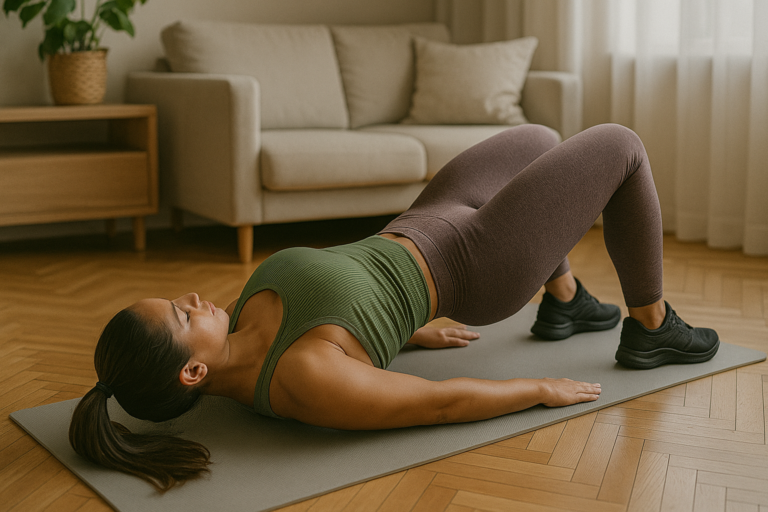
- Bridge holds (20–30 seconds)
- Clamshells (12–15 reps per side)
- Standing abductions (15–20 reps)
- Donkey kicks (12–15 reps)
- Banded walks (10–15 steps per side)
These warm-ups increase neural firing and blood flow, priming your muscles for better engagement.
A warm glute fires stronger, grows faster, and maintains tension longer.
2. Slow Down Every Rep
Rushing through reps destroys your MMC.
Your brain cannot connect if your body is moving too fast.
Slow reps improve:
- muscle control
- awareness
- tension
- precision
- stability
Aim for:
- 2–3 seconds on the lift
- 2–3 seconds on the lowering phase
- a 1-second squeeze at the top
Slow reps ensure your glutes stay in control every second.
3. Use Touch and Tactile Feedback
Touching the muscle you want to activate can dramatically improve neural signaling.
You can do this by:
- placing your hands on your glutes during exercises
- touching the side booty during abductions
- pressing lightly on the lower glute for RDLs
- giving the glutes a small tap before lifting
This tactile cue helps your brain locate the muscle, increasing activation.
4. Visualize the Muscle Working
Visualization is a proven element of MMC.
Before each rep:
- picture your glutes squeezing
- imagine the muscle fibers shortening
- see the shape contracting
This increases brain-muscle communication and helps you feel the exercise more deeply.
5. Add a Squeeze at the Top of Each Movement
The peak contraction is where the magic happens.
In exercises like hip thrusts, glute bridges, kickbacks, and donkey kicks, the top position is the strongest contraction.
Holding a 1–2 second squeeze at the top:
- intensifies the burn
- activates fast-twitch fibers
- teaches your brain the correct motion
- maximizes tension
Don’t rush the top. Own it.
6. Reduce Weight if Necessary
Many women lift too heavy too soon.
Heavier weights make it harder to feel the glutes because other muscles are forced to help.
Always prioritize feeling the muscle over lifting more weight.
Light or moderate weight with strong MMC is infinitely more effective than heavy weight with poor activation.
Quality > quantity
Control > load
Tension > ego lifting
7. Isolate Before You Compound
Compound exercises (squats, deadlifts, lunges) are important, but they are harder for beginners to feel in the glutes.
Isolations are best for building MMC:
- bridges
- kickbacks
- side-lying lifts
- frog pumps
- abductions
Perform a few isolation movements before your heavy compound lifts.
This primes the glutes to take charge during larger movements.
8. Check Your Pelvic Position
Pelvic tilt heavily affects glute activation.
Anterior pelvic tilt (APT) tends to shut off the glutes and activate the lower back.
Posterior pelvic tilt (PPT) during lifts helps engage glutes more easily.
Practice neutral or slightly posterior tilt in:
- hip thrusts
- squats
- bridges
- deadlifts
This ensures the glutes stay loaded, not the spine.
9. Train Barefoot or With Flat Shoes
Thick soles shift load into your toes and quads.
Training barefoot or in flat shoes helps:
- improve stability
- increase heel drive
- enhance glute activation
This is especially effective in hip thrusts, bridges, lunges, and RDLs.
10. Finish With High-Rep “Burnout” Sets
Mind-muscle connection thrives on repetition.
Burnout rounds push the glutes into deep activation. Examples:
- 30–40 frog pumps
- 30 bridge pulses
- 40 band abductions
- 20 donkey kicks per side
These create lasting tension and reinforce the neural pathway from brain to glute.
The Best Exercises for Building Mind-Muscle Connection
Here are the exercises that maximize MMC for glutes.
Best for Internal Glute Activation
- glute squeezes
- bridge holds
- kickbacks
Best for External Glute Activation
- abductions
- side-lying leg lifts
- clamshells
Best for MMC in Strength Movements
- hip thrusts
- RDLs
- reverse lunges
Master these, and you’ll feel your glutes in every leg movement — even walking.
How to Test Your Mind-Muscle Connection
Try this simple test:
Stand tall.
Contract your glutes without moving your legs.
Switch left glute on only.
Switch right glute on only.
If you struggle to isolate each side, your MMC is weak.
This article helps you fix that.
How Long Does It Take to Build MMC?
Everyone is different, but on average:
- 1 week: noticeable improvement
- 3–4 weeks: stronger glute contractions
- 6–8 weeks: glutes activate easily during all exercises
- 12+ weeks: MMC becomes automatic
This is the phase where glutes suddenly begin to grow faster.
Common Mistakes That Block MMC
Avoid the following:
- rushing reps
- lifting too heavy
- poor pelvic alignment
- using momentum
- skipping warm-ups
- focusing on completing reps rather than feeling them
Glute training is about quality control, not speed.
A Sample Mind-Muscle Booty Workout (No Equipment Needed)
Warm-Up Activation
- Glute squeezes: 30
- Bridges: 20
- Clamshells: 20 per side
Main Workout
- Hip thrusts: 3 × 12 (2 second squeeze at top)
- Reverse lunges: 3 × 10 per leg
- Side-lying leg lifts: 3 × 15
- Frog pumps: 2 × 30
Finisher
Bridge pulses: 40
Abductions: 40
This session deeply trains MMC while sculpting shape.
Final Thoughts: Mind-Muscle Connection Is the Glute Growth Multiplier
The difference between women who struggle with glute growth and women who transform their lower body is rarely genetics or luck.
It is awareness.
Precision.
Connection.
When you train with intention, your glutes finally respond.
The mind-muscle connection is a skill, and like any skill, it improves with attention and repetition. Once mastered, every glute exercise becomes more effective. Your booty grows faster, rounder, stronger, and more sculpted over time.
This is one of the most powerful fundamentals in your entire fitness journey — and now, you know exactly how to apply it.