Ankle Mobility & How It Helps Booty Training
Most women who start a booty-training journey focus on the obvious muscles: the glutes, the hamstrings, and sometimes the core.
But one of the least discussed, yet most important, components of strong, effective, shape-enhancing glute workouts is something far lower on the body:
Your ankles.
Limited ankle mobility is one of the biggest hidden reasons your booty workouts feel “off,” your squats sink into your quads, your deadlifts strain your lower back, and your glutes simply don’t grow the way they should.
Poor ankle flexibility changes the mechanics of nearly every lower-body movement, and without realizing it, you may be redirecting tension away from the glutes and into areas you don’t want to grow.
This article simplifies ankle mobility, explains why it matters, and gives you a set of practical strategies to improve it gradually and safely.
Once you understand the ankle-glute connection, you’ll never ignore this joint again.
Why Ankle Mobility Matters for Booty Training
Most people assume the ankle is only responsible for walking or running, but during strength training, it plays a major role in:
- squat depth
- hip hinge quality
- knee tracking
- pelvis positioning
- glute activation
- balance and stability
When ankle mobility is poor, everything above it compensates—knees collapse inward, hips shift forward, torso leans excessively, and the glutes disengage.
Here’s what happens in practical terms:
1. Poor ankle mobility = more quad dominance
If your heels cannot stay grounded during squats or lunges, your body shifts weight onto the toes.
This activates the quads far more than the glutes, leading to:
- “Why don’t I feel my booty?”
- “Squats only grow my thighs.”
- “My glutes don’t activate no matter what I do.”
The root cause is often the ankles.
2. Limited dorsiflexion = limited glute growth
Dorsiflexion refers to your ability to bring your toes toward your shin.
If this range is tight:
- your knees cannot move forward properly
- your hips cannot sit back safely
- your glutes cannot activate fully
Research shows that individuals with greater dorsiflexion achieve better squat mechanics, stronger glute activation, and more posterior-chain engagement.
3. Weak hinges = weak booty results
Exercises like Romanian deadlifts and hip hinges require stable ankles.
If the ankles collapse inward or outward, the entire movement shifts away from the glutes.
4. Better ankle mobility = more upward glute shape
With proper mechanics, glutes develop more evenly:
- upper-glute roundness
- under-glute lift
- overall firmness
Good ankle function enhances all lower-body biomechanics.
Signs Your Ankle Mobility Is Limiting Your Booty Growth
You may have ankle mobility issues if:
- Your heels lift during squats
- You feel lunges more in the quads than glutes
- Your knees collapse inward
- You struggle to keep balance during single-leg exercises
- Your shins stay very vertical during squats
- You cannot bend your ankle far without discomfort
- You can’t squat deeply without falling forward
- Your lower back overworks during hip-dominant exercises
If these sound familiar, ankle mobility may be one of the reasons your booty progress is slow.
Which Booty Exercises Require Good Ankle Mobility?
It affects nearly every major glute-building movement.
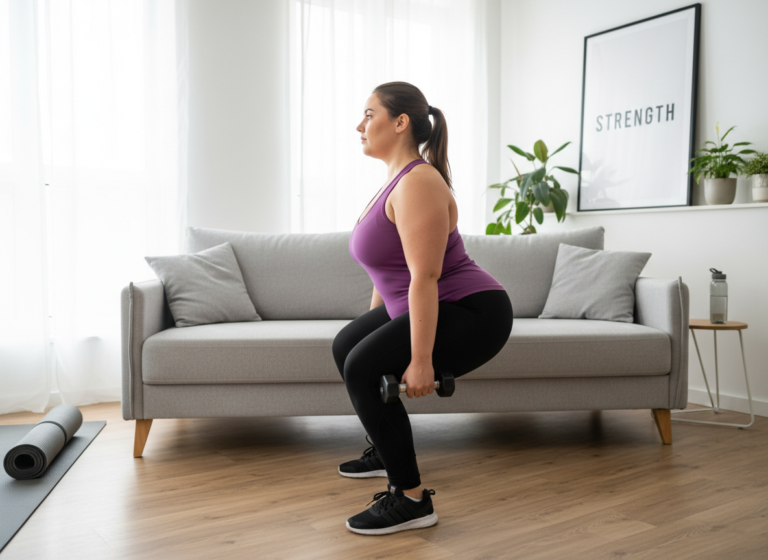
Squats
Low-bar and high-bar squats both demand ankle flexibility.
Without it, the torso tilts forward, glutes lose tension, and quads take over.
Lunges & Split Squats
Good ankle mobility allows:
- knee tracking
- hip drive
- controlled descent
- glute stretch
Without it, lunges feel unstable and knee-heavy.
Step-Ups
Restricted ankle range leads to poor knee alignment and less glute involvement.
Romanian Deadlifts
Even though RDLs primarily train hip mobility, poor ankles cause imbalance and collapse.
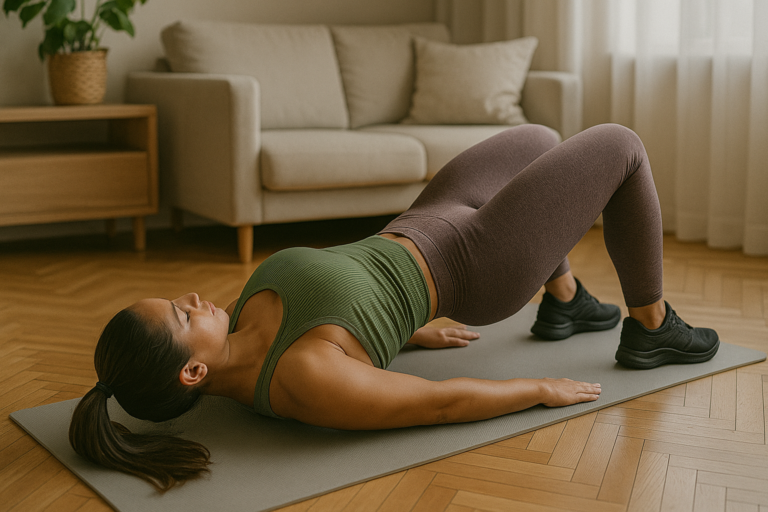
Glute Bridges & Thrusts
You don’t need extreme mobility here, but ankle tension affects foot stability and pressure distribution.
In short:
Better ankle mobility improves almost every glute exercise.
Worse ankle mobility reduces the effectiveness of nearly all of them.
The Science: How Ankles Influence Glute Activation
Biomechanically, ankle mobility affects glute recruitment through:
1. Tibial angle (shin angle)
The more the knee can travel forward safely, the deeper and more balanced the squat.
Deeper squat = deeper glute stretch = greater glute activation.
2. Foot stability
Flat feet or collapsing arches limit hip external rotation—the movement required for upper-glute and outer-glute engagement.
3. Hip-knee-ankle alignment
Alignment determines:
- load distribution
- glute activation
- knee pressure
- quad vs glute dominance
Good mobility = ideal kinetic chain.
How to Test Your Ankle Mobility
A simple test reveals everything.
The Wall Dorsiflexion Test
- Kneel in front of a wall
- Place one foot flat, toes 3–5 inches from the wall
- Try to touch your knee to the wall without lifting your heel
- If the heel lifts, reduce the distance and try again
If you cannot keep your heel down at 3 inches, your mobility is restricted.
Most people score between 1–2 inches—far below optimal.
The goal is 4 inches of controlled dorsiflexion.
How to Improve Ankle Mobility for Better Booty Gains
This section provides a three-part strategy:
- Stretch tight structures
- Strengthen weak muscles
- Improve motor control and stability
Follow these steps 3–4 times a week.
Part 1: Stretch the Tight Structures
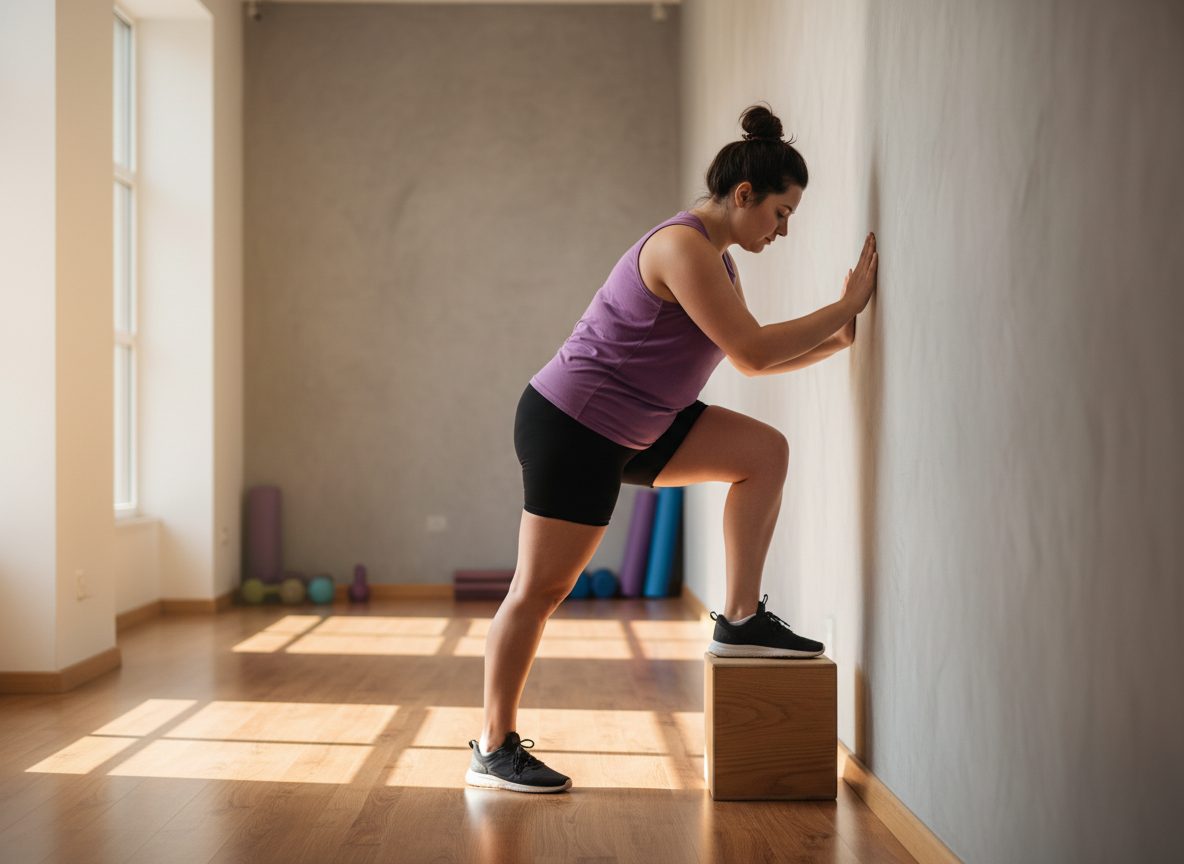
1. Calf Stretch (Gastrocnemius Focus)
- Stand facing a wall
- Keep back leg straight
- Lean into the stretch
- Hold 30 seconds per side
Tight calves block dorsiflexion.
2. Soleus Stretch (Deep Calf Muscle)
- Bend the back knee
- Lean forward
- Keep heel glued to the floor
- Hold 30 seconds per side
This targets the muscle most responsible for squat mechanics.
3. Achilles Tendon Stretch
Maintain the bent-knee position and gently pulse.
Avoid overstretching; slow progress is safest.
Part 2: Strengthen the Weak Links
Many ankle mobility problems come from weakness, not just tightness.
1. Tibialis Raises
- Stand with back against a wall
- Lift toes toward your shins
- Perform 15–20 reps
Strengthening the tibialis muscle improves knee tracking and ankle control.
2. Foot Arch Strengthening
Try towel scrunches with your toes.
Improved arch strength reduces knee collapse, improving glute activation.
3. Heel-to-Toe Balance Drills
Walking heel-to-toe enhances control and reduces instability.
Part 3: Mobilize the Joint Directly
1. Knee-Over-Toe Ankle Mobilization
- Place one foot forward
- Keep the heel down
- Gently push the knee forward
- 10–15 reps per side
This directly improves dorsiflexion.
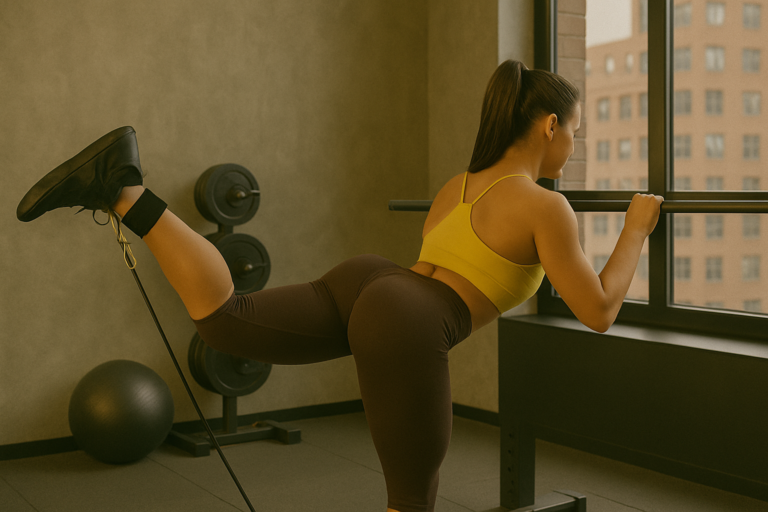
2. Banded Ankle Mobilization
If you have a resistance band:
- Wrap the band around the ankle
- Move forward into knee flexion
- Let the band pull the joint backward for better mechanics
This is one of the fastest ankle-mobility tools for athletes.
How Long Does It Take to Improve Ankle Mobility?
Beginners usually see noticeable change in:
- 7–10 days: better squat comfort
- 3–4 weeks: deeper range of motion
- 6–8 weeks: fully improved mobility
The key is consistency.
Even 5 minutes a day can transform your ankle function.
How Better Ankles Lead to Better Booty Shape
Here’s the direct connection.
1. Improved squat depth = better glute stretch
A deeper stretch recruits more glute fibers for growth.
2. Better balance = safer, stronger hinges
Less wobbling means better tension on the glutes.
3. Enhanced knee tracking = more glute medius activation
Good mechanics reduce knee caving, improving outer-booty shaping.
4. Reduced quad dominance
With proper ankle mobility, weight stays in the heel and midfoot—exactly where you want it for glute activation.
5. Better body alignment = better aesthetics
Strengthening the kinetic chain from the foot up improves posture and overall lower body symmetry.
Sample Warm-Up Routine for Booty Days (5 Minutes)
Use this before any glute workout.
- 20 tibialis raises
- 30-second soleus stretch
- 10 knee-over-toe mobilizations
- 20 glute bridges
- 15 banded abductions
- 10 hip circles
This warm-up improves mechanics, glute activation, and injury prevention.
Booty Exercises That Work Better With Improved Ankle Mobility
1. Bulgarian Split Squats
Deeper range, improved glute stretch, and better knee control.
2. Reverse Lunges
Better step depth and more glute engagement.
3. Squats and Squat Variations
Freer ankle movement = less quad dominance.
4. Deadlift Variations
More balanced foot pressure and hip hinge stability.
5. Step-Ups
Less wobbling and improved hip drive.
Better ankles equal better mechanics—and better booty shape.
Signs Your Mobility Work Is Paying Off
You will know it’s working when:
- your squats feel easier and deeper
- your glutes activate sooner in the workout
- you feel less pressure in your knees
- lunges feel more controlled
- your balance improves
- you stop leaning forward excessively
- you feel exercises more in the glutes and less in the quads
These improvements often appear before visible glute growth—but both are coming.
Final Thoughts: Small Joint, Big Booty Impact
Ankle mobility is often ignored because it is not glamorous or visually exciting, but it is one of the most powerful ways to improve your lower-body training.
A strong glute program is not just about reps or weights; it is about alignment, mechanics, and movement quality.
Good ankle mobility unlocks your body’s full potential to build:
- better glute shape
- more lift
- improved symmetry
- stronger hips
- balanced posture
- greater athletic performance
If you invest a few minutes each week into your ankles, your glutes will thank you.