Cultural Perspectives on Booty Shape
Booty shape has never been just a matter of muscle and genetics.
It has always lived inside culture—shaped by history, media, fashion, beauty standards, and the subtle (and not-so-subtle) messages women receive about their bodies.
But here’s the truth most fitness spaces rarely say out loud:
What you consider a “good booty” has far less to do with anatomy and far more to do with the cultural lens you grew up with.
Your idea of “too flat,” “too round,” “too big,” or “not big enough” didn’t come from your body.
It came from the world around you.
And understanding this is powerful—because once you see how cultural narratives shape your self-image, you can step out of them and step into your own confidence.
This article explores how booty beauty standards formed, how different cultures view curves, why these ideals shift over time, and how you can build body confidence that isn’t dependent on any external approval.
Let’s begin with a question many women never ask:
Who decided what the “perfect booty” looks like—and why?
Beauty Standards Are Not Universal
What you consider attractive today is not what was considered attractive 100 years ago.
And what is celebrated in one culture may be unremarkable—or even discouraged—in another.
Booty shape, size, and projection have fluctuated in desirability depending on:
- geography
- historical era
- economic conditions
- fashion trends
- media representation
- social values
This means no single standard is correct.
There is only context.
To understand how this shapes your confidence, it helps to step outside your present moment and explore how booty ideals have evolved.
A Brief Historical Tour of Booty Standards
Ancient Civilizations: Curves as Symbols of Fertility
In ancient African, Middle Eastern, and Mediterranean societies, fuller hips and buttocks were celebrated as signs of:
- fertility
- health
- prosperity
- strength
Figures like the Venus of Willendorf show that roundness was not just accepted—it was revered.
Victorian Europe: Voluminous Lower Bodies
During the 1800s, bustles and layered skirts were designed specifically to enhance the backside, giving the illusion of a lifted, rounded silhouette.
Curves were fashionable, luxurious, and associated with femininity.
Early 1900s: Slimness Becomes the Ideal
Industrialization and Hollywood influence created the preference for a thinner, flatter silhouette.
Curves were downplayed; fitness for aesthetics was not mainstream.
1990s to Early 2000s: Thin Dominates Western Media
Minimal curves were idealized.
Flat stomachs and slim hips filled magazines and television.
Booty-focused training was nearly nonexistent.
2010s to Present: Global Rise of Curves
With the influence of Afro-Caribbean, Latin American, African American, and Brazilian beauty cultures, plus social media visibility, the fuller, rounded booty became widely celebrated.
Hip dips, projection, roundness, and shape became topics of mainstream conversation.
Cultural Identity and Booty Shape
Different cultures view the booty in unique ways.
These differences matter, especially if you’re critiquing your own shape without realizing you’re evaluating yourself through someone else’s cultural lens.
Here are some examples:
Latin American & Afro-Caribbean Cultures
Booty shape is associated with:
- femininity
- sensuality
- pride
- cultural identity
Dancing styles, music, and social dynamics celebrate curves and movement.
Roundness and fullness are embraced without apology.
African & African Diaspora Communities
Larger hips and fuller booties are often seen as signs of:
- beauty
- vitality
- womanhood
- confidence
The celebration of curves predates modern social media influence.
East Asian Cultures
Historically, slender frames were more idealized, although contemporary trends have shifted.
Booty training is newer to mainstream culture and growing rapidly.
Western Europe & North America
These regions have had fluctuating beauty trends, heavily influenced by fashion, film, and media cycles.
While roundness is now celebrated, thinness dominated for decades.
Middle East & South Asia
Preferences vary, but many cultures appreciate curves while balancing modesty norms.
Full hips and glutes are often viewed positively within traditional beauty concepts.
What does all this mean?
There is no single, universal booty standard—and there never will be.
Beauty is cultural, not absolute.
How Culture Shapes Your Self-Image
Here’s something important:
You did not invent your insecurities.
You inherited them.
From:
- media
- magazines
- movies
- fashion
- music videos
- social media filters
- influencers
- family comments
- peer comparisons
And the messages weren’t always intentional.
Sometimes they were subtle, absorbed over years.
Some examples:
- If you grew up in a culture where curves are praised, you may feel pressure to be “curvier.”
- If you grew up in a culture valuing slim silhouettes, a natural curve may feel excessive.
- If your culture values modesty, you may feel self-conscious about having noticeable glutes.
- If your community celebrates curves, having a flat or square shape may feel out of place.
You are not wrong for absorbing these messages.
But you are also not required to keep them.
The Modern Influence: Fitness Culture, Social Media, and “Perfect Booties”
Instagram, TikTok, and fitness influencers have amplified booty ideals dramatically.
Three trends now dominate the cultural imagination:
- The “round from every angle” look
- The ultra-projected silhouette
- The no-hip-dip, upper-booty fullness aesthetic
These trends are not inherently bad.
But they are curated, filtered, posed, and often surgically enhanced.
Most importantly:
They are not realistic benchmarks for natural bodies.
If you compare your natural anatomy to:
- posing angles
- lighting
- pump-induced photos
- edited videos
- BBL-enhanced silhouettes
you will always feel behind.
Confidence comes not from matching an aesthetic but from understanding:
- what is natural for your body
- what is realistic to change
- what is not worth chasing
Understanding Your Natural Anatomy Is Liberation
Once you understand factors like:
- pelvis width
- muscle insertion points
- fat distribution
- torso-to-leg ratio
- hip structure
you realize something freeing:
Your booty shape is not wrong.
It is simply yours.
And your goal isn’t to force your anatomy into a template created by media.
Your goal is to enhance what you naturally have—shape, lift, tone, symmetry, and strength—without trying to erase your individuality.
Fitness should amplify your uniqueness, not erase it.
Confidence Strategy: Build Your Own Booty Standard
Here’s a mindset shift:
Instead of asking,
“Why doesn’t my booty look like hers?”
Ask:
“What kind of booty shape feels the most me?”
Your answer might be:
- firm and athletic
- soft and round
- lifted
- full
- toned without bulk
- curvy with balance
- natural shape with enhanced strength
There is no right choice.
What matters is your comfort, your identity, your confidence.
Exercises and Training That Honor Your Body, Not a Trend
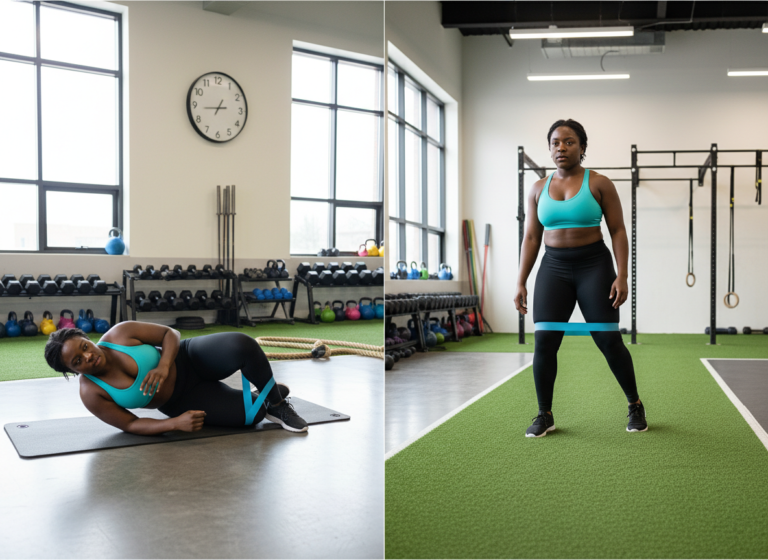
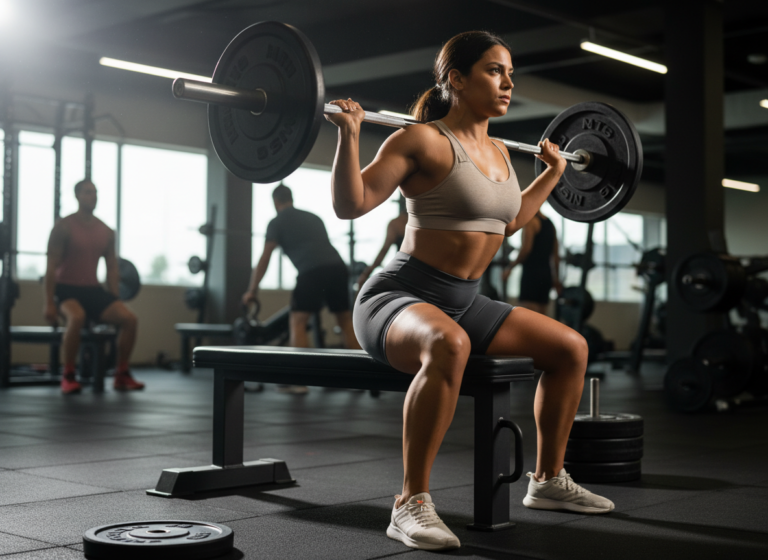
Booty training becomes empowering when you treat it as:
- functional strength
- posture improvement
- stability building
- athletic movement
- body appreciation
- controlled sculpting
not as punishment for not looking like someone else.
Here are examples of how you can reframe training:
Instead of
“I need to fix my hip dips,”
say
“I want to strengthen my side glutes.”
Instead of
“My butt is too flat,”
say
“I want to improve lift and muscle engagement.”
Instead of
“I don’t look like that influencer,”
say
“I’m training to feel powerful in this body.”
This mindset protects your confidence while still letting you pursue aesthetic goals.
The Power of Representation
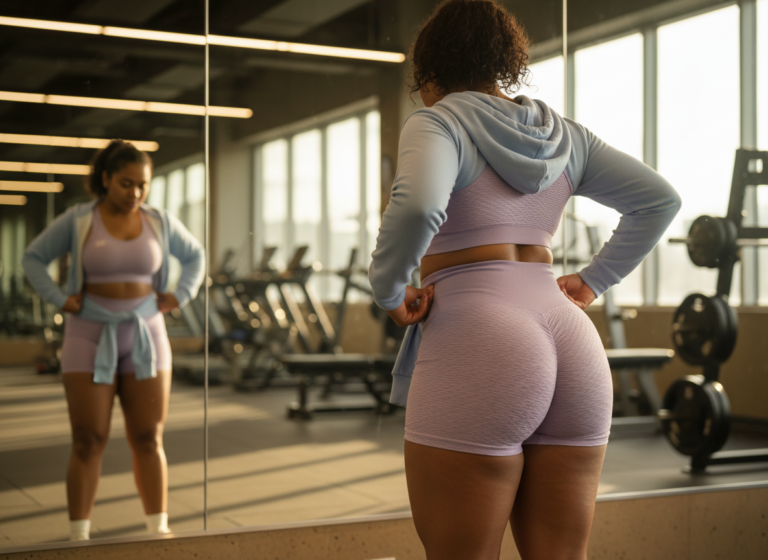
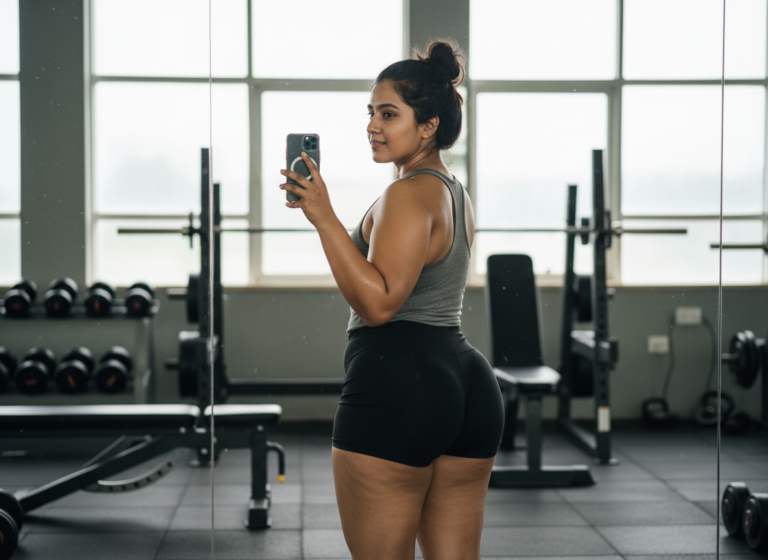
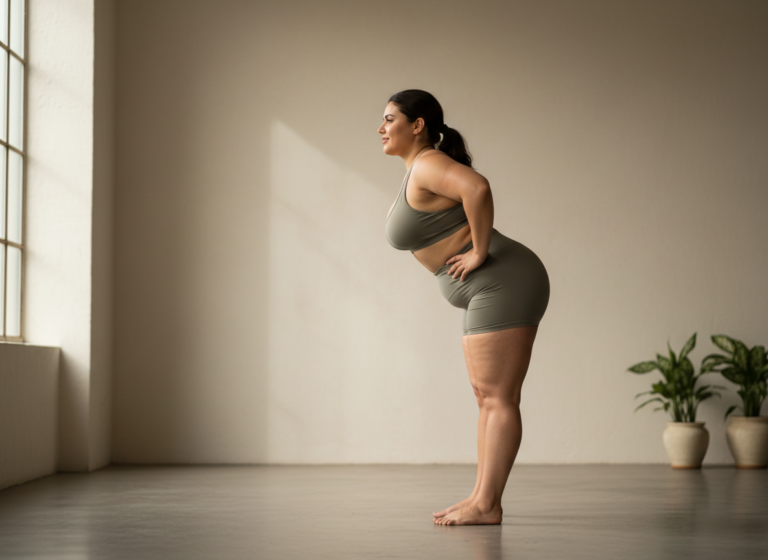
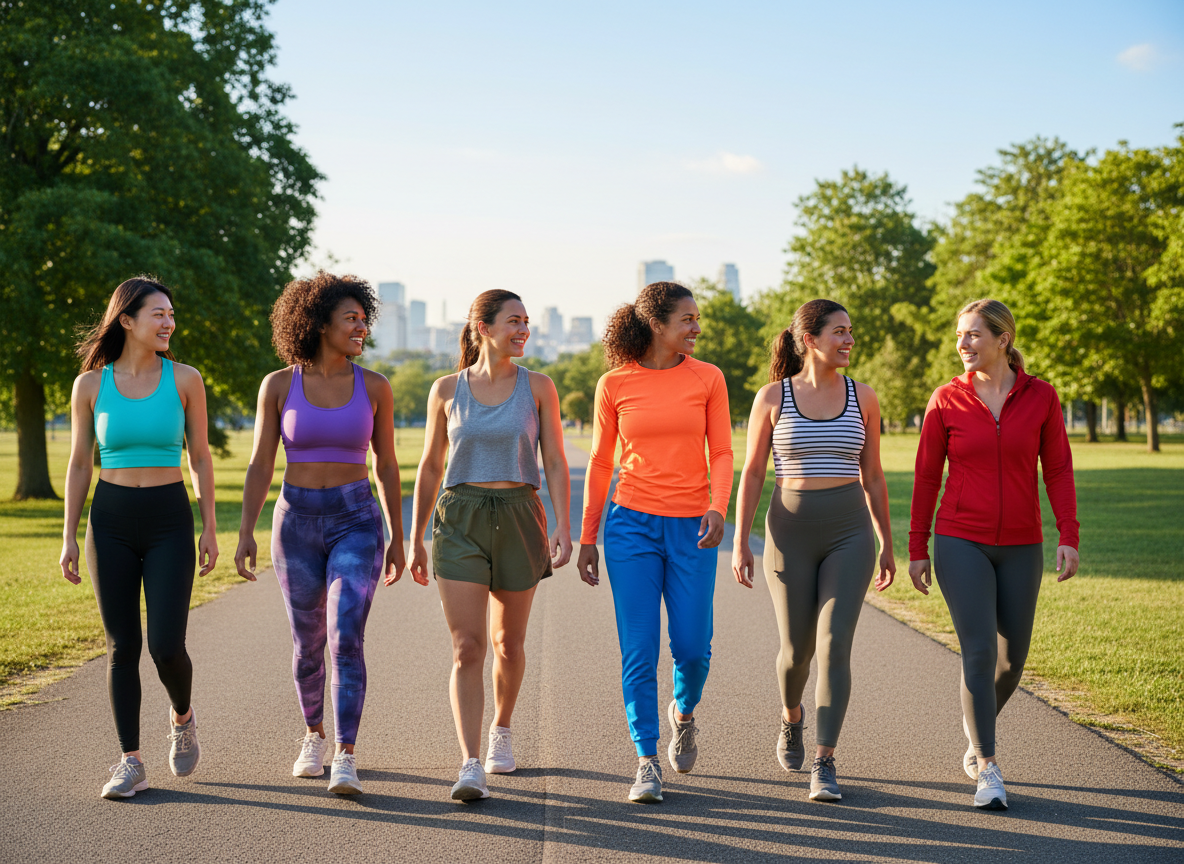
Seeing women of all shapes celebrated helps reshape your own confidence.
In recent years, there has been rising visibility of:
- round booties
- square booties
- V-shaped booties
- fuller hips
- hip dips
- athletic shapes
- postpartum shapes
- plus-size curves
This diversity reflects reality far better than filtered content.
The more representation expands, the more freedom women feel.
You deserve to be represented too.
How to Build Confidence Independent of Cultural Pressure
Here are tools that genuinely work:
1. Separate your goals from social expectations
Ask yourself:
“Do I want this because I like it, or because I think I should like it?”
2. Consume media consciously
Follow accounts that reflect body diversity, not unrealistic perfection.
3. Celebrate functionality
Your glutes help you walk, lift, stabilize, climb stairs, and protect your spine.
4. Use training as empowerment
Every rep is a vote for a stronger, more confident version of yourself.
5. Understand that bodies change over time
Age, hormones, stress, pregnancy, and activity levels all influence body shape.
And that is normal.
The Ultimate Lesson: Confidence Comes From Ownership, Not Comparison
Cultural ideals will continue to shift.
Trends will rise and fall.
Social media will exaggerate features that are naturally rare.
But your self-worth cannot be allowed to fluctuate with them.
The more you understand the history, cultural influence, and external pressures behind booty standards, the easier it becomes to detach from them.
You start to see beauty standards for what they are:
Narratives—not truths.
And once you recognize that, you reclaim authority over your own body image.
The goal isn’t to meet a standard.
The goal is to feel at home in your own shape—strong, confident, and grounded in your body’s uniqueness.
Final Thoughts: Embrace Your Shape, Train With Purpose, and Define Your Own Beauty
Booty shape is not a single-body ideal.
It is a spectrum—rich, diverse, influenced by culture, identity, heritage, and personal experience.
You don’t need to chase the dominant trend of the moment.
You don’t need to erase your natural structure.
You don’t need to compare yourself to filtered images of bodies that may not even exist in real life.
Your body tells a story shaped by your culture, ancestry, history, lived experiences, and strength.
Honor it.
Train it.
Celebrate it.
That is confidence.
That is empowerment.
That is freedom.