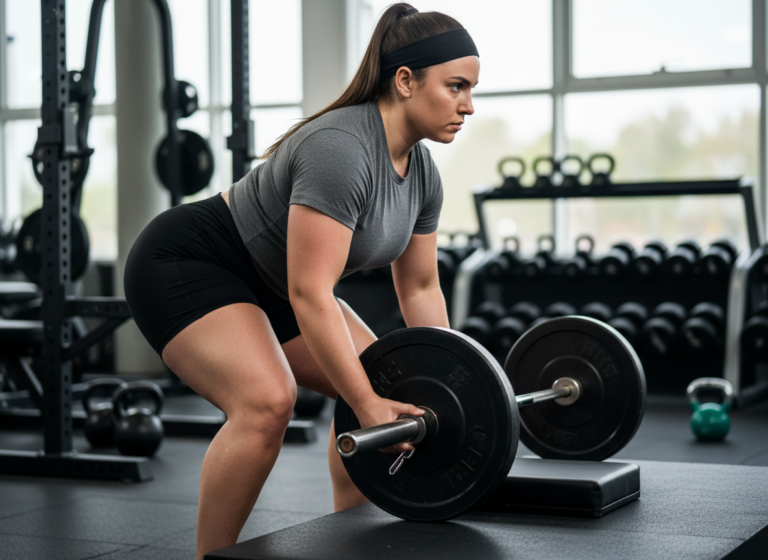
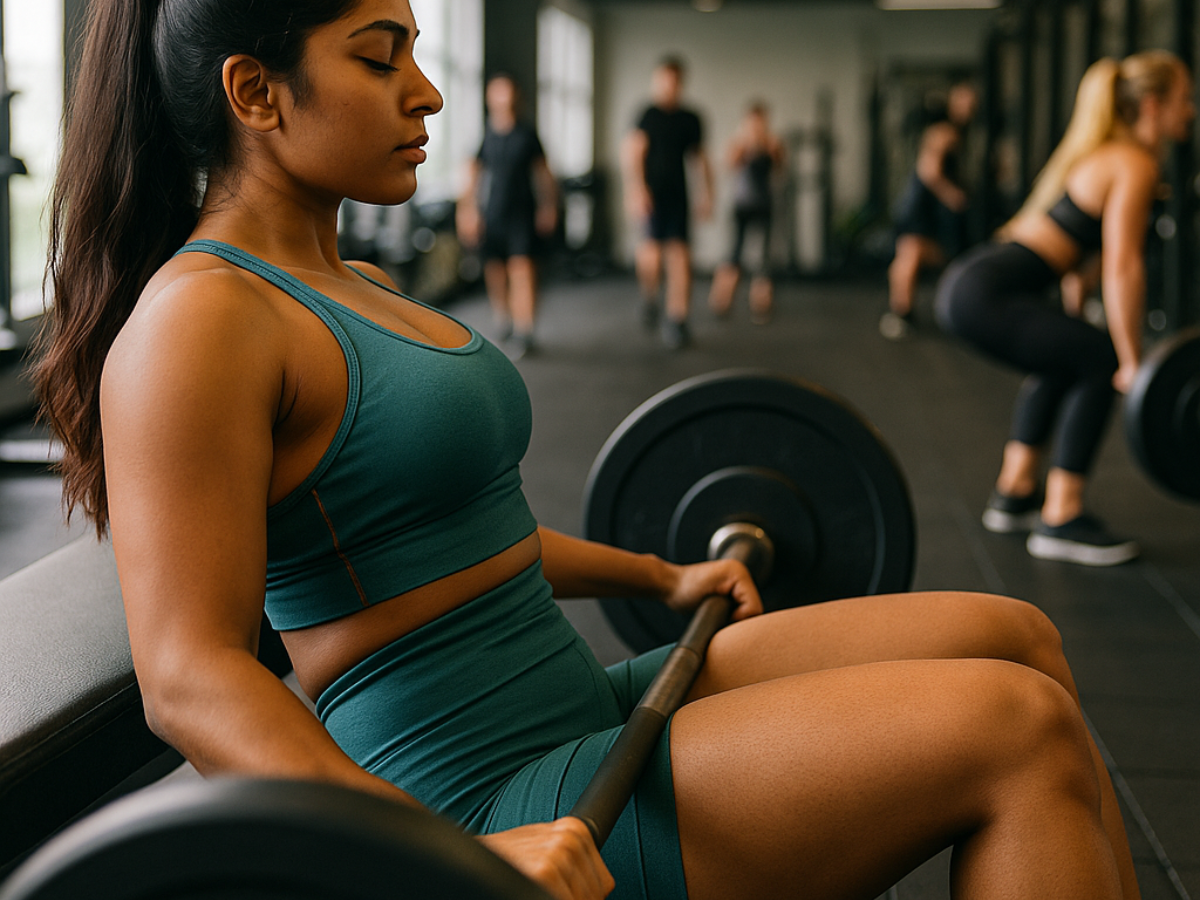
Booty Day Structure: Warm-Up to Cool Down
A great booty workout is not just a list of exercises.
It is a system, a structure, a sequence that prepares your body, activates your glutes, minimizes injury risk, maximizes performance, and ensures that every rep contributes to real shape change.
Most women underestimate how important structure is.
They jump straight into squats, lunges, or hip thrusts without understanding how the body should be primed before the heavy workload.
As a result, they:
- feel exercises in their quads instead of their glutes
- fatigue early
- compromise technique
- activate the wrong muscles
- struggle to see results
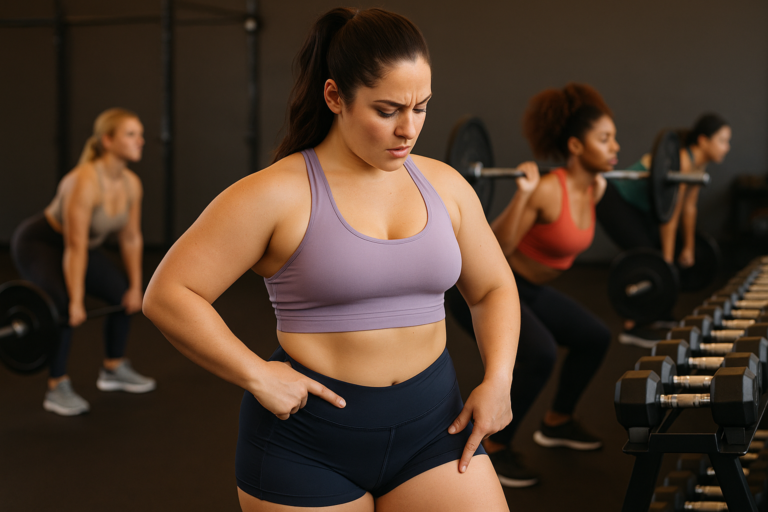
- experience soreness in the lower back rather than the glutes
A well-structured booty day solves all of this.
It transforms your workout from chaotic effort into a precision-designed glute session that targets all three glute muscles with intention:
- Gluteus Maximus for size and lift
- Gluteus Medius for side shape and stability
- Gluteus Minimus for hip function and rounding
This article walks you through the complete structure of a perfect booty day—from warm-up to activation, main lifts, accessory work, pump finishers, and cooldown.
By the end, you’ll have a blueprint you can follow every time you train glutes, whether at home or in the gym.
Why Structure Matters for Booty Growth
Glute training is unlike training the arms or shoulders.
The glutes are a large, complex muscle group surrounded by compensators.
If you do not structure your workout correctly, other muscles will steal the work.
A well-structured booty workout ensures:
- strong muscle activation
- correct movement patterns
- maximum tension in the glutes
- reduced quad dominance
- reduced lower-back stress
- faster strength gains
- better shape over time
Glutes respond exceptionally well when trained in a specific order:
- Warm-up
- Activation
- Strength/heavy work
- Hypertrophy (volume) work
- Isolation/pump finishers
- Cooldown and mobility
This is the structure elite trainers use for glute development.
Step 1: Warm-Up (3–5 Minutes)
Your warm-up should prepare your hips, core, and glutes for movement—not exhaust you.
The purpose is to:
- increase blood flow
- loosen restricted muscles
- wake up the nervous system
- prepare joints for range of motion
A proper warm-up reduces injury risk and improves performance significantly.
Recommended Warm-Up Sequence
1. Cat-Cow Stretch (30 seconds)
Mobilizes the spine and improves hip movement.
2. Hip Circles (10 each direction)
Targets hip joints and lubricates movement for abductions, bridges, and squats.
3. Marching in Place (20–30 seconds)
Elevates heart rate slightly.
4. Standing Leg Swings (10 each side)
Improves range of motion for hip hinges and lunges.
Warm-up is not activation.
Activation is the next step.
Step 2: Glute Activation (3–7 Minutes)
Activation is critical.
It switches on the glutes and ensures they are the primary movers during your lifts.
Most women have underactive glutes from prolonged sitting, posture imbalances, or weakness.
Activation reminds your brain to use the glutes, not the quads or lower back.
Activation Guidelines
- Low intensity
- High focus
- Slow and controlled
- No fatigue—just activation
Effective Activation Exercises
1. Glute Squeezes (20–30 reps)
Lie on your back and squeeze your glutes hard.
2. Banded Side Steps or Crabs (20 steps each direction)
Targets the glute medius.
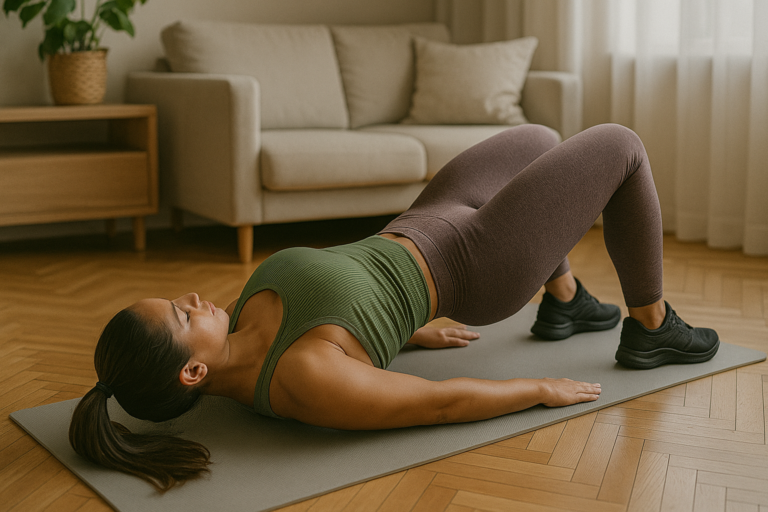
3. Glute Bridge Hold (20–30 seconds)
Builds mind-muscle connection.
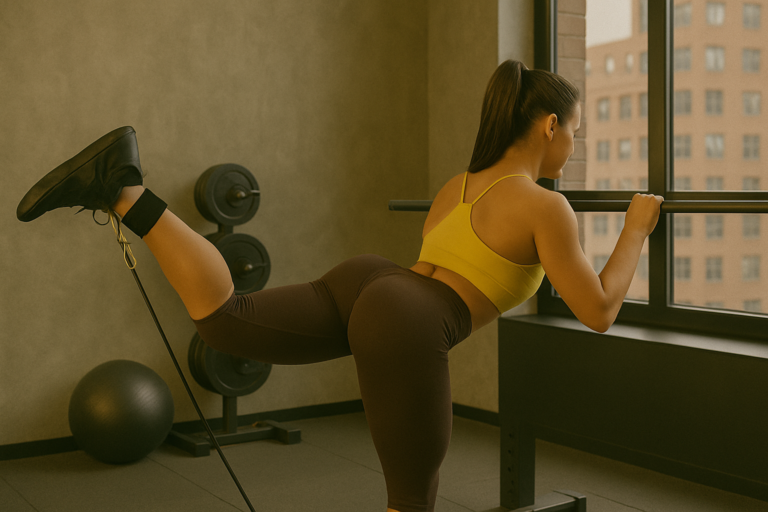
4. Donkey Kicks (10–12 each leg)
Prepares the gluteus maximus for hip extension.
5. Standing Abductions (10–15 per leg)
Warms up the upper and side glutes.
Activation should make you feel your glutes “switch on,” not burn out.
Step 3: The Main Lift (Strength Component)
This is the foundation of your booty day—the heavy or primary exercise of the workout.
It should be a compound glute-dominant movement that allows for the most load, tension, and muscle recruitment.
You should perform one main lift per booty day.
Best Main Lift Options
1. Hip Thrusts
The most effective glute exercise for strength and hypertrophy.
Target: Gluteus maximus for lift and projection.
2. Barbell Glute Bridges
Similar to hip thrusts, slightly shorter range of motion.
3. Romanian Deadlifts (RDLs)
Stretches the glutes under tension, building the under-curve.
4. Deficit Reverse Lunges
Increases range of motion for deeper glute activation.
Main Lift Structure
- 3–5 sets
- 5–10 reps for strength
- Slow eccentric (lowering phase)
- Explosive hip extension
Heavy sets first, while your energy is high.
Step 4: Secondary Lift (Hypertrophy Focus)
After your main lift, you target the glutes through a slightly lighter exercise that enhances muscle size and shape.
Hypertrophy lifts are moderately heavy, with higher reps.
Best Secondary Lift Options
- Bulgarian split squats
- Reverse lunges
- Single-leg hip thrusts
- Dumbbell RDLs
- Step-ups
These exercises develop the lower- and mid-glute regions, enhance symmetry, and increase overall volume.
Hypertrophy Structure
- 3–4 sets
- 8–15 reps
- Focus on form and stretch
- Keep rest moderate (60–90 seconds)
This section builds the foundation of booty shape.
Step 5: Abduction Work (Upper and Side Glutes)
Most women who want a lifted, round upper booty must train the abductor muscles.
These are responsible for hip rounding, side curves, and hip dip reduction.
Your booty day should always include at least one abduction exercise.
Best Abduction Movements
- Cable or banded abductions
- Side-lying leg lifts
- Curtsy lunges
- Lateral step-ups
- Fire hydrants
These exercises target the gluteus medius and minimus.
Abduction Structure
- 2–4 sets
- 12–20 reps
- Light to moderate resistance
- High control, low momentum
Abduction work gives the booty its signature rounded top.
Step 6: Isolation and Pump Work (The Burnout Phase)
The final working section of your booty day is the pump phase.
These exercises are high-rep, high-burn, and designed to fill the muscles with blood, promoting metabolic stress and boosting muscle growth.
These movements shape and tighten the glutes.
Best Pump Exercises
1. Frog Pumps
Builds projection and roundness.
2. Bridge Pulses
High time-under-tension for the glute max.
3. Donkey Kick Pulses
Isolates the under-glute region.
4. Kickback Variations
Creates deep contractions.
Pump Structure
- 2–3 exercises
- 20–30 reps each
- Minimal rest
- Continuous tension
This section turns a good booty workout into a great one.
Example Booty Day Structure (Complete Routine)
Here is a full example using the structure outlined above.
Warm-Up (3–5 minutes)
- Hip circles (10 each way)
- Cat-Cow (30 sec)
- Leg swings (10 per leg)
Activation (3–7 minutes)
- Glute bridge hold (20 seconds)
- Banded side steps (20 steps each direction)
- Donkey kicks (12 each leg)
Main Lift (Strength)
- Hip thrusts: 4 sets × 6–8 reps
Focus on controlled lowering and strong lockout.
Secondary Lift (Hypertrophy)
- Reverse lunges: 3 sets × 10 per leg
Long step back to emphasize glute stretch.
Abduction Work
- Side-lying leg lifts: 3 sets × 12–15
Control the lift and avoid swinging.
Pump Finisher
- Frog pumps: 2 sets × 25
- Bridge pulses: 2 sets × 20
Minimal rest for a deep burn.
Cooldown (2–4 minutes)
- Pigeon stretch (30 sec per side)
- Hamstring stretch (20–30 sec)
- Hip flexor stretch (20–30 sec)
Step 7: Cooldown and Stretching (2–4 Minutes)
Stretching returns the muscles to a relaxed state, reduces stiffness, and supports recovery.
Key Stretches
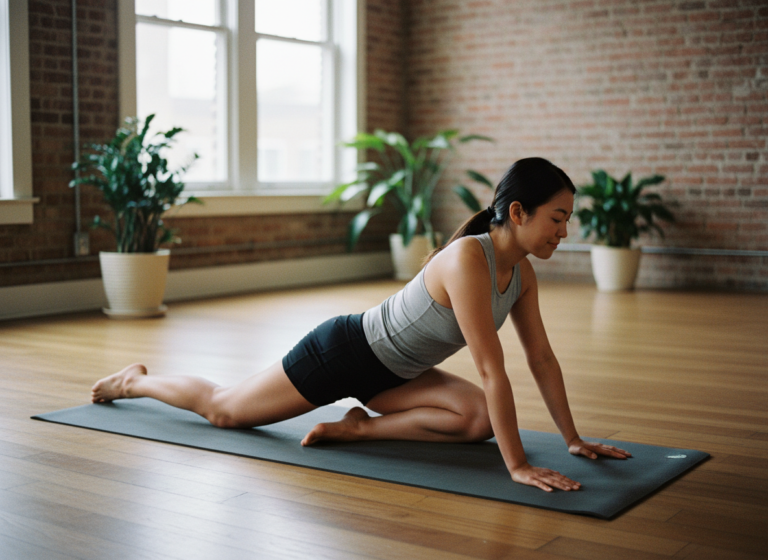
1. Pigeon Pose (30 sec per side)
Deep glute stretch that releases the piriformis and upper glutes.
2. Hip Flexor Stretch (20 sec per side)
Counteracts sitting and helps pelvic alignment.
3. Hamstring Stretch (20–30 sec)
Reduces pulling tension on the lower back.
4. Figure-Four Stretch
Targets the gluteus maximus after heavy work.
A proper cooldown improves recovery between sessions.
What a Well-Structured Booty Day Achieves
A good structure ensures you hit every glute region:
Lower Glutes
- Hip thrusts
- RDLs
- Lunges
- Bridges
These lifts create lift and firmness.
Upper Glutes
- Abductions
- Side-lying lifts
- Curtsy lunges
These build the rounded upper curve.
Full-Glute Engagement
- Frog pumps
- Pulses
- Step-ups
These enhance total shape and muscle tone.
This balanced approach prevents overtraining certain areas and neglecting others.
Common Mistakes When Structuring Booty Day
Avoid these to get maximum results:
1. Skipping activation
This leads to quad dominance and lower-back fatigue.
2. Doing the wrong exercises first
Squats before hip thrusts reduces glute output.
3. Too many random exercises
You don’t need 15 movements—just the right ones in the right order.
4. No progressive overload
If you do the same reps and weights weekly, results stall.
5. Poor tempo control
Glutes grow with tension, not rushed reps.
6. No abduction work
This is essential for women wanting roundness.
7. Skipping the cooldown
This limits flexibility and long-term mobility.
A structured session is more effective than a long session.
How Often Should You Use This Structure?
For most women:
- Beginners: twice per week
- Intermediate: two to three times per week
- Advanced: three to four times per week
Always rest at least one day between heavy glute days.
Final Thoughts: Structure Is the Secret Behind Every Great Booty Workout
A booty transformation does not happen through random workouts.
It is the result of following a structured, consistent, strategic plan that activates the right muscles, challenges them intelligently, and finishes with targeted pump work.
When you follow this structure:
- your glutes activate properly
- your lower back stops overworking
- you feel exercises exactly where you should
- your shape improves faster
- your strength increases
- your entire lower body becomes more stable
- you build roundness, lift, and firmness with purpose
The perfect booty day is not about doing more.
It is about doing the right things in the right order.
Using this blueprint will elevate every booty session you perform from today onward.