
Booty & Lower Back Pain: How Strong Glutes Help
Lower back pain is one of the most common issues women face today.
It affects students, office workers, new moms, athletes, gym beginners, and even people who consider themselves fit.
But here’s the part most women never hear:
A weak booty may be the real reason your lower back hurts.
The glutes are not just aesthetic muscles.
They are some of the most important stabilizers in the entire body.
When they are strong, your posture improves, your hips stay aligned, and the lower back can finally relax.
When they are weak, the lower back is forced to do jobs it was never designed to do.
This article breaks down the glute–lower-back relationship in clear, simple terms, explains why booty weakness leads to pain, and outlines how strengthening your glutes can dramatically change the way your entire body feels.
By the end, you’ll understand why glute training is one of the most powerful forms of back-pain therapy.
Why the Glutes Matter for a Healthy Back
The glute muscles form the powerhouse of your lower body.
They help you walk, stand, climb stairs, run, lift, bend, carry, stabilize, and even maintain spinal alignment.
When they are strong, they:
- protect the lower back
- reduce pressure on the spine
- support the hips
- help you move with good posture
- absorb shock when you walk or exercise
When they are weak, everything becomes harder.
Your body starts compensating in dangerous ways.
Let’s make this simple:
The glutes are supposed to generate force.
The lower back is supposed to stabilize, not push or pull.
When the glutes fail, the lower back takes over.
This overload leads to tightness, chronic pain, poor movement, and even long-term injury.
The Muscles Involved: Understanding the Glute Trio
When we say “glutes,” most people think of one big muscle.
In reality, the booty is made of three key muscles:
1. Gluteus Maximus
The largest muscle in the body.
Responsible for hip extension, power, climbing stairs, lifting, and giving your booty shape and fullness.
2. Gluteus Medius
Located on the outer hip.
This muscle keeps your pelvis stable when walking, squatting, and standing on one leg.
Weakness here directly causes hip drop and lower-back strain.
3. Gluteus Minimus
A deep stabilizer that controls internal rotation and hip stability.
All three muscles contribute to lower-back health by absorbing load and maintaining alignment.
If even one of them is weak, your spine feels the impact.
How Weak Glutes Cause Lower Back Pain
There are four primary ways weak glutes lead directly to pain in the lumbar spine.
1. Compensation: The Lower Back Does the Glutes’ Job
When glutes are weak, the body immediately looks for other muscles to help complete movements.
Those helpers usually are:
- lower back muscles
- hamstrings
- hip flexors
- quadriceps
The biggest problem is compensation from the erector spinae muscles in the lower back.
These muscles are not designed to produce heavy force or power.
Their job is stabilization, not propulsion.
When they start working harder than the glutes, they become:
- tight
- fatigued
- inflamed
- painful
This is the classic “my lower back always hurts after leg day” scenario.
2. Anterior Pelvic Tilt (APT)
This is one of the most common posture problems in women.
APT occurs when:
- the pelvis tilts forward
- the lower back arches excessively
- the stomach protrudes
- the glutes flatten and shut down
Weak glutes and tight hip flexors are the main cause.
This posture dramatically increases compression in the lumbar spine.
Strengthening the glutes is one of the best cures for APT because it helps pull the pelvis back into neutral alignment.
3. Poor Hip Stability
Your hips are supposed to guide movement.
When glutes are weak, the hips lose stability and the lower back must work harder to keep you upright.
This often leads to:
- lower-back tightness
- SI joint discomfort
- uneven hips
- gait problems (walking imbalances)
- pain when standing too long
Women often describe this feeling as “my back feels tired,” which is a classic sign of glute weakness.
4. Reduced Shock Absorption
Every step you take puts force into the body.
Strong glutes absorb this force.
Weak glutes force the spine to absorb it instead.
Over time, this leads to:
- disc compression
- stiffness
- muscle spasms
- pain when walking or exercising
If you walk frequently but feel pain in the lower back rather than fatigue in the glutes, this is a clear sign your booty muscles are not working properly.
Signs Your Back Pain Is Caused by Weak Glutes
If you experience any of these, glute weakness is likely part of the problem:
- Your lower back hurts after standing or walking
- You barely feel your glutes during workouts
- Your quads take over leg exercises
- You cannot feel your booty contract during hip thrusts or bridges
- You have hip or knee pain alongside back pain
- You have poor posture or an exaggerated lower-back arch
- You sit most of the day
- You struggle with balance or single-leg stability
- Your hips sway during walking
The good news: these problems are reversible with proper glute strengthening.
Why Strengthening Your Glutes Reduces Lower Back Pain
When the glutes get stronger, they take back the role they are designed to play.
They:
- generate force
- stabilize the pelvis
- control hip movement
- reduce pressure on the lower spine
- support your posture
- create balanced movement
In essence, the glutes become the “engine,” and the lower back becomes the “support system” again.
This alignment makes movement efficient and pain-free.
How to Train the Glutes to Reduce Back Pain
The key is to choose exercises that:
- activate the glutes without overloading the spine
- strengthen them progressively
- avoid excessive arching or back extension
- target all three glute muscles
- support better posture
Below is a full breakdown of the best exercises for lower-back relief through glute strengthening.
The 8 Best Glute Exercises for Lower Back Pain Relief
Each of these exercises builds strength safely without stressing the lumbar spine.
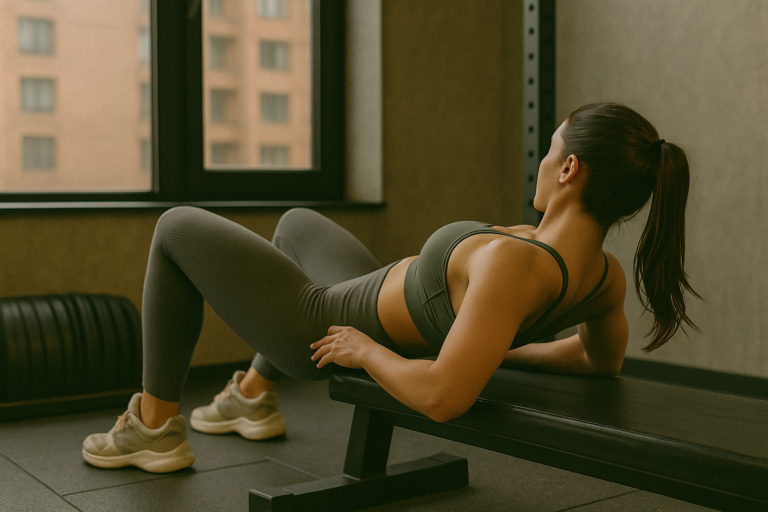
1. Glute Bridges
One of the safest, most effective ways to activate and strengthen the glutes without lower-back involvement.
Tips:
- Keep ribs down
- Avoid over-arching
- Push through heels
Start with 3 sets of 12–15 reps.
2. Hip Thrusts
More powerful than glute bridges because they activate the glutes throughout a larger range of motion.
Tips:
- Tuck pelvis slightly
- Keep chin tucked
- Squeeze hard at the top
Start with bodyweight and progress to loading later.
3. Clamshells
This exercise targets the gluteus medius and minimus, the stabilizing muscles that protect your lower back.
Tips:
- Do not rotate your hips
- Lift slowly
- Focus on the outer glute squeeze
3 sets of 15–20 reps per side.
4. Side-Lying Leg Lifts
Simple but incredibly effective for pelvic stability and hip alignment.
Tips:
- Keep hips stacked
- Lift with control
- Don’t swing the leg
3 sets of 15 per side.
5. Romanian Deadlifts (Light Weight or No Weight)
Strengthens the posterior chain while teaching proper hip hinge mechanics.
Tips:
- Keep spine neutral
- Push hips back, not down
- Contract glutes at the top
3 sets of 10–12 reps.
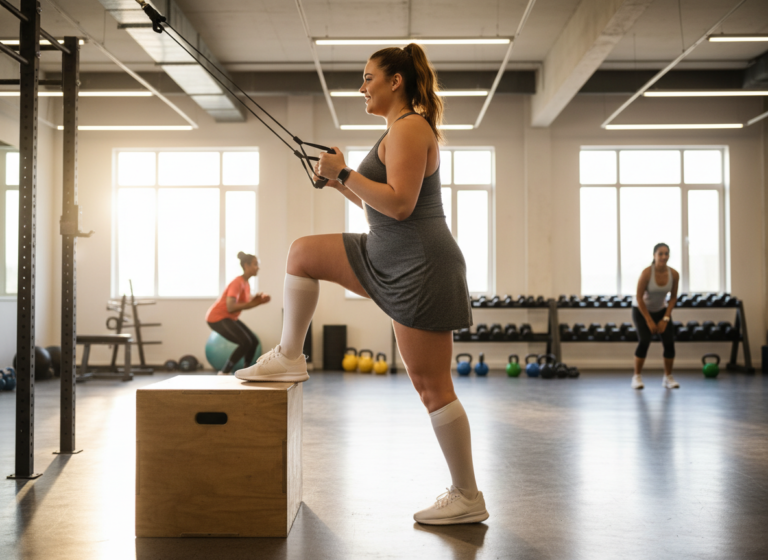
6. Step-Ups
A functional movement that improves hip stabilization and single-leg strength.
Tips:
- Use a low step when starting
- Drive through the heel
- Keep your torso tall
3 sets of 8–10 reps per leg.
7. Donkey Kicks
Fantastic for isolating the gluteus maximus without stressing the spine.
Tips:
- Keep hips square
- Press with the glute, not the lower back
- Move slowly and avoid arching
3 sets of 12–15 reps.
8. Glute Marches (Bridge or Hip Thrust Position)
This exercise challenges stability and forces your glutes to fire independently, improving balance and hip control.
Tips:
- Keep pelvis level
- Lift legs slowly
- Avoid rocking
3 sets of 10 per leg.
A Beginner-Friendly Routine for Relief and Strength
Here’s a safe, balanced routine that strengthens glutes while protecting the back.
Warm-Up (2 minutes)
- 10 glute squeezes
- 20 bridges
- 10 clamshells each side
Main Workout
- Hip Thrusts — 3 × 12
- Clamshells — 3 × 15
- Side-Lying Leg Lifts — 3 × 15
- Romanian Deadlifts — 3 × 10
- Donkey Kicks — 3 × 12
- Glute Marches — 2 × 10 each leg
Cooldown
- Hip flexor stretch
- Hamstring stretch
- Deep glute stretch
Perform this routine 2–3 times per week.
How Long Until You Feel Relief?
Everyone is different, but typical timelines look like:
- 1 week: reduced tightness, better activation
- 2–3 weeks: noticeable decrease in back discomfort
- 4–6 weeks: major improvement in posture and movement
- 8–12 weeks: long-term relief and visible glute shaping
Strength takes time, but progress begins quickly.
Lifestyle Habits That Reduce Back Pain and Support Glute Strength
Training alone isn’t enough. You need to change daily habits too.
1. Stand and walk more
Prolonged sitting weakens the glutes and tightens hip flexors, directly increasing back pain.
Take standing breaks every hour.
2. Stretch tight hip flexors
These muscles pull the pelvis forward and overload the spine.
Add daily hip flexor stretching for best results.
3. Avoid excessive lower-back arching
Many women arch their backs when standing, posing, or lifting.
This increases lumbar stress.
Instead, practice neutral pelvis alignment.
4. Strengthen your core
A stable core supports the glutes and improves movement mechanics.
Focus on:
- dead bugs
- planks
- bird-dogs
5. Sleep well
Muscles recover and grow during sleep, not during the workout.
Aim for quality rest to reduce inflammation and pain.
When to Seek Professional Help
If your lower back pain:
- shoots down the leg
- involves numbness or tingling
- worsens over weeks
- affects bladder or bowel control
- severely limits movement
Seek medical evaluation to rule out serious conditions.
For muscular or functional pain, glute strengthening is usually one of the most effective long-term solutions.
Final Thoughts: Strong Glutes = A Strong, Pain-Free Back
Your booty is more than an aesthetic feature.
It is one of the most important support systems in your body.
When your glutes are strong, your entire body moves differently:
- hips stay aligned
- posture improves
- the lower back relaxes
- movement becomes efficient
- pain decreases
- mobility increases
If you struggle with lower back pain, glute training is not optional.
It is a necessity.
Build your booty, and you will build a healthier, happier, stronger spine.
Your future self will thank you.