Cardio Without Killing Your Booty
Cardio has always had a complicated relationship with booty training.
You hear one trainer say, “Do more cardio for fat loss,” and the next warn, “Cardio will shrink your butt.”
Some swear by the treadmill, others avoid it entirely.
And somewhere in between, thousands of women wonder:
How do I keep my heart healthy, lose fat, and stay conditioned without sacrificing my hard-earned glute gains?
The good news is this:
You can absolutely enjoy cardio without flattening your booty.
You simply have to understand the science behind glute growth, the types of cardio that preserve muscle, and how to balance training intensity with recovery.
This article breaks everything down—why some cardio reduces glute mass, which forms of cardio actually support booty goals, and how to create a cardio plan that burns fat while maintaining (or even enhancing) your curves.
Why Cardio Gets Blamed for “Booty Loss”
Women often notice that when they increase cardio, their glutes:
- look flatter
- lose projection
- feel softer
- appear less round
- lose definition
But cardio is not the villain.
Here’s what’s really happening:
1. Muscle Loss from Excessive Calorie Burn
Cardio burns calories fast—especially steady-state cardio like long-distance running.
If you are in too large of a calorie deficit, your body begins using muscle tissue for energy.
The glutes, being large muscles, are among the first areas to shrink.
2. Too Much Endurance Training, Not Enough Strength Training
Endurance workouts signal the body to become efficient and reduce unnecessary muscle weight.
In contrast, booty growth requires hypertrophy—the exact opposite training style.
If endurance training dominates your weekly routine, your glutes can lose fullness.
3. Not Eating Enough Protein
Running or cycling without proper protein intake means the muscles cannot repair or grow.
Your body prioritizes energy over muscle building.
4. Overtraining and Under-Recovery
High-cardio weeks increase cortisol (stress hormone).
Chronic cortisol leads to:
- muscle breakdown
- fat storage around the hips and waist
- weakened glute contractions
This makes the butt appear smaller or less lifted.
5. Poor Glute Activation
If your glutes are already underactive, cardio further contributes to quad dominance.
The thighs grow stronger while the booty falls behind.
These problems are not from cardio itself—they’re from imbalanced training.
And when you correct the balance, cardio becomes a powerful tool for your booty journey.
The Science: How Cardio Affects Glutes
To keep this simple:
- Muscle is built through resistance training.
- Cardio burns energy and improves heart health.
- You lose glutes when cardio outweighs resistance stimulus.
Meaning:
You do not lose glute mass if you train your booty consistently and fuel your body correctly.
You only lose booty when cardio replaces booty training or when you are in a chronic calorie deficit.
The key is choosing cardio forms that support—not compete with—glute hypertrophy.
Let’s look at the best options.
Best Types of Cardio That Do NOT Kill Your Booty
These forms of cardio actually work well with glute growth.
Some even enhance it.
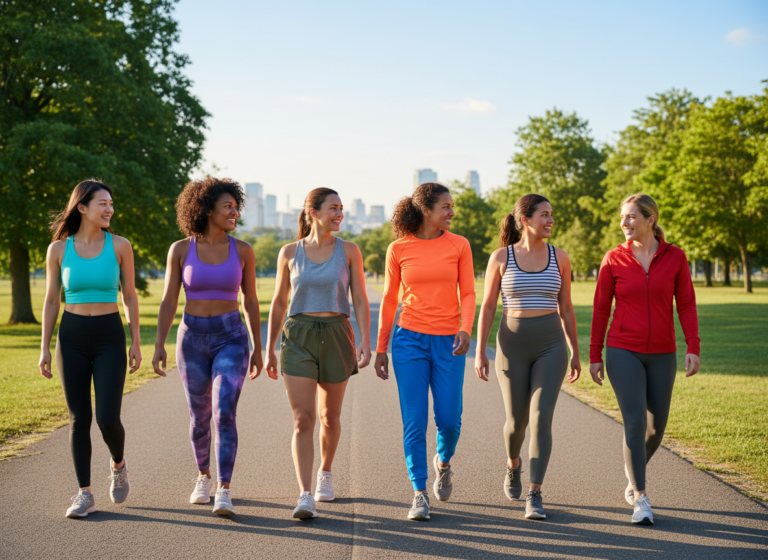
1. Incline Walking (The Glute Saver)
Walking on an incline activates the glutes far more than flat walking.
It improves booty tone while keeping intensity moderate.
Benefits:
- minimal muscle loss
- excellent fat burning
- strengthens glutes and hamstrings
- low impact
- great for beginners
Best incline range: 8–15 percent
Time: 20–30 minutes
Incline walking is arguably the best cardio choice for women focused on glute goals.
2. Stair Climbing
Stair machines, stadium stairs, or actual staircases all emphasize glute extension.
Benefits:
- direct glute activation
- excellent calorie burn
- no flattening effect
- strong lower-body stimulus
Do not hold onto the rails—this shifts effort into the quads.
Keep your torso slightly forward to recruit the glutes.
3. Hiking
Hiking is essentially outdoor incline walking, with even more glute activation because of terrain variation and elevation.
Benefits:
- natural movement pattern
- engages the entire posterior chain
- extremely good for glute endurance
- enjoyable and sustainable
Hiking is perfect if you want a cardio workout that actually strengthens your booty instead of shrinking it.
4. Cycling with Proper Glute Engagement
Cycling can either shrink your booty or help build it—depending on how you ride.
Focus on:
- pushing through your heels
- increasing resistance
- maintaining a hip hinge position
Avoid long, slow-distance rides at very low resistance.
Benefits:
- excellent fat burn
- moderate glute activation when resistance is high
- low impact on joints
A spin bike set to medium-to-high resistance is fantastic for glute tone.
5. Sprints (Short, Not Long-Distance Running)
Sprinters are known for powerful, rounded glutes.
Distance runners, not so much.
Why?
Sprinting uses explosive glute contraction.
Long-distance running uses repetitive low-intensity motion that leads to muscle loss.
Benefits of sprinting:
- maximum glute activation
- minimal muscle loss due to short duration
- builds athletic curves
- improves speed and power
Perform no more than 1–2 sprint sessions per week.
6. Low-Impact HIIT
High-intensity interval training that includes glute-focused movements (like step-ups, hip hinges, or jumps) is excellent for conditioning.
However:
- keep sessions under 20 minutes
- limit HIIT to 2 times per week
- avoid excessive jumping if protecting joints
HIIT is effective as long as it does not interfere with strength training recovery.
7. Swimming
Swimming is full-body, low-impact, and muscle-preserving when done moderately.
Benefits:
- total body conditioning
- minimal muscle loss
- great for active recovery
- improves posture and mobility
Not glute-specific, but harmless for glute growth goals.
Cardio That May Shrink Your Booty (If Done Excessively)
These activities aren’t bad, but they need caution:
1. Long-Distance Running
Repeated low-intensity endurance training signals your body to reduce lower-body muscle mass to conserve energy.
Risk Zone:
- more than 3 long-distance sessions per week
- fasted running
- low protein intake
If you enjoy running, keep distances short or moderate and complement with glute strength training.
2. Very High-Volume Cardio
More than 45–60 minutes of cardio per session increases the likelihood of muscle breakdown, especially when combined with inadequate nutrition.
3. High-Frequency Jumping Workouts
Plyometrics are useful, but excessive jumping fatigues the glutes and may reduce strength training performance.
4. Spin Classes with Low Resistance
Riding fast with low resistance becomes quad-dominant.
This is common in choreographed spin classes.
Use enough resistance to activate glutes properly.
The Formula for Keeping Your Booty While Doing Cardio
Booty preservation revolves around four pillars:
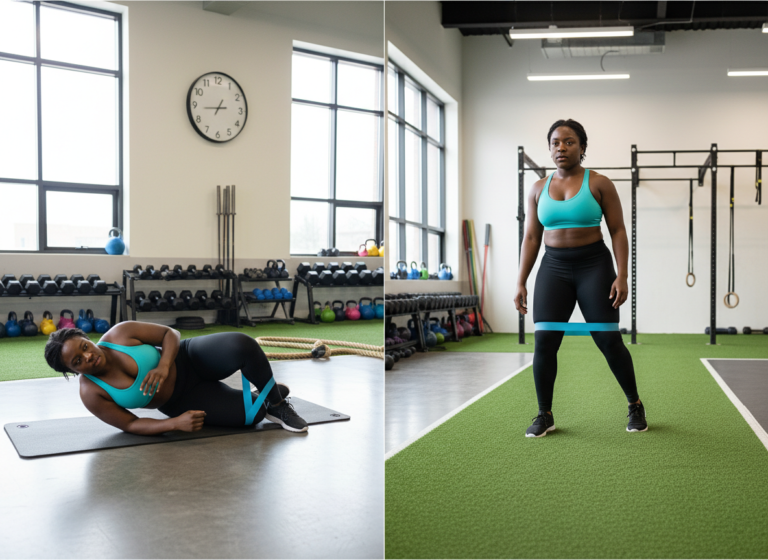
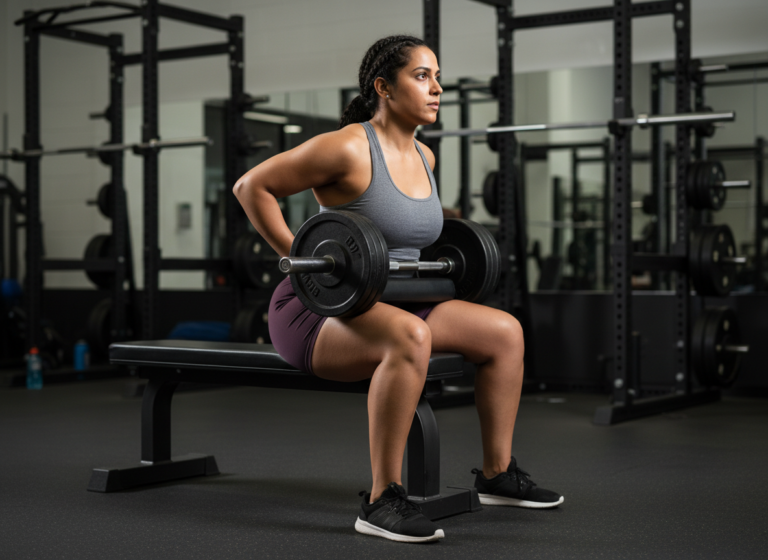
1. Prioritize Glute Strength Training (2–3 Days Per Week)
If you want to build or maintain glutes, you must consistently train:
- hip thrusts
- RDLs
- bridges
- lunges
- abductions
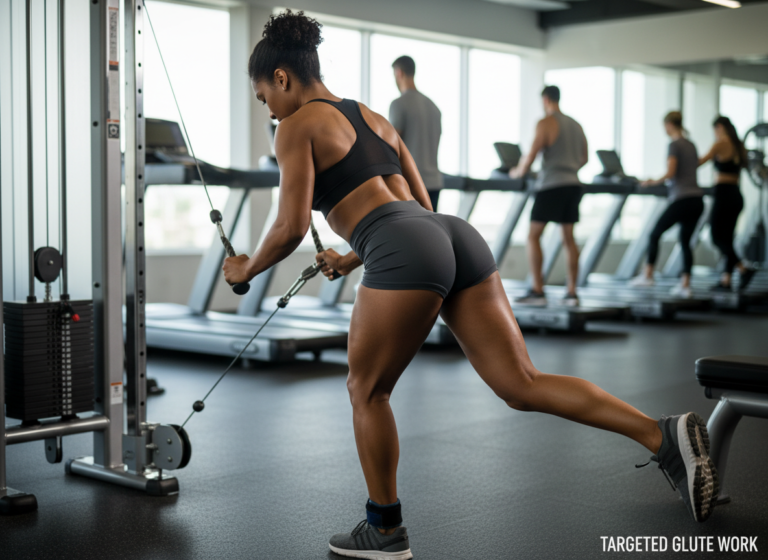
- kickbacks
If cardio is taking time away from these movements, you will see flatness.
2. Limit Cardio Frequency and Duration
Guideline for booty-focused women:
- 2–3 cardio days per week
- 20–30 minutes per session
- moderate intensity
This supports fat loss while protecting glute mass.
3. Eat Enough Protein
Protein is essential for preventing muscle loss.
Aim for:
- 0.8–1 gram per pound of body weight
- Protein in every meal
- High-quality sources (eggs, turkey, tofu, chicken, salmon, beans, Greek yogurt)
Without adequate protein, glutes cannot grow or stay full.
4. Avoid Chronic Calorie Deficit
A slight calorie deficit is safe for fat loss.
A large deficit accelerates muscle breakdown.
Signs your deficit is too aggressive:
- your glutes look smaller
- your face looks sunken
- your energy drops
- you feel weak during lower-body workouts
- your pumps disappear
A moderate deficit protects booty shape.
What a Balanced Cardio + Booty Week Looks Like
Here’s a sample schedule that preserves glutes:
Monday: Glute Strength Training
Tuesday: Incline Walking (25 minutes)
Wednesday: Upper Glute Day
Thursday: Cycling (20 minutes, high resistance)
Friday: Booty Pump Day
Saturday: Optional HIIT (short, glute-friendly)
Sunday: Rest or gentle walking
This combination supports:
- fat loss
- muscle definition
- strong glutes
- low stress levels
- consistent recovery
How to Know If Your Cardio Is Hurting Your Glutes
Watch for these signs:
- your lower booty looks flatter
- your jeans feel looser around the hips
- your hip dips appear more pronounced
- your glutes feel weak during workouts
- you lose booty pump quickly
- your thighs grow but your booty shrinks
If these occur, cut cardio volume or intensity, increase protein, and emphasize glute training.
How to Know If Cardio Is Helping Your Booty
- better definition
- less fat over the glutes
- enhanced roundness
- improved stamina during strength workouts
- more stable hips
- improved posture
- glowing, energized feeling
Cardio should make you feel healthier—not depleted.
The Truth: Cardio Is a Tool, Not a Threat
The narrative that “cardio kills gains” exists because people misuse it.
When balanced correctly, cardio:
- improves endurance
- enhances recovery
- burns fat
- reveals muscle shape
- strengthens the heart
- boosts energy
And your glutes remain full, round, and strong.
You don’t have to choose between cardio and a great booty.
You can have both.
The key is understanding:
- the right cardio type
- the right intensity
- the right duration
- the right nutrition
- the right balance with strength training
Your booty will thank you for giving it both strength and conditioning.
Final Thoughts: Train Smart, Not Fearfully
Cardio is not the enemy.
In fact, the right cardio enhances your overall fitness and helps your booty look better because body fat reduces and muscle definition becomes more visible.
What ruins glutes isn’t cardio—it’s:
- overtraining
- under-eating
- excessive endurance work
- unbalanced fitness routines
- lack of glute strength training
When cardio supports your training instead of overpowering it, you get:
- better curves
- better energy
- better physique balance
- better long-term results
Cardio + glute training is the formula for a strong, toned, healthy lower body.
The secret is simply to do cardio the right way.