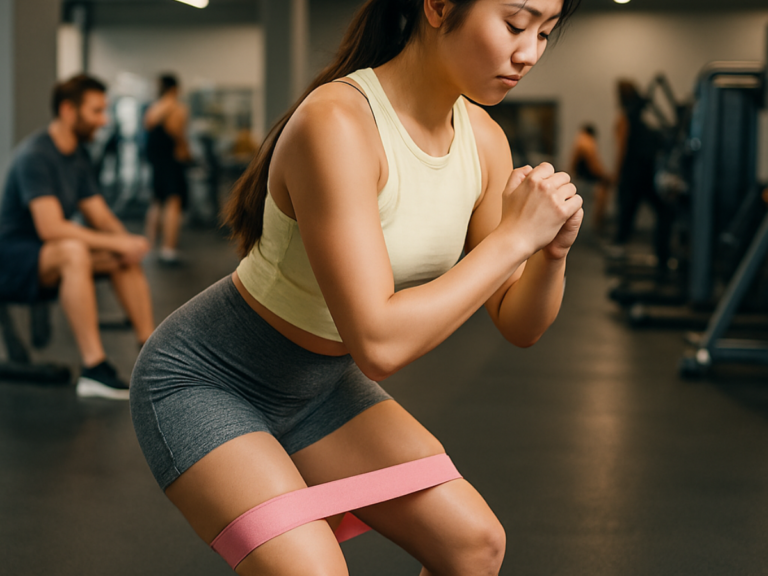
Daily Movements That secretly Train Your Glutes
Most women assume that shaping and strengthening the glutes requires a structured workout plan — hip thrusts, squats, lunges, and dedicated booty sessions. While these exercises are unquestionably effective, the truth is far more encouraging:
Your glutes learn, activate, strengthen, and subtly reshape themselves through the way you move all day long.
Not just during workouts.
Not only on “booty day.”
But during the ordinary, overlooked movements that make up your everyday life.
There is a reason some people naturally have firmer, stronger glutes even before they start training: their daily movement patterns keep their glutes active instead of letting them go dormant.
This article explores the surprisingly powerful lifestyle habits and everyday motions that secretly train your glutes — and how you can use them to improve your shape, posture, strength, and long-term booty progress without adding extra gym hours.
Let’s dive into the science of how your glutes are shaped by everything you do between workouts.
Why Daily Movements Matter More Than You Think
The glutes are the largest, most powerful muscles in the body.
But they are also some of the laziest.
Long hours of sitting, minimal walking, poor posture, and weak hip mechanics all contribute to a phenomenon known as gluteal amnesia, or “sleepy glutes.”
This condition reduces activation, weakens the muscles, shifts work to the quads and lower back, and diminishes roundness and lift.
But the opposite is also true:
Repeated low-level activation throughout the day helps keep the glutes switched on, toned, and responsive to training.
This is one reason people with active jobs, outdoor lifestyles, or walking-heavy routines often have better natural glute development.
Lifestyle shapes your body more than you realize.
How Everyday Actions Train Your Glutes
Before we explore specific movements, it’s important to understand the roles of the three glute muscles:
- Gluteus Maximus
Responsible for strength, lift, size, and the curve of the lower booty. - Gluteus Medius
Shapes the upper outer booty, controls hip stability, and reduces hip dips. - Gluteus Minimus
Works with the medius to stabilize every step and side motion.
Any daily movement that requires hip extension, hip abduction, and rotation will train these muscles.
Here’s how to use everyday life to strengthen and sculpt them.
1. Walking With Intention
Walking is one of the most underrated glute-building activities.
However, most people walk with minimal hip extension, meaning their glutes barely participate.
To turn walking into a glute-activating tool:
How to walk for glute activation
- Slightly lengthen your stride
- Push off your back leg with intention
- Keep your hips stable and forward
- Maintain a tall posture
- Lightly squeeze your glutes as your back leg extends
You are not flexing aggressively, just encouraging deeper activation.
Why it works
Longer strides increase hip extension.
Hip extension is the gluteus maximus’ primary job.
More extension = more glute involvement = improved shape over time.
If you walk 3,000 to 10,000 steps daily, even a small improvement in mechanics compounds rapidly.
2. Standing Instead of Sitting
Sitting places the glutes in a stretched, inactive position.
Over time, this reduces activation and weakens the muscles.
Standing engages:
- gluteus medius (hip stability)
- gluteus minimus (balance)
- gluteus maximus (postural support)
You do not need to stand all day.
Aim for:
- standing 5–10 minutes every hour
- micro-breaks from desk work
- standing while on calls
- alternating between sitting and standing if possible
These small interruptions wake up your hips and prevent gluteal amnesia.
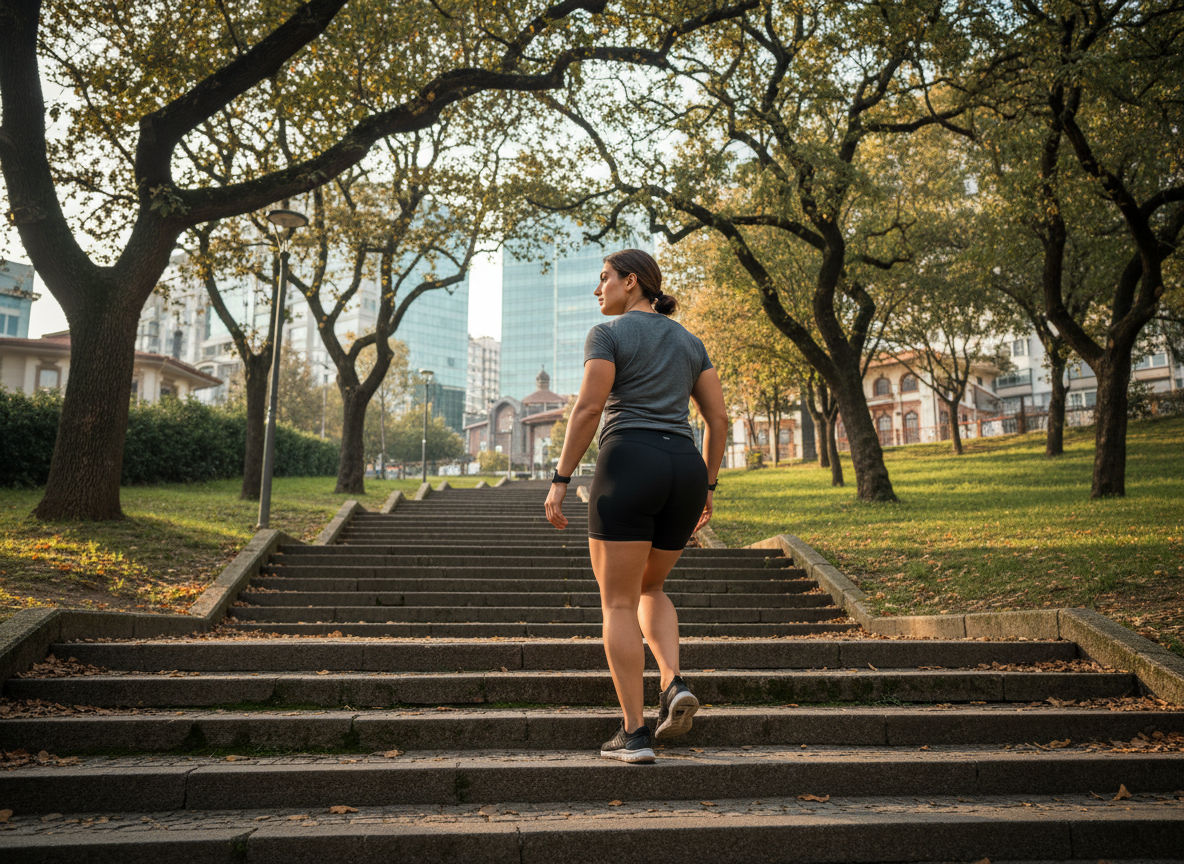
3. Using Stairs Instead of Elevators
Stair climbing is one of the best natural glute-building movements.
Why?
It requires:
- hip extension
- a heel-driven push
- single-leg strength
- balance and stabilization
This activates both the glute max and glute medius.
How to turn stairs into glute training:
- Drive through your heel
- Lean slightly forward from the hips
- Take slower, deeper steps
- Avoid pushing off the trailing leg
You can radically improve booty shape simply by switching to stairs daily.
4. Standing Up Properly From a Chair
Most people stand by shifting weight into their toes and using their quads.
Instead, perform a glute-driven stand:
- Plant feet flat
- Lean slightly forward
- Drive through the heels
- Squeeze the glutes at the top
Performing this movement 15–25 times per day teaches your glutes to fire during everyday tasks.
Think of it as a micro-workout.
5. Carrying Bags and Groceries Correctly
When you carry weight on one side of your body, your glutes — especially the gluteus medius — work hard to stabilize your pelvis.
This is a miniature version of a weighted farmer walk.
To maximize activation:
- Avoid slouching
- Keep hips level
- Walk tall and slow
- Switch sides periodically
You’ll feel the outer glutes working to keep you steady.
6. Engaging Your Core and Glutes During Household Chores
Daily tasks such as:
- bending to pick objects
- sweeping
- mopping
- vacuuming
- cleaning
- gardening
- lifting household items
All involve hip hinging or hip extension when done with awareness.
To optimize activation:
- keep a neutral spine
- hinge from the hips
- push through the heels
- lightly activate glutes during movement
This teaches your body to incorporate glute engagement naturally.
7. The Art of the Micro-Squeeze
One of the most effective ways to wake up glutes is to perform subtle, low-intensity contractions throughout the day.
This is not a hard flex.
The contraction should be gentle, sustainable, and easy to maintain while sitting or standing.
Examples of when to do micro-squeezes:
- waiting for water to boil
- brushing your teeth
- standing in line
- talking on the phone
- cooking
- working at your desk
Aim for 10 seconds on, 10 seconds off.
Perform sets of 5–10 throughout the day.
This builds endurance and enhances neurological connection.
8. Hip Alignment and Posture Awareness
The way you stand determines how your glutes look and how they function.
Two common postures reduce glute activation:
- Anterior pelvic tilt: hips tilt forward, booty appears tucked under
- Posterior pelvic tilt: pelvis tucks backward, reducing glute engagement
Both contribute to flatness or sagging appearance.
Adopt a neutral pelvis:
- ribs stacked over pelvis
- hips level
- core lightly engaged
- weight evenly distributed through heels
When you stand in a glute-friendly posture, you activate the muscles subtly and continuously.
9. Activating Glutes When Getting Out of a Car
Most people twist or push with their hands to exit a vehicle.
Instead:
- plant both feet outside the door
- lean forward
- drive upward through the heels
- squeeze glutes as you stand
Again, this is a tiny but repeated opportunity to reinforce glute patterns.
10. Sitting With Better Hip Mechanics
While sitting is unavoidable, you can reduce its negative effects by:
- keeping feet flat
- avoiding crossing legs tightly
- sitting tall instead of slouching
- lightly engaging the glutes
- taking frequent breaks
This protects glute function and prevents excessive tightness in the hip flexors.
11. Stretching Hip Flexors to Improve Glute Activation
Tight hip flexors inhibit glute strength.
Daily stretching helps unlock activation.
Practices that improve glute function:
- deep lunge stretch
- kneeling hip flexor stretch
- standing quad stretch
- pigeon pose (gentle version)
Perform 2–3 stretches daily for 30 seconds each.
This increases mobility and reduces glute dormancy.
12. Practicing Controlled Hip Hinging Throughout the Day
Hip hinging is the foundation of glute training.
You hinge naturally when:
- picking up objects
- leaning over counters
- reaching for lower shelves
- tying shoes
- adjusting furniture
Instead of bending your spine, hinge from the hips:
- push hips back
- keep spine neutral
- drive up using glutes
This movement pattern improves the glute maximus’ ability to contract during workouts and daily life.
13. Incorporating Short, Spontaneous Movement Breaks
If you work at a desk or sit for long periods, add glute activation breaks:
- 10 standing kickbacks
- 10 abductions per side
- 10 glute squeezes
- 10 hip hinges
These micro-breaks prevent dormant glutes and maintain activation hormone signaling.
14. Intentional Breathing Patterns That Support Glute Function
Deep diaphragmatic breathing stabilizes the pelvis and allows the glutes to contract fully.
To practice:
- inhale deeply, expanding ribcage
- exhale slowly while gently engaging core and glutes
This strengthens both stability and movement coordination.
Why These Daily Movements Improve Shape Over Time
Lifestyle glute engagement helps you:
- build endurance in the glute muscles
- keep glutes responsive between workouts
- prevent muscle inhibition
- improve hip stability
- enhance posture
- reduce quad dominance
- increase calorie burn
- maintain roundness and firmness
Consistency in small habits produces visible changes in:
- lift
- roundness
- firmness
- hip curve
- side profile shape
The compound effect is powerful.
How Long Until You See Results?
Most women notice improvements in:
2–3 weeks:
- better posture
- stronger hip stability
- increased activation
4–6 weeks:
- firmer feel
- reduced sagging
- slightly rounder upper glutes
8–12 weeks:
- visible lift
- clear shape changes
- better muscle tone
The beauty of daily glute habits is that they reinforce your workout progress, not replace it.
Final Thoughts: Your Booty Shapes Itself Through What You Do Daily
Workouts build your glutes.
Your lifestyle maintains them.
Daily movement patterns either:
- support growth
- or undo it
By walking better, standing more, hinging correctly, activating muscles during chores, and improving posture, you transform your glutes without needing extra time or equipment.
Your booty responds to everything you do — not just the hour you spend training.
If you use these daily habits consistently, your glutes will grow stronger, rounder, perkier, and more defined over time.
You are shaping your booty every day.
Make those moments count.