Glute Anatomy Made Simple
If you have ever wondered why some exercises grow your booty and others barely make a difference, the answer almost always comes down to glute anatomy.
Understanding how your glutes are built is the foundation of shaping, lifting, and strengthening them.
Most women train their glutes without understanding which muscles they’re targeting, how the glutes actually move, or why some movements round the upper booty while others lift the lower portion.
The result is confusion, slow progress, and frustration.
The good news is that glute anatomy is not complex. In fact, once you understand the basics, you’ll know exactly:
- why certain exercises work better
- how to activate all parts of your glutes
- how to correct flatness or weak areas
- how to choose movements that match your goals
This guide breaks glute anatomy down into its simplest, clearest components.
By the end, you will understand exactly how your booty works and how to train it intelligently.
Let’s begin with the big picture.
What Exactly Are the Glutes?
Your booty is made up of three primary muscles:
- Gluteus Maximus
- Gluteus Medius
- Gluteus Minimus
Together, these muscles:
- shape your hips and butt
- stabilize your pelvis
- support walking, running, climbing
- protect your lower back
- help create curves and balance
Even though we often refer to the glutes as one muscle, each part has its own job, its own function, and its own favorite exercises.
This is the key to targeted training.
The Gluteus Maximus: The Powerhouse and Shape-Maker
If the glutes were a family, the gluteus maximus would be the oldest sibling — the biggest, strongest, most powerful member.
It gives your booty:
- its size
- its lift
- its projection from the side
- its firmness
- its rounded lower portion
This is the muscle people refer to when they say “grow your booty.”
Location and Function
The gluteus maximus is located at the back of the hip, forming the bulk of the buttocks.
Its main functions include:
- hip extension (lifting your leg behind you)
- hip external rotation (turning your leg outward)
- helping your torso stand upright
- powering movements like climbing stairs, sprinting, jumping, and thrusting
If you want a fuller, more lifted booty, this is the muscle to prioritize.
When the Glute Max Is Weak
A weak gluteus maximus leads to:
- flatness in the lower booty
- lack of lift
- sagging shape
- back pain
- reliance on quads and hamstrings
Many women with “flat butt” issues simply have an underdeveloped glute max.
Best Exercises for the Glute Max
These exercises provide the most activation:
- Hip thrusts
- Glute bridges
- Romanian deadlifts
- Reverse lunges
- Squats with a hip hinge focus
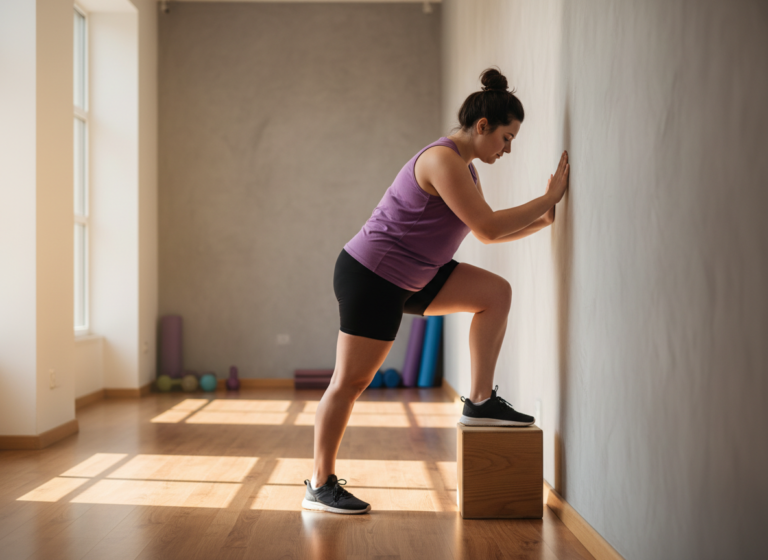
- Step-ups
- Frog pumps
The glute max responds best to heavy or moderate loads and powerful hip extension.
The Gluteus Medius: The Upper Booty Curve Muscle
If you’ve ever looked at your upper booty and wished for more roundness or lift, the gluteus medius is the muscle responsible.
This is the muscle that reduces the appearance of hip dips and creates the iconic “bubble” shape at the top of the butt.
Location and Function
The gluteus medius sits on the outer side of your hip, just above the glute max.
Its primary functions include:
- hip abduction (lifting your leg out to the side)
- stabilizing the pelvis when walking
- helping maintain balance
- shaping the side and upper booty
A strong glute medius makes your booty not only more rounded but also more athletic.
When the Glute Medius Is Weak
A weak upper glute leads to:
- deeper-looking hip dips
- lack of upper booty shape
- instability during single-leg exercises
- knee collapse during squats or lunges
- tilted pelvis
If your booty looks “square” or “flat on top,” this muscle needs more focus.
Best Exercises for the Glute Medius
Target these movements:
- Side-lying leg lifts
- Standing abductions
- Banded hip abductions
- Cable kickbacks at an angle
- Curtsy lunges
- Lateral step-ups
- Clamshells
These movements sculpt the upper curve and improve hip stability.
The Gluteus Minimus: The Stabilizer and Support Muscle
The gluteus minimus is the smallest and deepest glute muscle, located underneath the glute medius.
You may not see it, but you definitely feel its impact in movement.
Location and Function
Its key roles are:
- aiding in hip abduction
- helping the hip rotate inward
- supporting pelvic alignment
- providing stability during walking, running, or standing on one leg
While it does not add visual size, it helps shape the outer hip and improves movement efficiency.
When the Glute Minimus Is Weak
You might experience:
- hip instability
- wobbling during balance exercises
- difficulty feeling your glutes activate
- increased risk of injury
- poor control during lateral movements
Strengthening it improves overall glute performance.
Best Exercises for the Glute Minimus
Exercises overlap significantly with the glute medius:
- Clamshell variations
- Side-lying leg raises
- Standing or seated abductions
- Lateral band walks
- Elevated hip abduction holds
These movements help tone the side booty and stabilize the hips.
How the Three Glute Muscles Work Together
The glutes are not meant to work in isolation.
All three muscles work as a team to:
- stabilize your pelvis
- control your thigh movement
- generate power
- create shape, roundness, and lift
- protect your spine and hips
A well-developed booty requires training all three:
- glute max for size and lift
- glute medius for shape and curve
- glute minimus for stability
Most women unintentionally train only one area.
That’s why they see slow or uneven progress.
Why Understanding Glute Anatomy Improves Your Results
Knowing how the glutes function helps you:
- choose the right exercises for your goals
- avoid overworking your quads
- activate the correct muscles
- avoid common mistakes
- understand where your weaknesses are
- make faster progress with less confusion
For example:
If your booty is flat:
Your glute max needs targeted work.
If your upper booty is lacking shape:
Your glute medius needs more isolation.
If you have hip dips:
Your glute medius and minimus need abduction training.
If you struggle with balance:
Your glute minimus needs strengthening.
Anatomy is strategy.
And strategy creates shape.
The Three Planes of Glute Movement
To train the glutes effectively, you must work them from all planes of motion.
1. Sagittal Plane (Front-to-Back Movements)
These exercises primarily develop the glute max:
- Hip thrusts
- Glute bridges
- RDLs
- Lunges
- Step-ups
- Kickbacks
Result:
Lift, projection, firmness.
2. Frontal Plane (Side-to-Side Movements)
These movements train the glute medius and minimus:
- Side-lying leg lifts
- Lateral lunges
- Lateral step-ups
- Banded abductions
- Standing abductions
Result:
Roundness, upper-booty curve, reduced hip dips.
3. Transverse Plane (Rotational Movements)
These challenge the deeper stabilizers:
- Curtsy lunges
- Diagonal kickbacks
- Rotational abductions
- Clamshells
Result:
Better balance, stability, and sculpted side glutes.
A well-built program includes all three planes for a sculpted, balanced booty.
Why Some Women Struggle to Feel Their Glutes
Even with perfect exercises, many women struggle to activate their glutes due to:
- tight hip flexors
- weak core
- dominant quads
- excessive sitting
- poor pelvic alignment
- incorrect form
- fast, uncontrolled reps
All of these issues can shut down the glutes and make training ineffective.
Solutions
- Add glute activation before workouts
- Stretch hip flexors regularly
- Slow down your reps
- Squeeze intentionally at the top of movements
- Practice neutral pelvis positioning
Feeling your glutes is step one.
Growing them is step two.
The Importance of Mind-Muscle Connection
Research shows that thinking about the muscle you’re training increases activation.
To engage the glutes better:
- slow down your reps
- pause at the top
- use lighter weights to master form
- place your hand on the muscle as it contracts
- avoid swinging or rushing
The glutes respond extremely well to intentional, controlled contractions.
Common Mistakes That Prevent Glute Growth
Understanding anatomy also highlights mistakes most women make:
- Training quads instead of glutes
- Relying only on squats
- Not using hip thrust patterns
- Avoiding abduction movements
- Ignoring upper-glute work
- Poor posture and pelvis position
- Not activating the glutes beforehand
- Doing too many random workouts with no structure
Fixing these anatomical mistakes speeds up results instantly.
A Simple Anatomy-Based Booty Routine
Here’s a beginner-friendly routine that hits all three muscles:
Glute Max Focus
- Hip thrusts
- Romanian deadlifts
- Glute bridges
Glute Medius Focus
- Side-lying leg lifts
- Standing abductions
- Curtsy lunges
Glute Minimus / Stability
- Clamshells
- Lateral walks
This routine balances all glute muscles to create roundness, lift, and shape.
Why Glute Anatomy Matters for Women’s Fitness Goals
Understanding how your glutes work helps you:
- build a rounder, fuller booty
- reduce hip dips
- improve posture
- reduce lower-back pain
- gain athletic strength
- shape your legs and hips
- prevent injury
- enhance balance and stability
Your booty is not just aesthetic — it’s functional, powerful, and essential to daily movement.
Final Thoughts: Glute Anatomy is Your Training Superpower
When you understand how your glutes work, you can train with purpose.
You stop guessing.
You stop wasting time on ineffective exercises.
You stop relying on trends that don’t deliver results.
Instead, you begin training with:
- intention
- intelligence
- clarity
- structure
- strategy
And that is how you transform your booty.
Stronger glutes are not just about appearance.
They represent strength, balance, confidence, and control over your body.
Now that you understand the anatomy, you’re ready to sculpt the shape you want.