Hydration & Electrolytes for Training Women
Hydration is one of the most overlooked elements of women’s fitness, especially when it comes to training the glutes. Women often focus on form, frequency, weights, band tension, and workout intensity — all important factors. But without proper hydration and electrolyte balance, even the best training program cannot deliver the results you want.
The glutes are a strong, dense muscle group that perform best when the body is hydrated at the cellular level. When hydration dips, so does performance, recovery, circulation, pump, and muscle engagement. This means weaker workouts, lower strength output, slower progress, and a noticeable drop in firmness and fullness.
In simple terms:
Hydration is a performance enhancer.
Hydration is a recovery tool.
Hydration is a shape-improvement strategy.
This guide explores hydration from a science-backed perspective tailored specifically to women, addressing how water, electrolytes, hormones, training intensity, and lifestyle choices influence your booty-building journey. By the end, you’ll know exactly how to hydrate, when to hydrate, and what to consume to maximize glute growth, tone, and performance.
Why Hydration Is Essential for Glute Training
Women’s bodies are composed of roughly 45–55 percent water, and muscle tissue itself is about 76 percent water. That means your glutes — which you’re trying to grow, lift, tone, and sculpt — rely heavily on fluid balance.
Hydration directly affects:
- Muscle contraction strength
- Glute activation and mind-muscle connection
- Performance during strength and hypertrophy workouts
- Circulation and nutrient delivery to muscle fibers
- Recovery speed
- Hormone balance
- Energy and endurance
Even a 2 percent drop in hydration can significantly reduce strength output and endurance. This leads to weaker lifts and fewer quality reps, which ultimately slows down shape change and muscle development.
When training glutes, hydration is not optional — it is foundational.
Understanding Electrolytes and Why Women Need Them
Water alone is not enough.
Electrolytes such as sodium, potassium, magnesium, and calcium help regulate:
- Fluid balance
- Muscle contractions
- Nerve signaling
- Blood pressure
- Energy production
- Hormonal stability
Women lose electrolytes through sweat, daily metabolism, and especially during high-intensity booty workouts that involve repetitions under tension, pulses, bridges, squats, and hip thrusts.
Without electrolytes, water cannot properly hydrate the muscle cells or support performance.
Key Electrolytes for Booty Training
1. Sodium
Retains fluid in the muscle cells, supports nerve conduction, and helps maintain strength during heavy lifts.
2. Potassium
Prevents muscle cramps, improves muscle contraction, and balances sodium levels.
3. Magnesium
Reduces muscle tension, improves energy production, and supports recovery. Magnesium deficiency is common among women.
4. Calcium
Supports muscle contractions and helps prevent fatigue during high-rep glute exercises.
A proper electrolyte balance improves everything from glute pump to recovery, making your workouts more productive and your muscles fuller and more responsive.
How Hydration Influences Booty Growth and Tone
Here’s how staying properly hydrated supports glute development:
1. Improves Muscle Pump and Fullness
Water pulls into muscle cells during training. Without hydration, you lose volume, firmness, and pump.
2. Enhances Muscle Contraction Strength
Glute activation depends on strong neuromuscular signals. Dehydration weakens the connection between your brain and your glutes.
3. Boosts Endurance During Sets and Circuits
Better hydration means more reps, more volume, more progressive overload — and more results.
4. Speeds Up Recovery
Hydration helps remove metabolic waste (like lactic acid) and brings nutrients to damaged muscle fibers.
5. Reduces Risk of Injury
Dehydrated muscles are tight, stiff, and prone to strain.
6. Supports Metabolism and Fat Loss
Water is essential for transporting nutrients, regulating body temperature, and supporting metabolic function — all components of body recomposition and overall shape improvement.
Hydration is not a small detail. It is a performance multiplier.
How Much Water Women Should Drink Daily (and Around Workouts)
The general guideline is:
2–3 liters of water per day for moderately active women.
However, if you’re training consistently — especially glutes, which involves large muscle groups — you may need:
- 500 ml–1 liter more on training days
- More during heat, stress, PMS, or long workouts
A practical guideline:
Drink half your body weight in ounces daily.
Example: A woman who weighs 150 lbs should aim for about 75 ounces per day.
Hydration Timing for Booty Workouts
Before your workout:
300–500 ml of water
If you sweat heavily, include electrolytes.
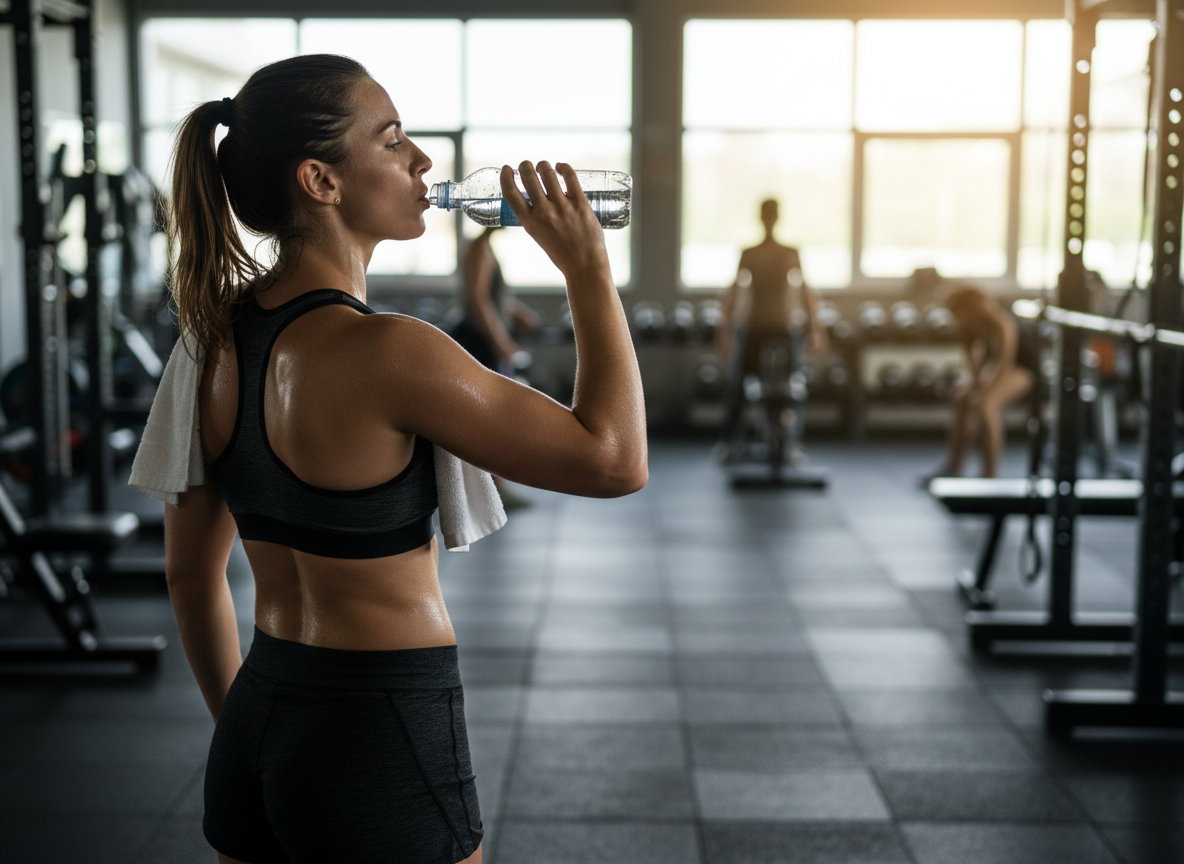
During your workout:
100–200 ml every 10–15 minutes
Glute workouts are demanding; hydration keeps intensity high.
After your workout:
300–500 ml with electrolytes
This restores fluid lost through sweat and supports recovery.
Booty pump, energy, and consistency depend on this.
The Role of Hydration Throughout the Menstrual Cycle
Women’s hydration needs fluctuate across the menstrual cycle because hormones shift water retention, electrolyte balance, and body temperature.
Follicular Phase (Day 1–14)
Lower progesterone means you sweat less and retain less water.
Hydration feels easier and more stable.
Ovulation (Day 14–16)
Body temperature rises slightly, increasing fluid loss.
Hydrate more to maintain performance.
Luteal Phase (Day 15–28)
Progesterone increases body heat and fluid retention.
You may feel more bloated but also more dehydrated.
Electrolytes become more important to manage symptoms.
Menstrual Phase (Day 1–5)
Blood loss equals mineral loss.
Increase electrolytes like iron, sodium, and magnesium.
Understanding these shifts helps you optimize hydration for consistent glute performance throughout the month.
Signs You’re Dehydrated (Even If You Don’t Feel Thirsty)
Many women underestimate their dehydration.
Here are the most common indicators:
- Feeling weak during glute exercises
- Reduced pump
- Dry mouth or lips
- Headaches
- Muscle cramps, especially in glutes or hamstrings
- Constipation or bloating
- Lower back tightness
- Excessive fatigue
- Dark yellow urine
- Trouble focusing
- Flat-looking muscles
You should never wait until you’re thirsty to drink — thirst is a late-stage symptom.
Water Quality and Types: What Actually Helps Hydration?
Not all water is equal. Here is what matters:
Filtered Water
Best for daily hydration. Removes contaminants without stripping minerals.
Electrolyte Water
Great for workout days or during heat. Supports performance and recovery.
Mineral Water
Contains naturally occurring magnesium, potassium, and calcium. Excellent for muscle support.
Avoid Overhydration
Too much water without minerals causes electrolyte imbalance (hyponatremia). This reduces performance and can make you feel weak or dizzy.
Balance is the goal.
Electrolyte Sources That Actually Support Training Women
You don’t need expensive sports drinks loaded with sugar.
Here are clean and effective options:
Natural Electrolytes
- Coconut water
- Sea salt (pinch in water)
- Lemon with salt
- Watermelon juice
- Banana
- Spinach
- Avocado
- Yogurt
- Almonds
- Pumpkin seeds
Supplement-Based Electrolytes
Choose an option without artificial sweeteners or dyes.
Look for:
- Sodium 200–400 mg
- Potassium 100–200 mg
- Magnesium 50–100 mg
Electrolytes are most useful:
- before heavy glute days
- after sweaty workouts
- during the luteal phase
- in hot climates
- when fasting or low-carb dieting
Hydration Strategies for Better Booty Workouts
If you want better glute pumps, more activation, stronger contractions, and faster results, use these strategies:
1. Start your day with water
Drink 250–500 ml first thing in the morning.
2. Hydrate before your workout, not during your first set
Dehydration at the start of a workout makes the entire training session weaker.
3. Add electrolytes to your pre-workout routine
Especially on heavy hip thrust or RDL days.
4. Drink consistently, not in sudden large amounts
Your body absorbs water best in small, steady amounts.
5. Use a hydration reminder
Most women simply forget to drink enough.
6. Drink more when increasing glute training frequency
The more volume you add, the more water you need for recovery and pump.
7. Hydrate after training to reduce soreness
Water supports muscle repair and reduces inflammation.
Does Dehydration Affect Booty Shape Directly?
Yes.
Women often report feeling:
- flatter
- softer
- less defined
- less lifted
when dehydrated.
This is because muscles lose glycogen, which holds water inside muscle cells.
When glycogen is low, muscles look smaller, flatter, and less firm — including the glutes.
Hydration gives the glutes:
- fullness
- firmness
- better contraction
- better roundness
It’s not just about performance — it directly affects appearance.
Can You Hydrate Through Food? Yes — And You Should
High-water foods contribute to hydration while providing vitamins and minerals essential for training women.
Add these to your diet:
- Cucumbers
- Lettuce
- Berries
- Citrus fruits
- Pineapple
- Zucchini
- Tomatoes
- Broth-based soups
- Melons
Hydrating through food improves digestion, reduces bloating, and increases mineral intake.
Building a Daily Hydration Routine
Here’s a simple routine women can start immediately:
Morning:
250–500 ml water + optional pinch of sea salt
Mid-morning:
200–300 ml water
Hydrating fruit or coconut water
Before workout:
300–500 ml water + electrolytes
During workout:
100–200 ml every 10–15 minutes
After workout:
300–500 ml + magnesium-rich food
Evening:
Light hydration, herbal tea, or mineral water (avoid drinking too much right before bed)
Follow this pattern for 2–3 weeks and you will feel a dramatic improvement in your glute training performance.
Final Thoughts: Hydration Is a Training Strategy, Not an Afterthought
Most women underestimate hydration.
But if you want stronger glute activation, better mind-muscle connection, fuller shape, faster recovery, and consistent progress, hydration and electrolytes are non-negotiable.
Hydration supports:
- strength
- tone
- volume
- pump
- hormone balance
- endurance
- recovery
- metabolic function
It’s one of the simplest ways to elevate your glute results — without adding extra intensity or hours to your training routine.
Hydrate intentionally, and your glutes will respond with better shape, fullness, and long-term growth.