Hip Mobility for Better Glute Activation
Most women train their glutes with the best intentions: the right exercises, the right reps, the right programs. But one key factor often goes unnoticed — hip mobility. And without hip mobility, even the best booty workout becomes less effective.
Weak glute activation is not always a strength problem.
Often, it’s a movement restriction problem.
If your hips cannot move freely, your glutes cannot fire fully — which means:
- your quads take over
- your lower back compensates
- your booty doesn’t grow
- your exercises feel inefficient
- your form breaks down quickly
Understanding and improving hip mobility is one of the most powerful steps toward building rounder, stronger, fuller glutes. Once your hips move well, your glutes activate better. And once your glutes activate better, everything from hip thrusts to reverse lunges becomes more productive.
This guide simplifies hip mobility, explains why it matters, and gives you specific drills to unlock better glute activation and shape.
What Is Hip Mobility and Why Does It Matter for Booty Training?
Hip mobility refers to how well your hip joint can move in different directions:
- hip extension (leg moving behind you)
- hip flexion (leg lifting in front)
- hip abduction (leg moving sideways)
- hip internal/external rotation
Your glutes are responsible for many of these movements, especially hip extension—one of the main drivers of booty growth.
But when mobility is restricted:
- your stride shortens
- hip thrusts feel awkward
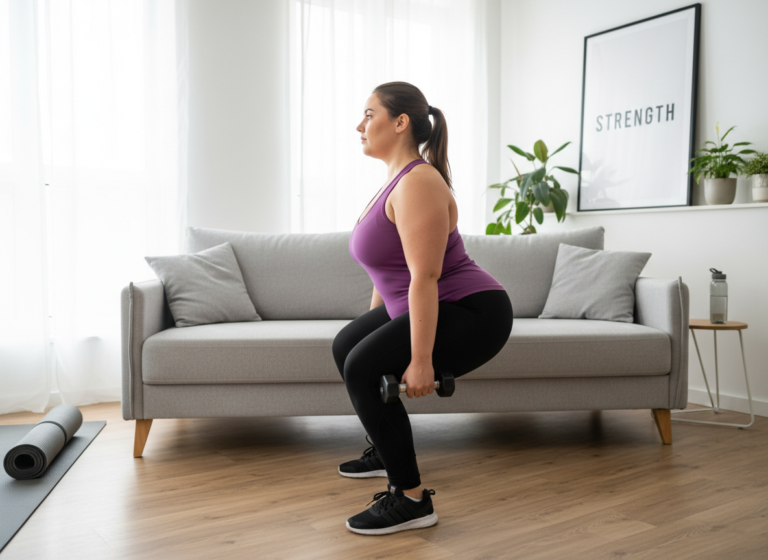
- squats shift into your quads
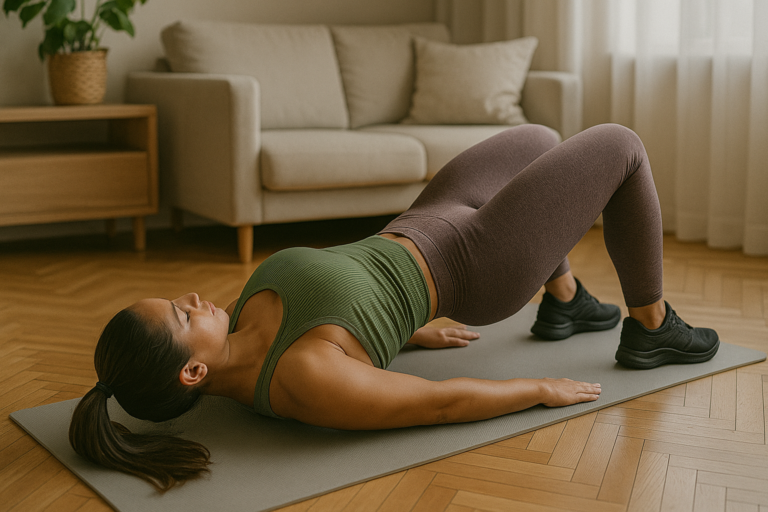
- bridges lack intensity
- RDLs pull your lower back
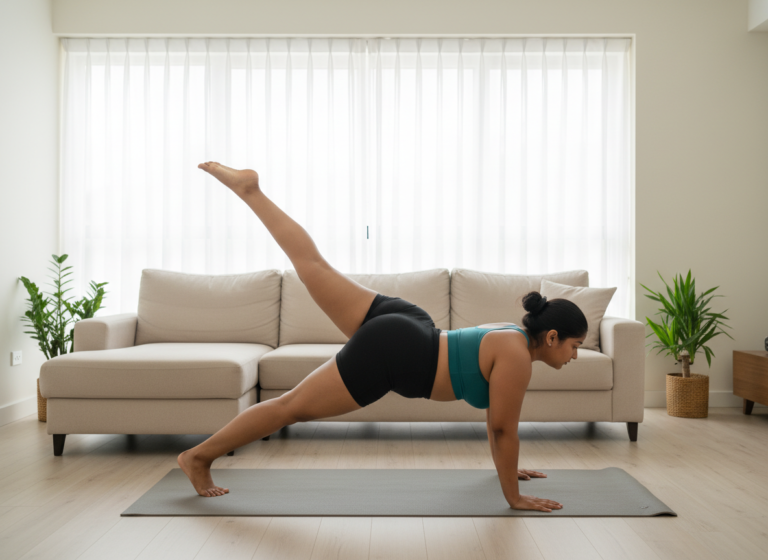
- kickbacks feel like hamstring work
Good hip mobility allows the glutes to lengthen and shorten optimally during exercises. Optimal length-tension equals optimal muscle activation, which equals optimal growth.
Signs You Have Poor Hip Mobility
You might have hip mobility limitations if you experience:
1. Tight hip flexors from sitting long hours
This prevents hip extension, limiting glute contraction.
2. Difficulty squeezing your glutes at the top of exercises
Your glutes cannot fully shorten.
3. Lower back compensation during hip thrusts or bridges
Your body is trying to make up for lack of hip movement.
4. Stiffness around the front of the hips or upper thighs
This blocks glute engagement.
5. Knees collapsing inward during squats or lunges
Weak hip abductors + tight internal rotators.
6. Clicking or pinching when lifting one leg forward or sideways
The hip joint isn’t gliding smoothly.
7. Feeling booty exercises more in quads or hamstrings
Mobility restrictions are forcing other muscles to take over.
If one or more of these apply to you, improving hip mobility will immediately elevate your booty training.
The Relationship Between Hip Mobility and Glute Activation
To train your booty effectively, you need three key mobility components:
1. Hip Extension
This is crucial for exercises like hip thrusts, kickbacks, and bridges.
If your hip flexors are tight, your glutes cannot fully activate.
Without extension, glute max (the main booty muscle) cannot contract strongly.
2. Hip Abduction
Side movements express upper-glute muscles like glute medius.
If your hips cannot move outward efficiently, abductions feel weak or awkward.
3. Hip External Rotation
This helps stabilize the pelvis and recruits deeper glute fibers.
Poor rotation leads to inward-collapsing knees and difficulty achieving shape in the upper-lateral booty region.
Why Most Women Lose Hip Mobility Without Realizing It
Several everyday habits contribute to tight, immobile hips:
Sedentary Lifestyle
Sitting shortens the hip flexors dramatically.
High-Heel Use
Elevated heels tilt your pelvis, increasing hip tightness.
Stress and Tension
Stress causes protective tightening around the hips.
Weak Core
A weak trunk forces the hips to compensate.
Poor Warm-Ups
Most people start workouts without mobilizing their hips properly.
Unbalanced Training
Too much quad-dominant exercise (leg press, traditional squats) reinforces immobility.
The good news: hip mobility can be trained easily — and results often appear within days.
How Improved Hip Mobility Transforms Your Booty Training
Women who improve hip mobility often report immediate changes such as:
- deeper, stronger hip thrusts
- more intense glute contraction
- reduced lower back pain
- improved posture
- better squat and lunge mechanics
- increased comfort during stretching
- enhanced workout results
When your hips move freely, your glutes finally get the full workload they’re designed to handle. This means faster shaping, more lift, and better curves.
The 3-Part Hip Mobility System for Better Glutes
This routine is simple, effective, and requires no equipment. It follows a progression:
Part 1: Release
Reduce tension in tight muscles.
Part 2: Stretch
Lengthen tight areas to allow full movement.
Part 3: Mobilize
Train the hips to move with control and strength.
Do this 10-minute routine before booty workouts or daily for maximum improvement.
Part 1: Hip Release (2–3 minutes)
These techniques reduce tension in common problem areas.
Hip Flexor Release
- Place hands on hips
- Press fingertips gently at the front upper thigh
- Massage in circular motions for 20–30 seconds per side
Glute Medius Release
- Lie on side
- Massage the upper outer hip with your palm
- Continue for 20–30 seconds
Lower Back Release
- Lie on your back
- Pull knees into chest
- Rock gently for 20–30 seconds
Reducing tightness sets the stage for better stretching and activation.
Part 2: Hip Stretches (3–4 minutes)
These stretches open the hips for better glute activation.
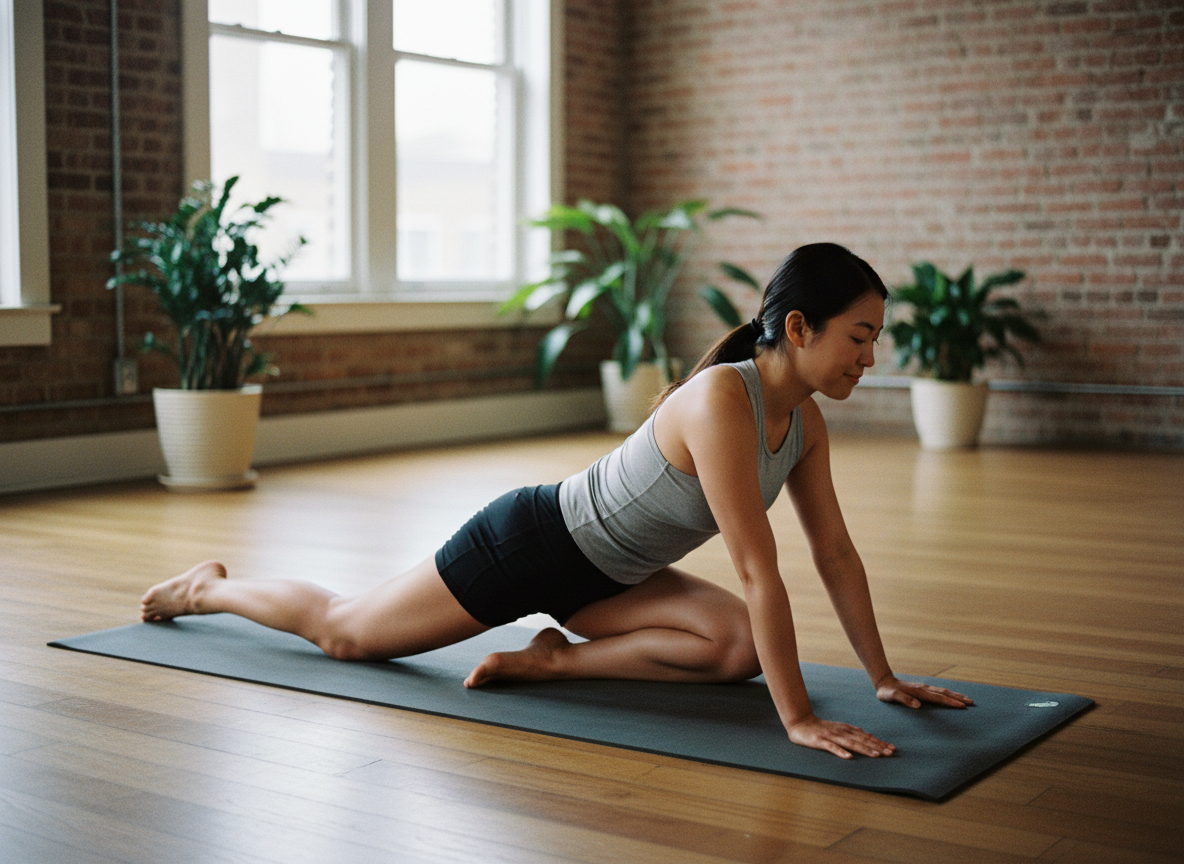
1. Hip Flexor Stretch (Absolute Essential)
- Kneel on one knee
- Tuck pelvis under
- Lean forward slightly
Hold 30–40 seconds per side.
This unlocks hip extension.
2. Figure-4 Glute Stretch
- Lie on back
- Cross ankle over opposite knee
- Pull legs toward chest
Hold 30–40 seconds per side.
3. Inner Thigh (Adductor) Stretch
- Sit with feet together
- Gently press knees outward
Hold 30 seconds.
This frees up side-to-side hip movement.
Part 3: Hip Mobility Drills (5 minutes)
These movements actively train the hips to move through greater ranges.
1. Hip CARs (Controlled Articular Rotations)
Stand or kneel.
Lift knee forward, out, and around in a slow circle.
Perform 5 slow circles per side.
This improves rotation and joint control.
2. 90/90 Hip Mobility
Sit on floor with one leg in front at 90 degrees and the other behind at 90 degrees.
Lean forward gently.
Hold 20–30 seconds, then switch sides.
Builds rotation and stability.
3. Kneeling Hip Extension Pulses
In a lunge position:
- Move pelvis forward and back gently
- Focus on lengthening the front of the hip
Perform 15 pulses per side.
4. Standing Leg Swings
Forward-backward swings
Side-to-side swings
10–15 reps each direction.
Great for warming up the glutes dynamically.
Exercises That Benefit Most from Improved Hip Mobility
Once your hips move better, these exercises become dramatically more effective:
Hip Thrusts
Full lockout becomes easier, leading to stronger glute contractions.
Romanian Deadlifts
Better hinge = better glute stretch and growth.
Reverse Lunges
Improved depth and stability increase glute involvement.
Kickbacks and Abductions
Better control leads to better shape-building isolation.
Step-Ups
Greater hip flexion improves glute drive.
Mobility doesn’t replace strength training — it enhances every rep.
How to Use Hip Mobility to Reduce Quad Dominance
If your quads keep stealing your booty gains, hip mobility is your best friend.
Here’s why:
- Tight hips shift force into the thighs
- Limited extension prevents glute power
- Restricted abduction shuts down upper-glute work
By freeing the hips, you allow the glutes to function as the primary movers.
Combine hip mobility with:
- heel-driven movements
- slight forward torso lean during lunges
- controlled hinge mechanics
- slow eccentrics
And your booty workouts will finally start working the way they should.
Common Mistakes That Limit Hip Mobility and Booty Growth
Avoid these if you want optimal results.
1. Skipping Warm-Ups
Cold muscles move poorly.
2. Relying Only on Stretching
Stretch + mobilize is the winning formula.
3. Training glutes without fixing tight hip flexors
Your glutes can’t fire if the front of your hips is locked.
4. Ignoring internal and external rotation
Rotation is crucial for upper-glute development.
5. Doing mobility too fast
Control is key; slow repetition builds greater capacity.
A Simple Weekly Hip Mobility Schedule
Daily (5–8 minutes):
- Hip flexor stretch
- Figure-4 stretch
- Hip CARs
- Leg swings
Before Booty Workouts (10 minutes):
- Release tight areas
- Stretch hips
- Mobilize
- Finish with glute activation (bridges, abductions)
Weekly Goal:
At least 3 focused mobility sessions.
Expected Results After Improving Hip Mobility
With consistent practice, expect:
After 1 week
- improved exercise comfort
- reduced stiffness
- better glute contraction
After 2–4 weeks
- deeper RDLs and lunges
- improved posture
- less quad dominance
- more effective booty workouts
After 6–12 weeks
- visible glute shaping
- improved symmetry
- greater hip strength
- smoother movement during training
Better hip mobility doesn’t just change how you move — it changes how your glutes grow.
Final Thoughts: Mobility Is the Missing Link in Booty Training
Most women struggle with glute activation not because their glutes are weak, but because their hips are restricted. Hip mobility unlocks your glute potential, improves workout effectiveness, and accelerates shape change.
When your hips move better:
- your glutes fire faster
- your form improves
- your reps become intentional
- your booty grows with less effort
Mobility is not glamorous, but it is transformative. Investing just a few minutes per day in your hip mobility is one of the smartest decisions you can make for your long-term booty progress.
Your glutes will thank you, and your training will finally feel aligned with your goals.