Back Pain Fix: Strengthening Posterior Chain
Back pain can feel like an unwelcome shadow following you everywhere — sitting, standing, lifting, even during workouts. For many women, the pain feels mysterious, unpredictable, and frustratingly persistent. But here’s the breakthrough truth:
A weak posterior chain is one of the biggest causes of chronic back pain.
The posterior chain includes the muscles along the back of your body — glutes, hamstrings, lower back, and upper back. When these muscles are strong and active, your spine is supported, your hips align properly, and your movements become fluid and pain-free.
But when these muscles are weak?
- Your lower back overcompensates
- Your posture collapses
- Your hips tilt out of alignment
- Your core becomes unstable
- Daily movements strain the spine
The good news:
You can significantly reduce or eliminate back pain by strengthening your posterior chain — especially your glutes.
This guide walks you through why this connection matters, how to fix imbalances, and the best exercises to build a strong, pain-resilient back.
Understanding the Posterior Chain: Your Body’s Natural Support System
To understand back pain, you have to understand the system meant to prevent it.
The posterior chain includes:
- Gluteus maximus, medius, and minimus
- Hamstrings
- Erector spinae (lower back muscles)
- Latissimus dorsi (upper back)
- Rear deltoids
- Spinal stabilizers
- Hip external rotators
These muscles work together to:
- Maintain upright posture
- Support your spine
- Stabilize your pelvis
- Generate strength for lifting, walking, running, sitting, standing, and bending
- Prevent unnecessary pressure on spinal discs
If any major muscle in this chain is weak — especially the glutes — stress shifts into the lower back.
This is the root of most pain patterns.
Why Weak Glutes = Back Pain
Your glutes are the strongest muscles in your body, designed to:
- Extend your hips
- Stabilize your pelvis
- Protect your low back
- Create efficient movement
But modern life has a bad habit of turning glutes off.
Long sitting hours, lack of movement, and quad dominance all contribute to “gluteal amnesia,” a term used by physical therapists to describe underactive glutes.
When the glutes aren’t firing properly:
- Your lumbar spine absorbs the force meant for the hips
- Your hamstrings overwork and tighten
- Your pelvis shifts out of alignment
- Your core becomes unstable
- Your back muscles pick up the slack
This chain reaction leads directly to discomfort, tightness, and pain.
The solution?
Strengthen and re-activate the posterior chain so your back no longer carries the burden.
Common Signs You Need Posterior Chain Strengthening
If you experience any of the following, your posterior chain is likely weak:
- Lower back pain after standing or walking
- Tight hamstrings, especially in the morning
- Difficulty activating glutes during workouts
- Dominant quads during squats or lunges
- Knees caving inward during movement
- Anterior pelvic tilt (arched lower back)
- Poor hip hinge mechanics
- Rounded shoulders or forward head posture
- Pain when lifting objects
- Back tightness after sitting for long periods
These are all natural consequences of an imbalanced posterior chain — and they can all be corrected.
Why Strengthening the Posterior Chain Works Better Than Stretching Alone
Many people attempt to relieve back pain by stretching endlessly — hamstrings, hips, lower back, everything.
Stretching can temporarily reduce tightness, but it doesn’t fix the actual source.
Why?
Because weak muscles tighten as a protective mechanism.
Your body stiffens when it senses instability.
Stretching a tight muscle without strengthening its counterpart is like loosening the screws on a shaky structure.
If your glutes and hamstrings are weak, stretching your back or hips won’t solve the imbalance.
Strengthening is the long-term solution because:
- It stabilizes the spine
- It corrects posture
- It reduces strain on small back muscles
- It allows your hips and glutes to take over their intended work
This is why physical therapists focus on activation and strength, not just passive stretching.
The Three Pillars of Posterior Chain Strengthening
To fix back pain at the source, you must train the posterior chain with a balanced approach:
1. Activation
These exercises wake up dormant glutes and stabilizers.
Examples:
- Glute bridges
- Bird dogs
- Clamshells
Activation improves muscle firing patterns so the right muscles take over during bigger movements.
2. Strength Training
This builds muscle fibers, enhances stability, and reduces load on the spine.
Examples:
- Hip thrusts
- Romanian deadlifts
- Back extensions
Strength training is essential for long-term pain reduction.
3. Mobility
Mobility restores natural movement and reduces stiffness caused by imbalanced muscle recruitment.
Examples:
- Hip flexor stretches
- Hamstring mobility
- Thoracic rotation
Together, these three pillars build a resilient, pain-resistant body.
The Best Posterior Chain Exercises for Back Pain Relief
Below is a complete selection of beginner-friendly and intermediate exercises designed to strengthen the glutes, hamstrings, and lower back without overstressing the spine.
Each movement includes a purpose and technique notes for safety.
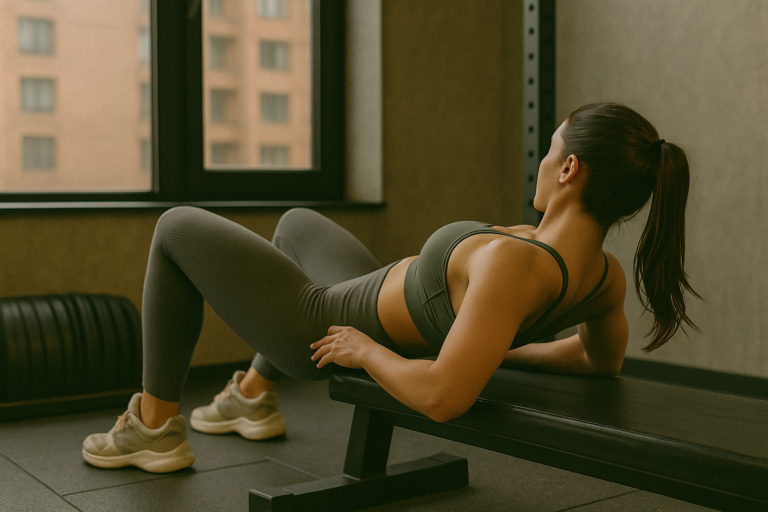
1. Glute Bridges
The foundational exercise for glute activation.
Why it works
Bridges strengthen the glutes while relieving pressure from the lumbar spine.
How to do it
- Lie on your back
- Bend knees, feet flat
- Lift hips by squeezing the glutes
- Hold briefly at the top
- Lower slowly
2. Hip Thrusts
The most powerful glute-isolating exercise available.
Why it works
Hip thrusts build glute strength that directly supports spinal stability.
Tips
- Push through heels
- Keep ribs down
- Squeeze at full extension
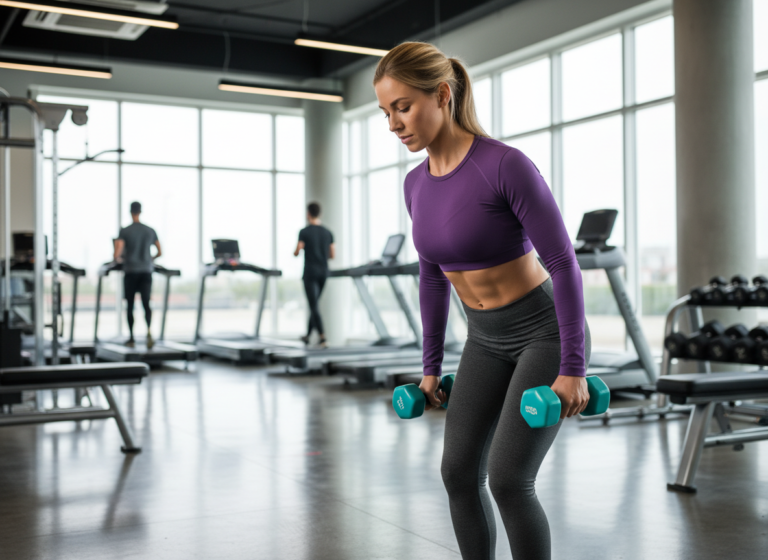
3. Romanian Deadlifts (RDLs)
One of the best exercises for developing the posterior chain.
Why it works
RDLs strengthen hamstrings and glutes without compressing the spine.
Tips
- Keep back neutral
- Push hips backward
- Lift with glutes, not lower back
4. Bird Dogs
A core stability essential.
Why it works
Bird dogs train spinal stabilizers while teaching hip control.
Tips
- Move slowly
- Keep hips level
- Avoid arching your back
5. Hamstring Curls (Stability Ball or Floor)
Engages hamstrings and glutes simultaneously.
Why it works
Balanced hamstring strength takes pressure off the low back.
6. Back Extensions (Modified or Full)
Strengthens lower back safely when performed correctly.
Why it works
A strong lower back prevents compensatory injuries during movement.
Tip
Lift using glutes and hamstrings, not by over-arching.
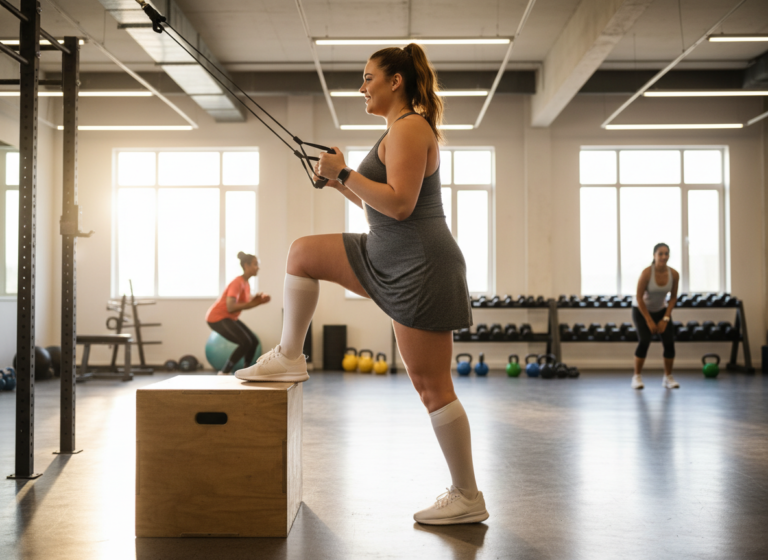
7. Step-Ups
Functional and glute-dominant.
Why it works
Builds unilateral strength and reduces pelvis misalignment.
8. Hip Hinge Practice
A technique drill, not just an exercise.
Why it works
Proper hip hinge form prevents back rounding during everyday bending.
9. Dead Bugs
An anti-extension core exercise.
Why it works
Strengthens the deep core that stabilizes the spine.
10. Glute Medius Work (Side-Lying Lifts, Abductions)
Upper glute strength is essential for pelvic stability.
Why it works
Weak glute medius muscles contribute heavily to low back pain and knee pain.
A Sample 3-Day Posterior Chain Strength Program
You can incorporate this routine into your weekly schedule to gradually reduce back pain and build balanced strength.
Day 1: Activation + Strength
- Glute bridges: 3 × 15
- Hip thrusts: 3 × 10
- Romanian deadlifts: 3 × 12
- Bird dogs: 3 × 10 each side
- Hamstring stretch: 45 seconds
Day 2: Mobility + Stability
- Hip flexor stretch: 45 seconds
- Dead bugs: 3 × 12
- Side-lying leg lifts: 3 × 15
- Back extension (light): 2 × 10
- Cat-cow mobility: 1 minute
Day 3: Integrated Strength
- Step-ups: 3 × 12 each leg
- RDLs: 3 × 10
- Hamstring curls: 3 × 12
- Glute bridge hold: 30 seconds
- Thoracic rotation mobility: 1 minute
How to Know Strengthening Is Working
Within 2–4 weeks, you should notice:
- Fewer “pinch” sensations
- Less morning stiffness
- Improved hip mobility
- A stronger glute contraction during workouts
- Better posture when standing
- Reduced fatigue in the lower back
Within 6–12 weeks:
- Significant reduction in chronic pain
- Enhanced movement confidence
- Ability to perform daily tasks without discomfort
- Stronger, shapelier glutes
- Better overall athletic function
Posterior chain strengthening is not a quick fix.
It is a structural fix — which is exactly why it works.
Lifestyle Habits That Support a Strong Posterior Chain
Back pain recovery doesn’t stop at the gym.
Reinforce your training with these habits:
1. Take standing breaks every 30–60 minutes
Interrupt long sitting periods.
2. Walk intentionally
Engage the glutes lightly during each step.
3. Sleep in a supportive position
Avoid deep spinal twisting.
4. Keep core engaged during daily tasks
Lifting, standing, and even cooking require stability.
5. Use a firm seat cushion if you sit all day
Reduces hip compression and encourages better posture.
Correcting Posterior Chain Imbalance Takes Time, But the Results Are Transformational
Back pain can feel defeating, but it’s rarely permanent.
Your muscles are capable of change, adaptation, and strengthening at any age.
By training:
- Glutes
- Hamstrings
- Lower back
- Core
- Hip stabilizers
You give your spine the support system it always needed.
This is more than pain relief — it is full-body empowerment.
A healthy posterior chain improves:
- movement
- confidence
- athletic ability
- posture
- daily comfort
- longevity
Your back becomes strong not by avoiding movement, but by training the right muscles to share the load.
With consistency, you will not only reduce pain — you will reshape your body, enhance performance, and move with freedom again.