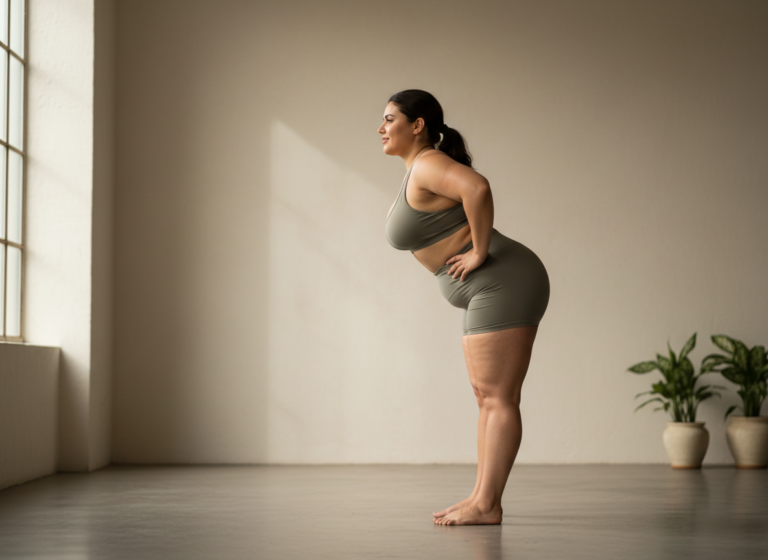
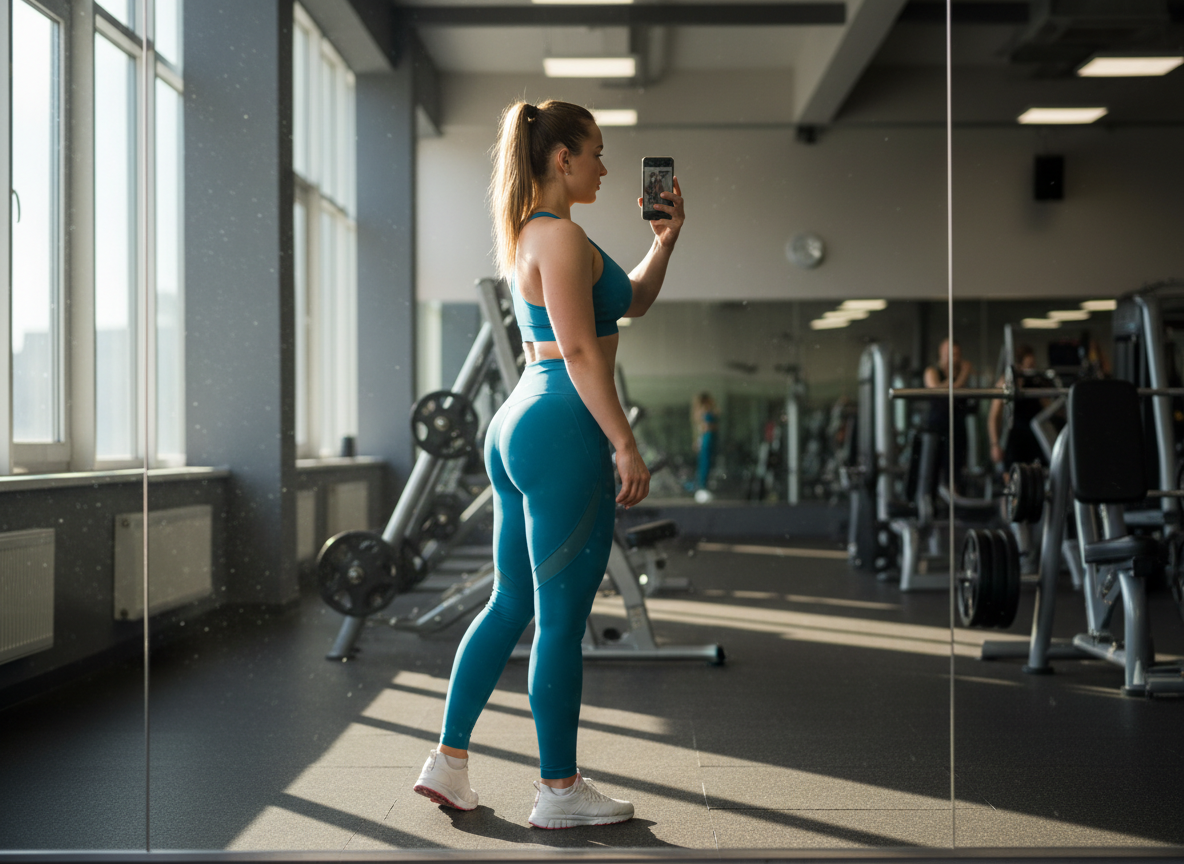
Using Progress Photos Without Obsession
Progress photos are one of the most powerful tools for tracking your fitness journey, especially when it comes to building and shaping your glutes. They reveal what the scale misses, they highlight the small details that numbers cannot express, and they give you a visual history of your hard work.
Yet for many women, progress photos come with an emotional weight.
Instead of feeling motivating, they can become stressful.
Instead of reflecting growth, they become a reason for self-criticism.
Instead of being a tool, they become an obsession.
It is possible to use progress photos without becoming consumed by them.
It is possible to track your booty journey without letting every angle or shadow affect your confidence.
This article teaches you how to do exactly that.
Let’s break it down into mindset, structure, emotional discipline, and a healthy framework.
Why Progress Photos Matter More Than the Scale
Your body composition changes long before your weight does.
Glute training often results in:
- decreased fat
- increased muscle
- improved posture
- lifted appearance
- reshaped silhouette
These changes may not show up on a scale at all.
But photos capture subtle details like:
- higher glute shelf
- deeper hip crease
- smoother transitions between muscle groups
- lifted lower glute area
- more upper-glute roundness
- symmetry improvements
Photos give you proof of progress without relying on numbers that fluctuate from water, sleep, hormones, or digestion.
But like any tool, their value depends on how you use them.
The Dark Side: When Progress Photos Turn Into Obsession
Progress photos can become harmful when they shift from documentation to judgment.
Obsession looks like:
- checking the camera every few days hoping for changes
- comparing yourself to influencers or strangers
- zooming into “flaws”
- feeling anxious before taking photos
- needing validation from improvements
- believing your worth hinges on your appearance
Fitness is supposed to empower you, not trap you.
If progress photos become a source of pressure rather than pride, it’s time to reset your approach.
The Healthy Middle: Using Photos as a Neutral Data Tool
Progress photos should serve the same purpose as:
- measurement tape
- training logs
- nutrition journals
- strength records
They are neutral data tools, not emotional verdicts.
Their purpose is to:
- track changes
- show shape development
- highlight posture improvements
- reveal strength-driven changes
- motivate consistency
- refine your training strategy
When used correctly, they guide your journey without defining your value.
The Secret: Detach Emotion from the Camera
The camera is not your judge.
It is your historian.
Your job is not to love or hate each photo.
Your job is simply to collect them consistently.
Let your future self interpret the story.
How Often Should You Take Progress Photos?
The biggest reason women obsess is because they take photos too frequently.
Daily and weekly photos can make you hyper-aware of tiny fluctuations caused by:
- bloating
- lighting
- soreness
- hydration
- hormones
- stress
Instead, use a structured schedule.
The healthiest frequency:
Every 2–4 weeks.
This is enough time for training changes to show visually.
Anything sooner does not give your body enough time to express results.
The 5 Angles You Should Capture
To avoid over-focusing on a single body part or angle, use a full set:
- Front
- Side
- Back
- Back quarter-turn
- Glutes flexed and relaxed
Taking multiple angles reduces emotional fixation and gives you a fuller picture of your body’s development.
This helps you appreciate improvements like:
- posture alignment
- waist-to-hip ratio changes
- lower back shaping
- hamstring development
- upper-glute curve
- symmetry
Not everything changes from the back view alone.
Consistency Beats Perfection: The Setup Guide
Progress photos should be taken under consistent, controlled conditions.
Keep everything the same each time:
- Same location
- Same lighting
- Same time of day (morning is best)
- Same camera distance
- Same pose
- Same outfit or similar tight-fit clothing
Why?
Because consistent conditions highlight true physical changes instead of environmental ones.
Lighting can erase or exaggerate details.
Angles can distort shape.
Camera distance can alter proportions.
Consistency keeps your comparison honest.
The Most Important Habit: Snap and Step Away
Do not analyze your photos immediately.
This single habit protects your mental health.
Take your photos.
Save them.
Walk away.
Review them only once a month, or even once every two months.
This prevents emotional reactions and allows long-term changes to emerge clearly.
The Comparison Rule: Compare Yourself Only to Yourself
Do not compare your photos to:
- influencers
- strangers
- friends
- models
- fitness coaches
- anyone else
Every body has different genetics, muscle insertion points, pelvis width, fat distribution, and bone structure.
Your goal is not to replicate someone else’s shape.
Your goal is to improve your own.
The only fair comparison is between:
You Today vs You Before.
How to Analyze Your Progress the Healthy Way
Instead of looking for perfection or flaws, look for:
1. Shape Changes
Is your upper glute fuller?
Do you have more roundness from the side?
Is the crease under your glute lifted?
2. Muscle Tone
Are muscles more visible or firm?
Is the hamstring-to-glute transition smoother?
3. Symmetry
Is one side catching up?
Are imbalances improving?
4. Posture
Is your pelvis more neutral?
Is your lower back more aligned?
5. Clothing Fit
Do jeans sit differently?
Do leggings contour differently?
Most women see subtle but real improvements long before they see dramatic changes.
Celebrate subtlety.
That is where transformation begins.
Detach Body Image from Progress Photos
You are allowed to want aesthetic improvements.
You are allowed to want a rounder booty.
You are allowed to sculpt your shape.
But your worth does not rise and fall with your reflection.
Your value is constant.
Progress photos reflect your journey, not your identity.
The Emotional Reset Ritual (Use Before or After Photos)
If you struggle with comparison, try this simple three-step ritual:
Step 1: State Your Intention
This photo is a record, not a judgment.
Step 2: State Your Gratitude
My body carries me through life.
My legs support me.
My glutes stabilize me.
My strength is growing.
Step 3: State Your Boundary
I choose not to criticize myself.
I choose to observe, not judge.
This creates mental space and resets emotional boundaries.
When Progress Photos Are Not Recommended
Some women temporarily benefit from stopping progress photos altogether.
If they trigger:
- anxiety
- body dissatisfaction
- obsessive checking
- compulsive comparing
- emotional spirals
- negative self-talk
It is healthier to pause them.
You can still track progress using:
- measurements
- strength logs
- consistent training
- clothing fit
- energy levels
- mobility improvements
You do not need photos to grow.
Alternative Progress Tracking Methods
If you are sensitive to photos, here are neutral ways to document growth.
Strength Tracking
Track improvements in hip thrusts, RDLs, and abductions.
Mobility Tracking
Better hip external rotation and hinge depth indicate muscular changes.
Performance Indicators
Your stability, balance, and range of motion will improve.
Clothing Fit
This is one of the most honest markers of change.
Booty Feel
Your glutes will feel firmer, more lifted, and more engaged.
Why Your Booty May Be Improving Even If Photos Don’t Show It Yet
Progress photos don’t always reflect early changes such as:
- increased glute activation
- improved neuromuscular efficiency
- reduced quad dominance
- muscle fiber density improvements
- better posture
- more balanced hips
These invisible changes set the foundation for visible transformation later.
Booty growth often appears suddenly around week 6 to 12, even if photos earlier look unchanged.
Trust the process.
Your body is adapting even when you cannot see it yet.
How to Celebrate Progress Without Becoming Dependent on Photos
Practice these habits:
1. Focus on how training makes you feel
Confidence, energy, discipline, mood improvements.
2. Set performance goals
Lift more weight.
Increase reps.
Improve form.
3. Notice lifestyle improvements
Better sleep, less back pain, improved posture.
4. Connect with body appreciation
Your body is your partner, not your project.
5. Cultivate identity-based goals
I am becoming stronger.
I am becoming more consistent.
I am becoming more patient.
I am becoming more capable.
These goals last longer than aesthetic wins.
Progress Photos Should Support You, Not Control You
You deserve to enjoy your fitness journey without pressure.
You deserve to see your body as capable and evolving, not flawed.
You deserve to take progress photos with calmness, not fear.
You deserve to pursue your booty goals with balance, not obsession.
With healthy structure and mindset, progress photos become:
- a record of growth
- a motivator
- a guide
- a memory of how far you’ve come
not a trigger for insecurity.
Final Thoughts: Your Booty Journey Is Bigger Than a Photo
Photos capture moments.
Training shapes your life.
Your confidence grows rep by rep.
Your strength grows week by week.
Your body grows through consistency, not comparison.
Your journey is yours — personal, beautiful, and evolving.
Use progress photos wisely, calmly, and with compassion.
Let them be a tool for reflection, not a measure of your worth.
Your biggest transformation will always begin on the inside before it appears on the outside.