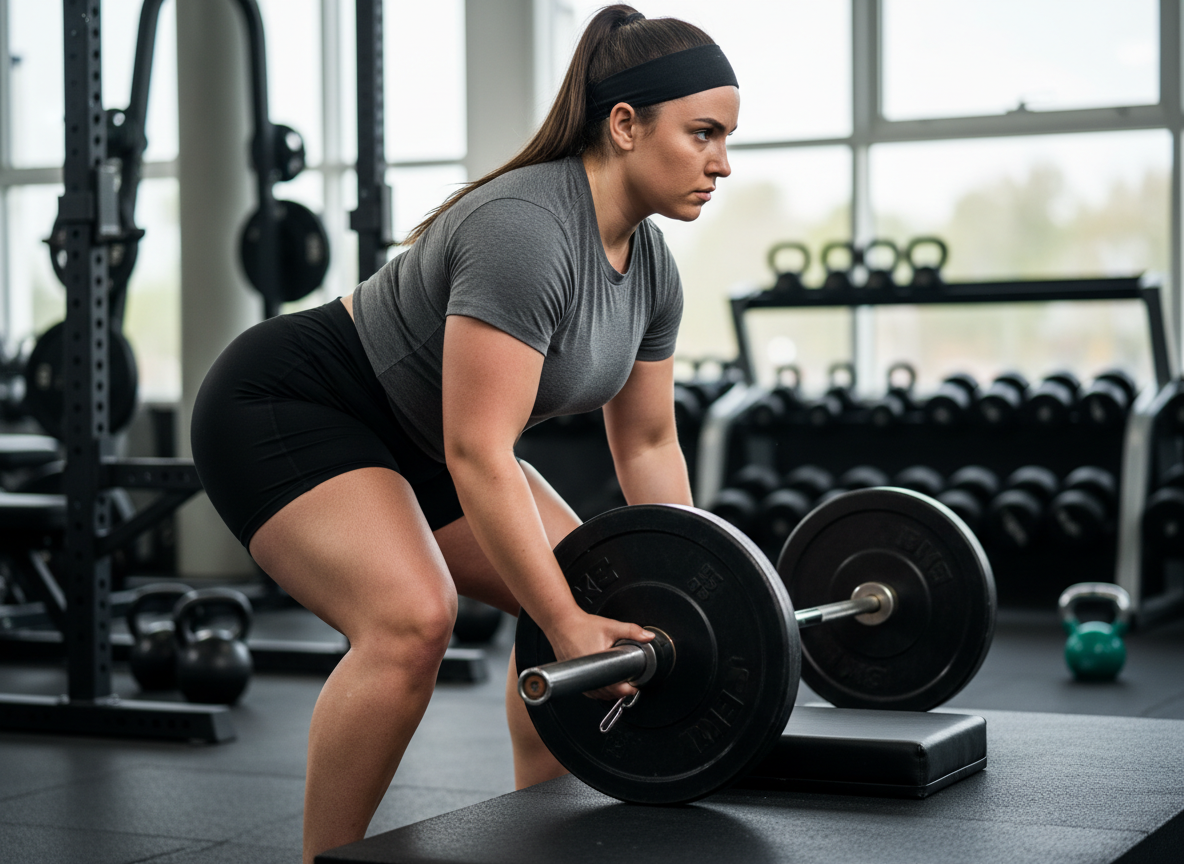
Booty Plateau Guide: How to Break Stagnation
Every woman who trains glutes seriously eventually faces the same frustrating moment:
You’re doing the workouts.
You’re showing up consistently.
You’re lifting. You’re sweating. You’re trying.
But your booty?
It stops changing.
No new roundness.
No extra lift.
No firmness gains.
Just the same shape, week after week.
This is called a glute plateau, and it’s far more common than you realize.
In fact, most people will plateau multiple times during their booty-building journey.
The good news?
A plateau is not a dead end.
It is a signal — your body telling you that it has adapted and is ready for smarter, more intentional training.
This guide explains:
- why booty plateaus happen
- the biomechanics behind stalled glute growth
- how to diagnose the exact cause
- and finally, the step-by-step blueprint to break through stagnation and build new shape
By the time you finish reading, you’ll know exactly what to do next week to restart your progress.
Let’s begin.
What Exactly Is a Booty Plateau?
A plateau occurs when your glutes no longer respond to your current workouts.
You may notice:
- no new muscle growth
- no shape change
- no strength increase
- flatness in progress photos
- the same weight/reps for months
- a weaker mind-muscle connection
- fatigue without results
Plateaus happen because the glutes are adaptive muscles.
They grow when you challenge them — but stop growing when you repeat the same patterns for too long.
Most plateaus are NOT due to genetics or lack of effort.
They are due to predictable training mistakes, all of which can be fixed.
Why Your Booty Has Stopped Growing: The Top Causes
There are several reasons why progress stalls. Understanding them makes the solution clear.
1. No Progressive Overload
Progressive overload means you gradually increase training difficulty over time.
Without it, your muscle has no reason to grow.
Signs this is your issue:
- same weight for weeks or months
- same reps every workout
- same exercises in the same order
- identical weekly routine
Your glutes adapted, so they stopped responding.
How to fix it:
Increase at least one of the following each week:
- weight
- reps
- sets
- tempo
- range of motion
- training frequency
Even a small increase causes a measurable change.
2. Too Much Quad Dominance (Not Enough Glute Activation)
Many women accidentally train their quads more than their glutes, especially during:
- squats
- lunges
- leg press
- step-ups
- deadlifts
If your quads do most of the work, your booty stops growing.
This is the most common hidden cause of a plateau.
How to fix it:
Before your session, warm up with:
- 20 glute squeezes
- 20 band abductions
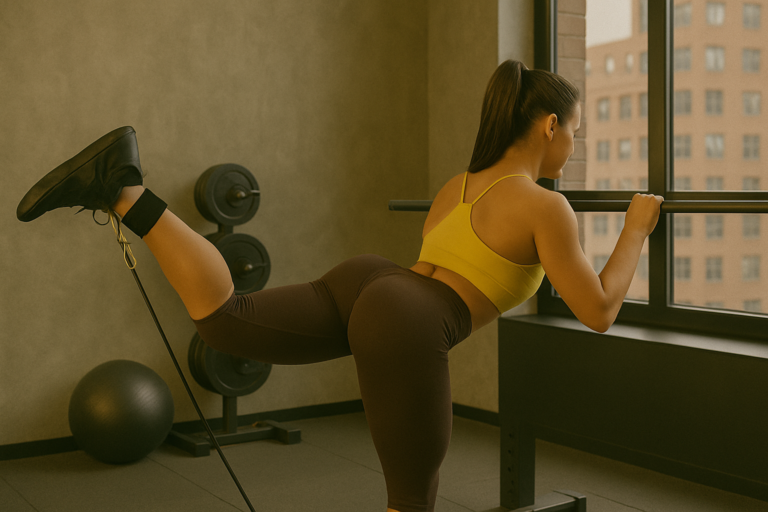
- 15 kickbacks per side
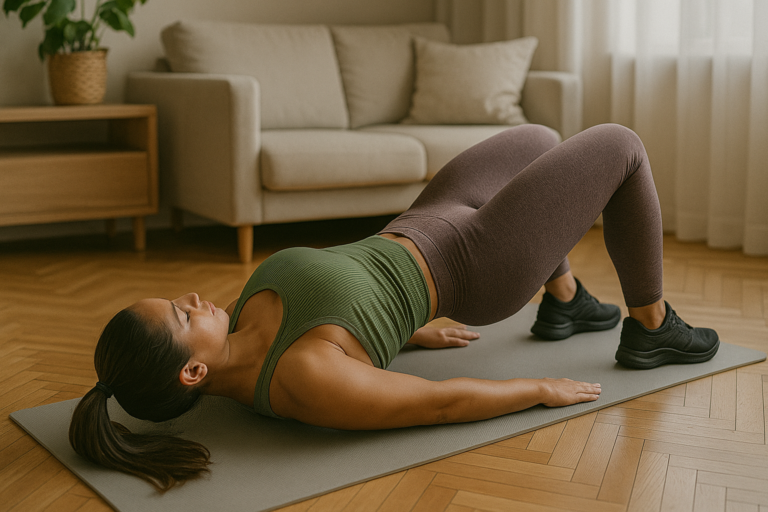
- 20 bridges
A warm booty grows better than a cold one.
3. You’re Not Training All Three Glute Muscles
The gluteus maximus builds size and lift.
The medius builds roundness and upper-booty shape.
The minimus adds depth and stability.
If you’re training only one area, your growth stalls.
How to fix it:
Train all three:
- Hip thrusts for glute max
- Abductions for glute medius
- Stabilization movements for glute minimus
A balanced program unlocks new shape.
4. Your Frequency Is Too Low
Training legs once a week is not enough for glute development.
Most women grow best with:
- 2–3 booty-focused sessions per week
- at least 48 hours between heavy sessions
If you’ve been training glutes only once weekly, plateauing is almost guaranteed.
How to fix it:
Add a second or third glute day.
One heavy, one moderate, one pump/high rep.
5. Insufficient Recovery (Too Much, Too Often)
A booty plateau can also occur from too MUCH training.
Signs you’re under-recovered:
- soreness lasting 3+ days
- weaker performance
- tight hip flexors
- low back irritation
- no motivation
- chronic fatigue
Your muscles need time and fuel to grow.
How to fix it:
- sleep 7–9 hours
- eat adequate protein
- take rest days
- reduce stress
- rotate heavy and light days
Your glutes grow outside the gym, not inside.
6. Lack of Exercise Variety
Doing the same three exercises for months leads to predictable adaptation.
Hip thrusts are amazing, but not enough alone.
The glutes need:
- thrust patterns
- squat patterns
- hinge patterns
- abduction patterns
- stabilization patterns
How to fix it:
Include all five categories weekly.
A plateau is usually broken by introducing a new angle or pattern.
7. Poor Mind-Muscle Connection
If you can’t feel your glutes contracting, they won’t grow.
Over-reliance on momentum, speed, or improper form makes your glutes passive during exercises.
How to fix it:
- slow every rep
- pause at the top
- squeeze as hard as possible
- reduce weight until you feel full control
Feeling the glutes matters more than lifting heavy.
8. Nutrition Gaps
A booty plateau often has nothing to do with training — and everything to do with nutrition.
Without enough:
- protein
- calories
- hydration
- micronutrients
muscles do not repair or grow.
How to fix it:
- consume 0.7–1 gram of protein per lb of body weight
- increase healthy fats
- eat enough complex carbs
- hydrate well
Your glutes are muscles. They need fuel.
The Booty Plateau Breakthrough Blueprint
Here is a scientifically structured method to restart booty growth immediately.
Step 1: Reset and Rebuild Activation
Spend 1 week improving glute activation before workouts.
Daily mini-routine:
- 20 glute squeezes
- 20 bridges
- 20 abductions
- 15 kickbacks per side
- 30-second bridge hold
This reconnects your brain to your glutes, setting the foundation for growth.
Step 2: Choose a Three-Day Booty Training Split
Use this proven structure:
Day 1: Heavy Strength (Glute Max Focus)
- Hip thrusts
- Romanian deadlifts
- Reverse lunges
- Glute bridges
Heavy loads stimulate new muscle fibers.
Day 2: Shape and Roundness (Upper Glutes)
- Kickbacks
- Side-lying leg lifts
- Curtsy lunges
- Abductions
This day improves side profile and curves.
Day 3: High-Rep Pump (Metabolic Stress)
- Frog pumps
- Bridge pulses
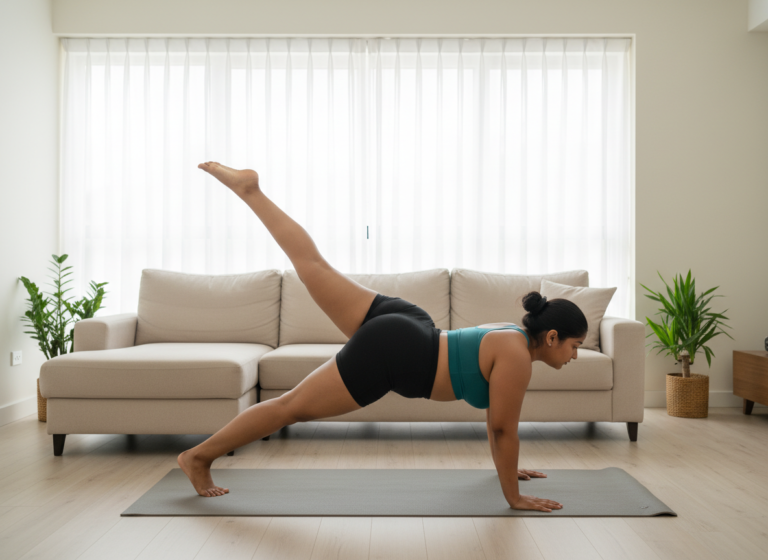
- Donkey kicks
- Banded thrusts
High reps create metabolic stress that drives hypertrophy.
Step 3: Add Progressive Overload Every Week
Choose one overload method per session:
- add weight
- add reps
- add a set
- slow tempo
- longer squeezes
- deeper range of motion
Even a tiny increase resets growth.
Step 4: Fix Your Form and Reduce Quad Dominance
Common form corrections:
- push through heels
- maintain slight forward lean in lunges
- keep ribs down in hip thrusts
- keep knees soft in RDLs
- squeeze glutes at peak contraction
This directs work into the glutes where it belongs.
Step 5: Incorporate New Exercises Every 4–6 Weeks
Instead of repeating the same routine forever, rotate:
- thrust variations
- hinge variations
- lunge variations
- abduction variations
New angles = new growth.
Step 6: Improve Your Recovery Strategy
To break plateaus, improve:
Sleep
Muscle grows during deep sleep cycles.
Nutrition
Eat enough to support new tissue.
Stress Management
High cortisol blocks muscle growth and increases fat storage.
Mobility
Tight hips or hamstrings reduce range of motion and activation.
Better recovery equals better gains.
Step 7: Increase Non-Gym Booty Activation
Daily habits that help glute growth:
- walk with intentional glute engagement
- avoid long periods of sitting
- practice posterior pelvic tilt control
- stretch hip flexors twice daily
Small actions create cumulative improvement.
Step 8: Track Your Training
Nothing breaks a plateau faster than training with intention.
Track:
- weights
- reps
- sets
- weekly volume
- frequency
- form notes
If you don’t track, you can’t know where stagnation started.
How Long Does It Take to Break a Plateau?
Most women see renewed progress within:
- 2 weeks: activation and strength increase
- 4 weeks: shape becomes firmer
- 6–8 weeks: visible size and roundness improvements
- 12+ weeks: major transformation
Patience + consistency = results.
Common Plateau Myths (Debunked)
Myth: You need to lift super heavy
Truth: You need progressive overload, not extreme weights.
Myth: You need more squats
Truth: Squats are not glute-dominant.
Myth: You are genetically flat
Truth: Almost everyone can grow glutes with the right program.
Myth: More workouts = more gains
Truth: Recovery is equally important.
Signs Your Plateau Is Breaking
You’ll know things are working when:
- posterior chain activation increases
- you feel glutes burning in exercises
- you gain strength week by week
- soreness shifts from quads to glutes
- photos show roundness after 3–6 weeks
- hip dips reduce
- jeans fit differently
- booty feels firmer
Progress returns faster than most women expect once the plateau formula is applied.
Final Thoughts: A Plateau Is Not Failure — It’s Feedback
A booty plateau is not a reason to give up.
It’s a turning point.
A chance to train smarter, not harder.
Remember:
- Your glutes are adaptable
- They respond to new challenges
- They grow when stimulated correctly
- They transform when training is intentional
Use this guide as your roadmap.
Break the stagnation.
Rebuild momentum.
Rediscover excitement in your training.
Your strongest, roundest, most sculpted glutes are not behind you — they are ahead of you.