Gym Anxiety on Booty Day: How to Overcome
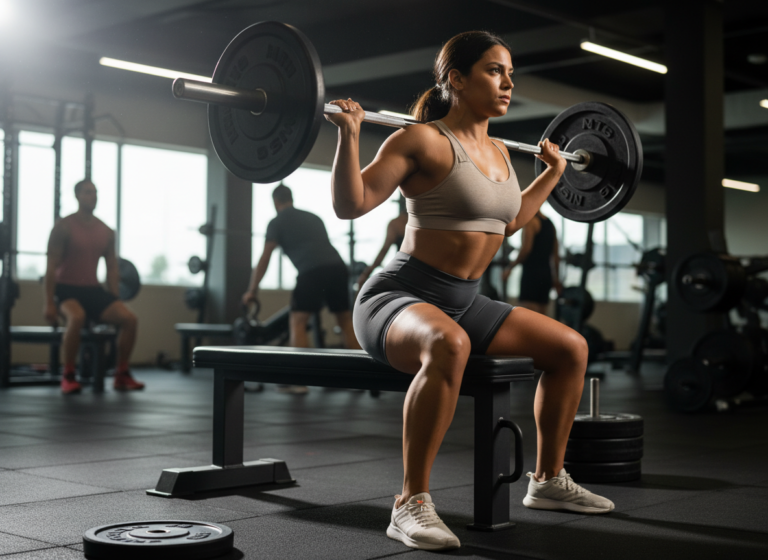
Many women feel gym anxiety, especially on lower-body or booty day, when movements require bending, thrusting, stepping, or taking up space in a weight room that often feels designed for men. Booty training also tends to involve exercises that are more visible or feel awkward when you’re self-conscious. And if you’re new, lack experience, or struggle with body image, that anxiety can intensify.
But here’s the truth most fitness articles never say out loud:
Gym anxiety on booty day is normal, common, and absolutely conquerable—with the right tools, mindset, and structure.
This guide breaks down not only why you feel anxious, but also how to build confidence, claim your space, and train your glutes with power, purpose, and pride—no matter your level.
Let’s take this step-by-step.
Why Booty Day Feels More Intimidating Than Other Workouts
Gym anxiety has layers—emotional, physical, social, and internal.
Understanding those layers helps you dismantle them.
1. Booty exercises feel “exposed” or awkward
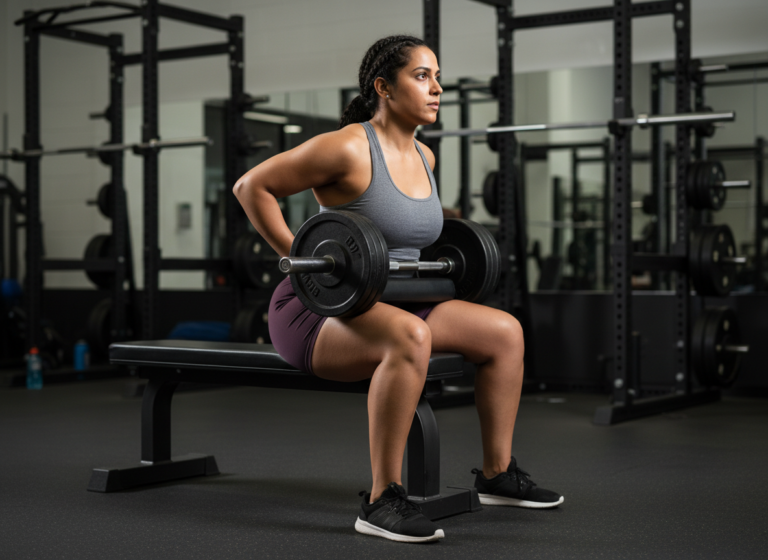
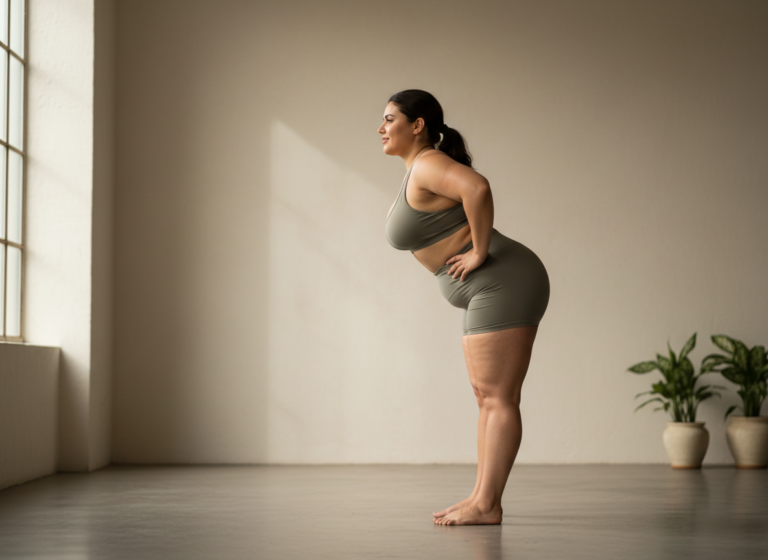
Movements like hip thrusts, Romanian deadlifts, donkey kicks, and glute bridges put your body in angles you might feel self-conscious about.
Many women fear:
- being watched
- being judged
- looking inexperienced
- performing the exercise incorrectly
- appearing “too focused on aesthetics”
But in reality, these are normal exercises, and glute training is one of the most common forms of training for men and women.
Awkwardness is a perception, not a truth.
2. Fear of taking space in the weight room
The weight room is often male-dominated, especially around benches and barbells.
Booty day requires:
- hip thrust setups
- benches
- barbells
- dumbbells
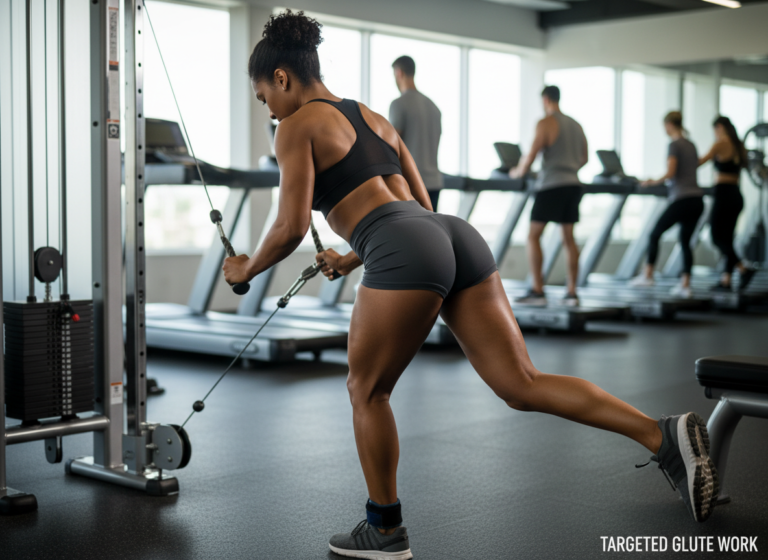
- cables
You may feel like you’re interrupting the “regulars.”
But space in the gym isn’t owned by anyone—it is shared.
3. Fear of being seen as a beginner
Many women avoid glute exercises because they worry they’ll look inexperienced.
But confidence doesn’t come before practice.
It comes because of practice.
Every expert once stood exactly where you stand as a beginner.
4. Comparison to others
Gym mirrors and social media have created unrealistic expectations.
You might compare your shape, strength, or experience level to:
- influencers
- athletes
- seasoned gym members
Comparison fuels anxiety, while progress fuels confidence.
5. Not knowing what to do or what order to follow
Booty day often involves several exercises, different equipment, and progression.
Uncertainty creates discomfort.
Clear structure removes anxiety.
Now that we understand these roots, let’s build real confidence.
How to Overcome Gym Anxiety on Booty Day
These strategies work for both beginners and intermediates who want to feel strong, capable, and confident during glute training.
1. Have a Clear Booty-Day Plan Before Entering the Gym
Uncertainty is the biggest driver of gym anxiety.
When you walk in with a clear plan, your brain shifts into execution mode—not survival mode.
Your plan should include:
- warm-up
- 3–4 main lifts
- 1–2 accessory moves
- finisher
- cool down
Example:
- Hip thrusts
- RDLs
- Reverse lunges
- Abductions
- Glute burnout circuit
Having a script instantly reduces anxiety.
2. Start in a Low-Pressure Area and Warm Up Confidently
Your warm-up is your comfort zone.
Use:
- mats
- stretching areas
- functional training zones
Perform activation moves such as:
- glute bridges
- clamshells
- abductions
- band steps
This accomplishes three things:
- activates your glutes
- calms your nervous system
- transitions your mind into focus mode
Confidence begins during warm-up, not the first rep.
3. Use Exercises You Feel Competent Performing
You don’t need advanced moves to see results.
Even simple moves build confidence when done well.
If hip thrusts feel overwhelming at first, start with:
- dumbbell bridges
- bench-supported thrusts
- Smith machine thrusts
If RDLs feel intimidating, practice:
- bodyweight hip hinge
- dowel rod hip hinge
- light dumbbell RDL
Master a handful of moves, then expand over time.
Skill builds confidence.
Confidence reduces anxiety.
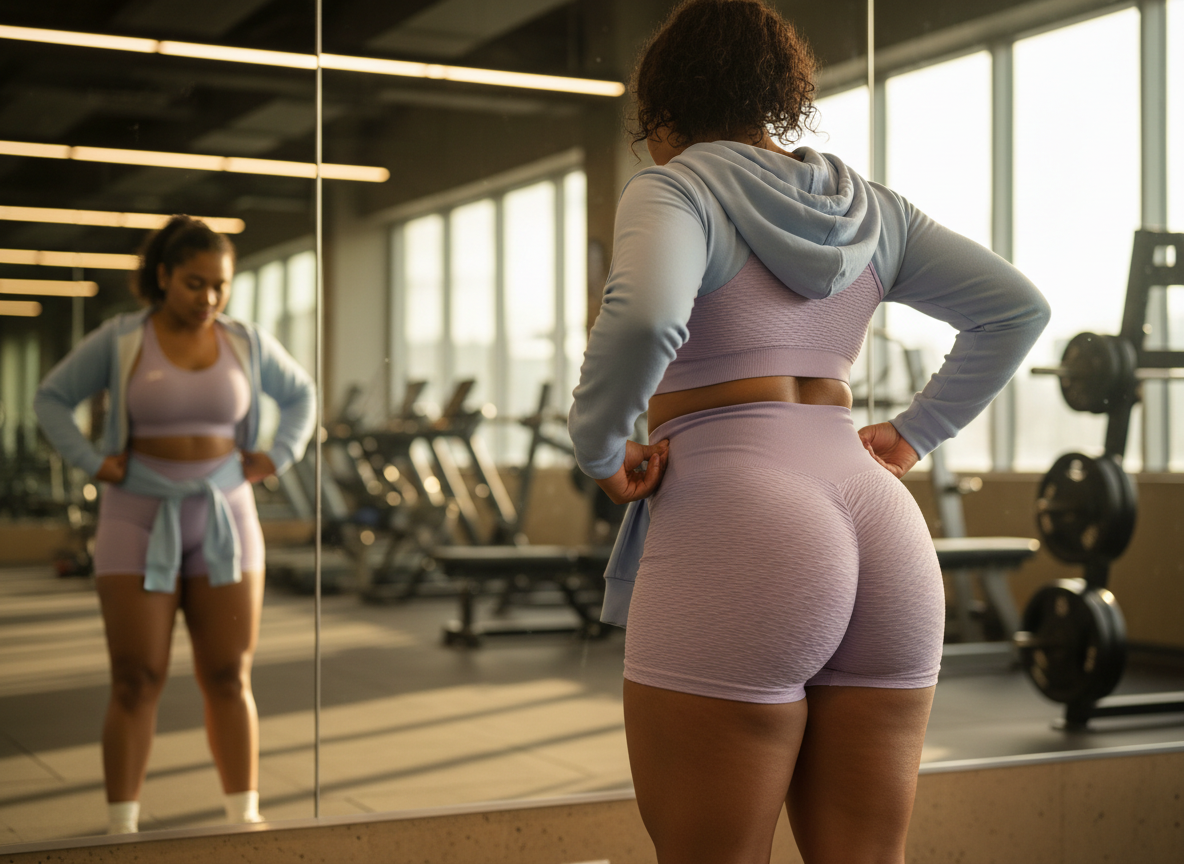
4. Wear an Outfit You Feel Comfortable Moving In
Your clothes should support your confidence, not undermine it.
For booty day, choose:
- leggings that don’t slip
- tops that feel secure
- fabrics you trust in various angles
Comfort eliminates distraction.
When you feel secure in your outfit, you feel secure in your movement.
5. Claim Your Space With Setup Rituals
Your setup is part of your confidence routine.
For hip thrusts:
- adjust the bench
- set the bar
- add padding
- position your feet
- take a breath
When you treat setup like a ritual, the movement becomes controlled and intentional—not awkward.
People respect those who move with purpose.
Even if you’re learning, rituals make you look and feel experienced.
6. Shift Your Focus Inward Instead of Outward
Gym anxiety thrives when you’re paying attention to:
- others’ judgments
- others’ bodies
- others’ workouts
Instead, focus inward:
- how your glutes contract
- your breathing
- your form
- your reps
- your progress
You can’t feel anxious and deeply present at the same time.
Presence is your anchor.
7. Practice “Small Exposure Wins”
Overcoming gym anxiety is like strengthening a muscle:
it improves through repetition and progressive exposure.
Start with what feels achievable:
Week 1: warm up and do two glute exercises
Week 2: add a third
Week 3: do a full structured booty workout
Week 4: add barbells or hip thrusts
Small victories destroy fear.
8. Train During Low-Traffic Times (If Possible)
If the gym environment itself overwhelms you, choose times such as:
- mid-morning
- early afternoon
- late evening
Training during quieter times helps you build confidence before progressing into peak hours.
9. Use Music to Create a Personal Bubble
Music is a powerful tool for emotional regulation.
Choose songs that:
- energize you
- calm your nerves
- create focus
- reduce overthinking
Headphones also signal that you’re in your own world.
They reduce social pressure instantly.
10. Remind Yourself: Most People Aren’t Watching You
This truth is liberating:
Ninety-nine percent of people in the gym are focused on:
- their own form
- their own bodies
- their own insecurities
- their own progress
People who seem experienced were once nervous beginners too.
If anyone is watching, it’s often out of admiration for your effort.
11. Use Equipment Alternatives if a Station Feels Intimidating
If the cable machine is taken or the barbell area feels overwhelming, use alternatives that work just as well:
Instead of hip thrusts:
- dumbbell thrusts
- smith machine thrusts
- frog pumps
- bridge variations
Instead of abductions:
- banded abductions
- standing band pulls
Instead of RDLs:
- dumbbell RDLs
- kettlebell RDLs
Progress doesn’t require the “perfect” equipment.
12. Learn Proper Form at Home First
Practicing in private:
- builds confidence
- reduces fear of looking unsure
- prepares your body
- strengthens muscle memory
Try practicing:
- hip hinge
- squat pattern
- bridge pattern
- lunges
- abductions
When you practice at home, you enter the gym already knowing what to do.
13. Commit to Showing Up, Not to Being Perfect
Confidence is built through imperfect action.
Every gym session you complete chips away at anxiety.
Your job is not perfection.
Your job is showing up.
Each rep is a vote for the stronger, more confident version of yourself.
14. Track Your Strength Gains to Replace Fear With Pride
When you see yourself:
- adding weight
- adding reps
- improving form
- feeling your glutes activate better
your confidence naturally grows.
Track your progress weekly or monthly.
Nothing reduces gym anxiety like seeing tangible improvement.
15. Build a “Booty Day Ritual” You Look Forward To
Your ritual could include:
- your favorite leggings
- your playlist
- your favorite warm-up
- a hydration routine
- post-workout stretching
- journaling progress
Rituals make booty day feel like an empowering self-care event, not a stress-triggering obligation.
What Results You Can Expect Once Anxiety Starts Fading
As confidence rises, your training improves dramatically.
You will begin to:
- feel your glutes activate more strongly
- lift with better form
- progress more quickly
- explore new equipment
- take up more space without hesitation
- enjoy the gym instead of fearing it
- feel proud of your body rather than hiding it
Booty day becomes a place of growth, not anxiety.
Final Message: You Belong in the Gym as Much as Anyone Else
Your body, your goals, your strength, your space—
you have the right to all of it.
Gym anxiety doesn’t mean you’re weak.
It means you’re human.
The fact that you continue showing up proves you are capable of far more than you give yourself credit for.
You don’t overcome gym anxiety overnight.
You overcome it rep by rep, session by session, week by week, until one day you look up and realize:
Booty day is no longer intimidating.
It’s empowering.
It’s no longer something you fear.
It’s something you own.
And the confidence you build in the gym begins to overflow into every part of your life.
You deserve to feel strong.
You deserve to feel proud.
You deserve to take up space.
Booty day is your reminder.