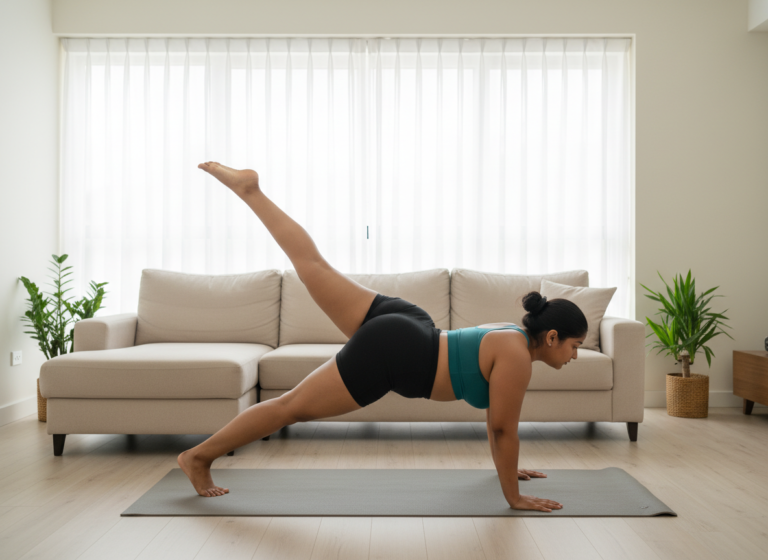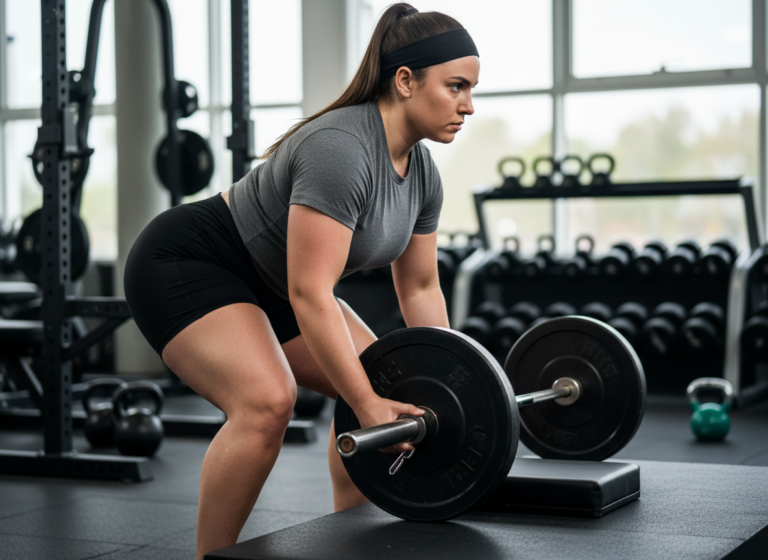
Why Your Thighs Steal Your Booty Gains (Quad Dominance)
You show up for booty day with good intentions.
You pick the right exercises, you try to squeeze your glutes, and you push through the workout.
But instead of feeling the burn in your booty, you feel it in the front of your thighs.
Your quads get sore.
Your legs get pumped.
Your booty stays asleep.
If this sounds familiar, you’re dealing with one of the most common issues in women’s fitness:
Quad dominance — when your thigh muscles (quadriceps) overpower your glutes during lower-body exercises.
This imbalance can completely stall your booty progress.
It doesn’t matter how many booty workouts you do, how many videos you follow, or how many reps you push through — if your quads keep stealing the work, your glutes will not reshape the way you want.
The good news is this:
Quad dominance can be fixed.
Completely.
Naturally.
Often faster than you expect.
This article breaks down exactly why your thighs take over, how quad dominance develops, how it stops booty growth, and the step-by-step method to reverse it.
Let’s get into it.
What Is Quad Dominance?
Quad dominance means your quadriceps (front thigh muscles) activate more than your glutes during lower-body movement.
When you should be using your glutes, your quads jump in and take over:
- During squats
- During lunges
- During hip thrusts
- During step-ups
- Even during walking or running
Instead of loading the glutes, your body defaults to the stronger, more dominant front-of-thigh muscles.
Quad dominance is not a “bad body type” or “genetic problem.”
It’s simply a movement pattern issue, and movement patterns can be retrained.
How Quad Dominance Ruins Booty Gains
When your quads take over:
- Your glutes don’t get enough stimulus.
- The booty doesn’t grow, lift, or firm.
- You feel lower-back pressure instead of glute activation.
- You experience knee strain during squats or lunges.
- You get thigh growth instead of booty growth.
This is why some women work out for months or years with little booty progress — not because they lack effort, but because they’re unintentionally training the wrong muscles.
Your body follows whatever pattern feels easiest.
If the quads are used to working, they will always jump in first.
The solution is not to “stop using quads.”
The solution is to retrain your glutes to activate correctly.
Before we fix it, let’s understand where quad dominance comes from.
7 Reasons Your Quads Take Over and Your Booty Stays Dormant
Quad dominance does not come from one single cause — it builds slowly through lifestyle habits, posture, and training patterns.
Here are the main contributors:
1. Sitting All Day (Dormant Glute Syndrome)
Modern life is the perfect recipe for glute shutdown.
When you sit for long hours:
- Glutes stretch and weaken
- Hip flexors tighten
- Pelvis tilts forward
- Quads shorten and overwork
This imbalance leads to quad overactivation and glute underactivation.
Even women who work out consistently suffer from this if they sit most of the day.
2. Poor Glute Activation Before Workouts
Most people go straight into squats or lunges without preparing the glutes.
But glutes don’t just “turn on” automatically — especially if they’re weak or inactive.
Without activation:
- Quads fire instantly
- Glutes stay quiet
- Form breaks down
- Booty results slow to almost nothing
Activation is not optional. It is essential.
3. Wrong Exercise Technique
A simple shift in weight distribution or posture can move the load to the quads.
Examples:
- Knees traveling too far forward in squats
- Pushing through toes instead of heels
- Torso too upright
- Not hinging at the hips
- Feet too narrow
- Arching the lower back during thrusts
- Not tucking the pelvis at the top
Even if you choose the right exercises, poor form shifts pressure to the quads.
4. Weak Glutes Compared to Strong Quads
Many women unknowingly train their quads far more than their glutes.
Daily movements strengthen quads:
- Walking
- Climbing stairs
- Sitting and standing
- Running
- Bending forward
- Cycling
But glutes don’t get trained unless you activate them deliberately.
Over time, quads become stronger, glutes become weaker, and the dominance cycle continues.
5. Tight Hip Flexors
Tight hip flexors block the glutes from firing efficiently.
This happens when:
- You sit too long
- You sleep curled up
- You don’t stretch
- You do too much quad training
Tight flexors create a forward pelvis tilt (APT), which makes booty exercises feel awkward and encourages quad use.
6. Poor Mind-Muscle Connection
If you cannot feel your glutes working during exercises, that is a sign of quad dominance.
A weak mind-muscle connection leads to:
- Poor contraction
- Minimal growth
- Incorrect form
- Inconsistent tension
Feeling your glutes is the first step to growing them.
7. Choosing the Wrong Exercises for Your Body
Some exercises are quad-dominant by nature:
- Forward lunges
- Standard squats
- Leg press
- Leg extensions
These are not wrong, but they are not ideal when your goal is to limit quad involvement.
If your body already favors the quads, these movements reinforce the imbalance.
Signs You Have Quad Dominance
Here are the main symptoms:
- You feel squats mostly in your thighs
- Lunges burn your quads more than your glutes
- Hip thrusts feel like a leg exercise
- Your quads grow faster than your booty
- You cannot feel your glutes activate during workouts
- Your glutes rarely feel sore
- You have knee pain during lower-body exercises
- Your thighs fatigue before your glutes do
- Your booty feels soft or flat despite training consistently
If you relate to three or more, you likely have quad dominance — but again, it is fixable.
How to Fix Quad Dominance and Unlock Booty Gains
The solution is threefold:
- Activate the glutes
- Train with correct form and proper muscle focus
- Choose glute-dominant exercises while limiting quad work
Let’s break each down.
1. Activate Your Glutes Properly Before Every Workout
Spend 3–5 minutes activating your glutes before any lower-body training.
These movements wake up dormant muscles:
Glute Activation Circuit (Do Before Every Booty Workout)
- 15 glute bridges
- 20 abductions
- 10 donkey kicks per side
- 10 fire hydrants per side
- 10–20 seconds of bridge holds
Activation prepares your glutes to take over the work instead of letting quads dominate.
2. Fix Your Form and Training Technique
Here are adjustments that dramatically reduce quad dominance.
Fix 1: Push Through Your Heels
This shifts the load into the glutes.
If you struggle:
- Wiggle your toes inside your shoes
- Keep your weight back
- Use a wider stance for better stability
Fix 2: Lean Slightly Forward During Glute Movements
For exercises like lunges or Bulgarian split squats, a slight forward torso lean positions the glutes as the primary movers.
Avoid staying too upright — that is quad territory.
Fix 3: Sit Back, Not Down
When squatting or hinging:
- Push your hips back first
- Do not bend your knees first
This protects your quads and shifts tension to the glutes.
Fix 4: Squeeze at the Top With a Pelvic Tilt
The top of a hip thrust or bridge is where the glutes contract the hardest.
Add:
- slight pelvic tuck
- deep squeeze
- full lockout
This turns the exercise into a glute builder instead of a quad burner.
Fix 5: Slow Down Your Reps
Fast reps make quads take over.
Slow reps increase glute tension and control.
Try a 3-second lowering phase.
3. Choose Exercises That Maximize Glute Activation and Minimize Quad Use
Here are the best glute-dominant movements to fix quad dominance quickly:
Top Glute-Dominant Exercises
Hip thrusts
The most glute-focused exercise in existence.
Romanian Deadlifts (RDLs)
Build the lower-glute tie-in and reduce quad engagement.
Glute bridges
Great for beginners and form correction.
Frog pumps
Activate the booty with minimal quad involvement.
Kickbacks
Isolate the gluteus maximus.
Side-lying leg lifts
Isolate the upper glutes and help balance hip structure.
Reverse lunges
More glute-focused than forward lunges.
Exercises to Limit Until Your Glutes Are Stronger
These are not bad, but they can be quad-heavy for beginners:
- Forward lunges
- Standard squats
- Leg press
- Step-downs
- Wall sits
- Cycling-based workouts
You can reintroduce these later after you retrain your glutes.
4. Improve Hip Mobility and Stretch Tight Muscles
Stretching your hip flexors reduces quad dominance dramatically.
Perform:
- Hip-flexor stretch (30–60 seconds per side)
- Hamstring stretch
- Glute stretch
- Quad stretch
When hip flexors relax, glutes activate more powerfully.
5. Strengthen Your Core and Posterior Chain
A weak core leads to posture that encourages quad dominance.
A strong posterior chain improves:
- balance
- glute engagement
- hip stability
- proper movement patterns
Try adding:
- bird-dogs
- planks
- back extensions
- good mornings
Just twice a week is enough.
6. Build Mind-Muscle Connection
Visualizing and feeling the glute contract increases activation by up to 15 percent, according to EMG studies.
Tips:
- Place your hand on your glute during exercises
- Move slowly
- Contract intentionally
- Pause at the top
If you can feel the glute working, it will grow.
7. Adjust Your Weekly Training Structure
To fix quad dominance, apply this training split:
Day 1: Strength-based booty training
Hip thrusts, RDLs, bridges, reverse lunges
Day 2: Upper glute and isolation training
Kickbacks, abductions, curtsy lunges
Day 3: Light activation and pump day
Frog pumps, pulses, bodyweight glute work
This approach ensures the glutes get prioritized three times per week, retraining the muscle pattern quickly.
How Long Does It Take to Fix Quad Dominance?
If you follow this structure:
- 2–3 weeks: noticeable increase in glute activation
- 4–6 weeks: quads fatigue less, glutes feel stronger
- 8–12 weeks: major improvements in booty shape and growth
After 3 months, most women can fully reverse quad dominance and start building real glute mass.
Final Thoughts: Your Booty Can Grow Once You Break the Quad Dominance Cycle
Quad dominance is not a permanent roadblock.
It is simply a miscommunication between your brain and your muscles, reinforced by lifestyle habits and training mistakes.
Once you correct it, everything changes:
- You feel your glutes during workouts
- Your booty finally responds to training
- Your thighs stop taking over
- Your lower body becomes balanced and pain-free
- Your body shape begins to transform
With activation, form corrections, glute-focused exercises, and consistent training, your booty will grow the way you’ve always wanted.
For the first time, the right muscles will be doing the right work.
This is how you take control of your results.