Grow vs Tone: What’s the Difference for Your Booty?
Every woman begins her glute journey with one burning question:
Do I want to grow my booty or tone it?
Most people use these words interchangeably, but in the fitness world, they mean completely different things. In fact, training for a toned booty and training for a fuller, rounder booty follow two very different scientific pathways.
If you’ve ever felt confused by terms like shaping, sculpting, tightening, building, defining, or toning, this guide will make everything clear.
You’ll learn exactly:
- what growth means
- what toning means
- which one you’re actually chasing
- how to train for each goal
- what mistakes ruin progress
- how long results take
By the end, you’ll know precisely what to do to get the booty shape you want, without guessing or wasting time on the wrong workouts.
Let’s break it down simply and clearly.
What Does “Grow” Really Mean?
To grow your booty means to increase the size of the glute muscles.
This is called hypertrophy.
Glute growth creates:
- more volume
- roundness
- projection from the side
- a fuller look from the back
- a lifted appearance
- curves around the hips
Growth focuses on making the muscle fibers bigger.
Think of it as building the foundation, brick by brick.
Growing your glutes requires:
- moderate to heavy resistance
- progressive overload
- enough weekly training volume
- higher-calorie or maintenance eating
- proper recovery
- slower, controlled reps
Without these, muscle cannot grow.
What Does “Tone” Really Mean?
Toning your booty means:
- improving muscle definition
- tightening the area
- reducing softness
- increasing firmness
- improving shape without significant size gain
Toning does not make muscles bigger.
It makes them more visible and more defined.
Tone happens when:
- body fat reduces slightly
- the muscle underneath becomes firmer
- training is lighter, more controlled, and higher-rep
- nutrition supports fat loss or maintenance
Toning does not require heavy weights.
It does not require eating in a calorie surplus.
Tone is the polishing stage, not the building stage.
Grow vs Tone: The Scientific Difference
Here is the simplest explanation you will ever read.
When you train your glutes:
- If the load is heavy enough, and calories are sufficient, your body says:
“I need to build more muscle.”
This equals growth. - If the load is moderate and calories are controlled, your body says:
“I need to firm and define what I already have.”
This equals tone.
Growth = building.
Tone = refining.
Both are useful, but they require different strategies.
The Visual Difference in Your Booty
Understanding the difference becomes easy when you imagine the outcomes.
A grown booty looks:
- rounder
- fuller on top
- fuller on the sides
- more lifted
- smoother and more curved
- bigger in shape
Growth often improves hip dips naturally due to added upper-glute volume.
A toned booty looks:
- firm
- lifted
- tight
- sculpted
- defined
- athletic
Toning does not dramatically change size, but it improves the aesthetics and firmness of your natural shape.
Which Goal Do Most Women Want?
Most women unknowingly want a combination:
They say they want to “tone,” but what they actually desire is:
- more roundness
- more lift
- more projection
- less flatness
- less sag
These are growth results, not toning results.
Toning only improves what already exists.
Growth creates what is missing.
If your booty is flat, square, soft, or lacking shape, you need growth first, then tone later.
This is why so many women get frustrated with light workouts or resistance-band routines — they tone a muscle that has not been grown yet.
How to Train for Booty Growth
Growth training is all about hypertrophy.
Below is the blueprint.
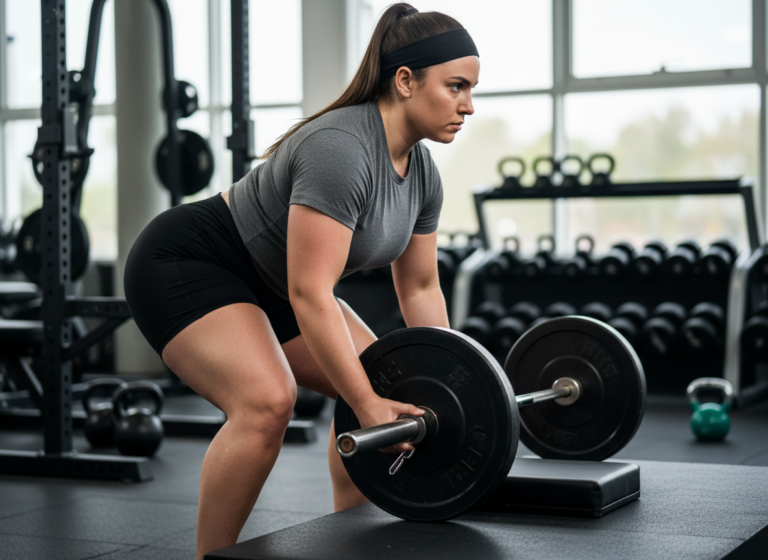
1. Use Moderate to Heavy Resistance
Your glutes must work harder than they are used to.
Bodyweight alone is not enough for long-term growth.
Ideal choices include:
- dumbbells
- barbells
- kettlebells
- ankle weights
- resistance bands for added tension
The weight should feel challenging by the last few reps.
2. Focus on Progressive Overload
Your glutes will grow only if you increase difficulty over time.
You can overload by:
- adding weight
- increasing reps
- increasing sets
- slowing tempo
- adding pauses
- improving range of motion
If your workout looks the same every week, your booty stays the same.
3. Train 2–3 Times Per Week
Optimal frequency for growth is:
- 2 days for beginners
- 3 days for intermediates
- 4 days for advanced lifters with structured programming
Spacing these sessions 48 hours apart ensures proper recovery and muscle remodeling.
4. Prioritize Glute-Dominant Exercises
These movements create the most hypertrophy.
Top growth exercises:
- hip thrusts
- Romanian deadlifts
- reverse lunges
- Bulgarian split squats
- glute bridges (weighted)
- step-ups
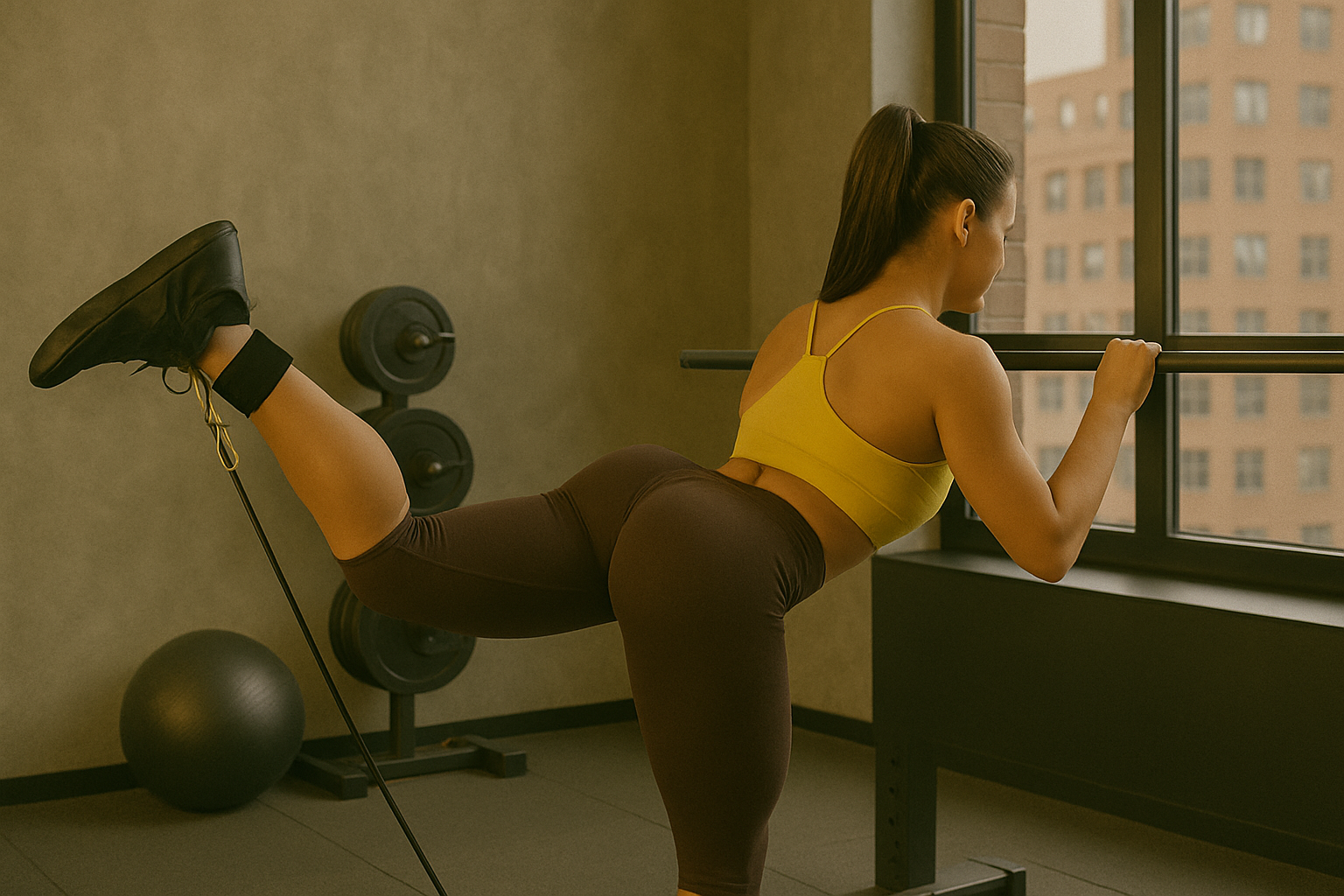
- cable kickbacks
- frog pumps for high-rep finishers
Your program should combine:
a heavy hinge, a squat/lunge, and an abduction movement.
5. Eat Enough to Support Growth
Your booty cannot grow without sufficient fuel.
Aim for:
- enough calories to support training
- 20–30 grams of protein per meal
- good hydration
- carbs pre-workout for energy
A calorie deficit stops muscle growth completely.
6. Rest and Sleep
Muscles grow when you rest, not while you train.
Aim for:
- 7–8 hours of sleep
- at least one rest day between heavy sessions
Recovery is half the equation.
How to Train for Booty Toning
Toning requires a different approach.
The goal is to firm, shape, and define without significant size gain.
1. Use Light to Moderate Resistance
You do not need heavy weights.
Effective choices include:
- resistance bands
- light dumbbells
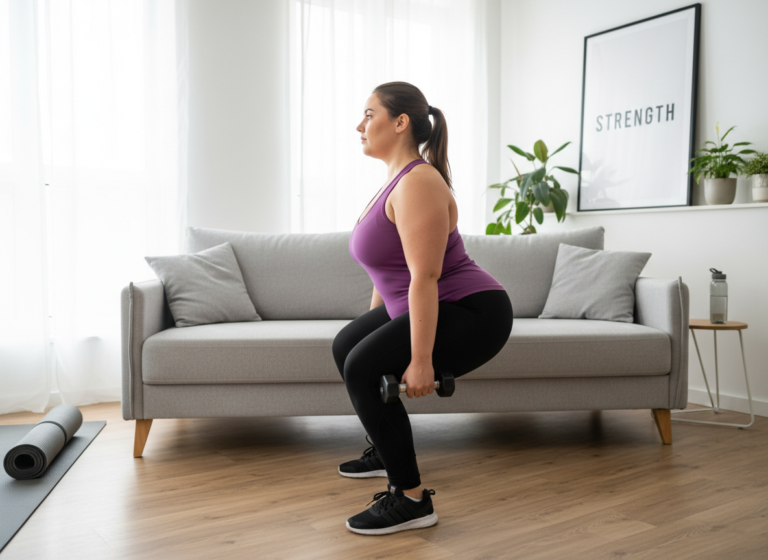
- bodyweight variations
Focus on controlled reps with perfect form.
2. Higher Reps, Lower Load
For toning, aim for:
- 12–20 reps per set
- 2–4 sets
- short rest periods
This improves muscle endurance and tightness.
3. Include Activation and Isolation Work
Toning is enhanced through targeted exercises:
- clamshells
- abductions
- side-lying leg lifts
- donkey kicks
- bridge pulses
- frog pumps
These improve definition and firmness.
4. Add Cardio if Desired
Cardio is optional but useful for fat loss, which improves muscle visibility.
Examples:
- incline walking
- stair climbing
- cycling
- jump rope
Cardio alone cannot tone; it simply reveals the shape underneath.
5. Eat at Maintenance or Slight Deficit
Toning requires:
- stable weight
- or slight fat loss
This makes muscle more defined and tight.
Too large a deficit causes muscle loss, which works against your goal.
Growth vs Tone: A Complete Comparison Chart
| Goal | Grow | Tone |
|---|---|---|
| Muscle size | Increase | Maintain or slightly increase |
| Training style | Heavy/Moderate | Light/Moderate |
| Reps | 6–12 | 12–20 |
| Sets | 3–5 per movement | 2–4 per movement |
| Frequency | 2–3 times weekly | 1–3 times weekly |
| Calories | Maintenance or surplus | Maintenance or slight deficit |
| Exercises | Hip thrusts, RDLs, lunges | Abductions, donkey kicks, bridges |
| Best for | Flat, soft, or saggy booty | Already-built booty lacking firmness |
Which Goal Is Better for You?
Here is the truth:
Your ideal goal depends on your starting point.
Choose GROW if:
- your booty feels flat
- you want more shape
- you want more projection
- you want feminine curves
- your glutes feel weak
- you have hip dips you want to reduce
- you want a fuller lower body look
Choose TONE if:
- you already have some glute size
- you want firmness and definition
- you want a more athletic look
- you prefer lighter workouts
- you want maintenance, not expansion
Most women should begin with GROW and finish with TONE.
Combining Grow and Tone: The Smart Hybrid Approach
You do not have to choose one forever.
A balanced program includes phases.
Here is an ideal yearly structure:
- 8–12 weeks growth phase
- 4–6 weeks tone phase
- Repeat
This cycle helps you:
- build
- refine
- shape
- maintain
- avoid plateaus
It also keeps you motivated because each phase has a purpose.
Why Some Women Never See Growth or Tone: Common Mistakes
These errors sabotage progress for both goals.
Mistake 1: Training Too Randomly
Random exercises do not create structured results.
Follow a plan, not trends.
Mistake 2: Using Only Bands for Growth
Bands are excellent for activation and toning, but they cannot replace heavy loading needed for growth.
Mistake 3: Not Eating Enough for Growth
A calorie deficit cancels hypertrophy completely.
Mistake 4: Not Training Glutes Frequently Enough
Once a week is not enough to reshape your booty.
Mistake 5: Overtraining During Toning
Too much training leads to muscle loss, not definition.
Mistake 6: Ignoring Upper Glutes
Most roundness comes from the gluteus medius and minimus.
If you skip abduction exercises, your booty remains flat on top.
Realistic Timelines for Both Goals
Growth
You may see:
- activation changes in 2 weeks
- shape changes in 6–8 weeks
- major transformation in 4–6 months
Toning
You may notice:
- firmness in 2–3 weeks
- visible definition in 6–10 weeks
- sculpted look in 12 weeks
Progress depends on consistency, nutrition, recovery, and proper technique.
Final Thoughts: Grow vs Tone Is About Strategy, Not Guesswork
Both goals are valid.
Both build confidence.
Both improve your shape in different ways.
Growth gives you:
- fullness
- roundness
- lift
Toning gives you:
- tightness
- firmness
- definition
Together, they create the complete booty many women want.
The key is understanding the difference and training accordingly.
Your booty can grow, tone, shape, lift, and transform with the right approach.
This guide gives you the clarity you need to train with purpose.